
Quick Summary
An ornamental aluminum fence delivers the wrought-iron look without the rust, weight, or maintenance schedule. For contractors, the practical wins are lighter panels (faster installs, fewer crew on site), powder-coated finishes that hold color for decades, and code-friendly designs that meet pool and HOA requirements. PrimeAlux ornamental systems use marine-grade alloy, foam-core options on solid panels, and a 3-layer wood-grain or matte coating process. Panels run 4\’x6\’ up to 8\’x8\’ with custom sizing on request, and the system carries ASTM E84 Class A fire performance and 220 km/h wind load test data. Installed pricing typically falls in the $80 to $120 per linear foot range for residential jobs in Canada, with commercial pricing on RFQ.
What an Ornamental Aluminum Fence Actually Is
The term “ornamental aluminum fence” gets used loosely. On a job site, it covers any aluminum fence that is built primarily for decorative effect alongside a security or boundary function. Picket-style runs with spear or flat tops, ornamental gates with scroll detailing, semi-privacy slat designs that read as architectural, and mixed runs that combine a fully solid base with a decorative cap row all qualify.
The structural elements are extruded aluminum (typically 6063-T5 or 6005A-T6) with welded or mechanically fastened pickets. Posts are heavier-wall extrusions sized for the panel run and gate weight. Caps, finials, and accent elements are usually cast aluminum or stamped components attached at the field. Everything carries a powder-coat finish that resists chalking, fading, and impact in normal residential and commercial service.
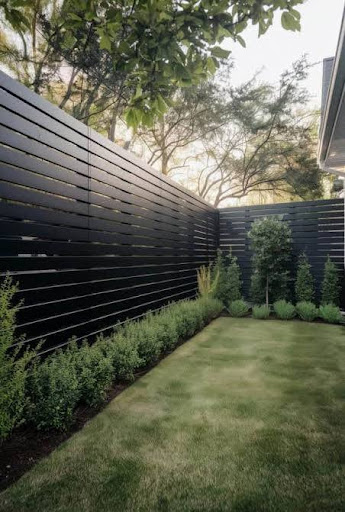
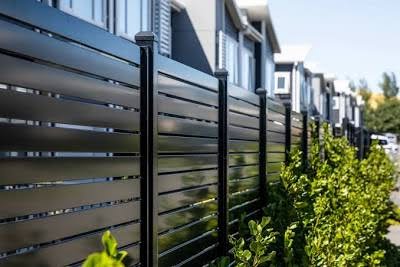
The point of specifying ornamental aluminum is appearance plus performance. A contractor delivering an HOA-mandated decorative fence on a townhouse complex needs panels that look like wrought iron from the curb but install with a one-person crew per panel and never need a paint cycle. PrimeAlux semi-privacy aluminum fence systems are commonly specified for this use case because the slim slat profiles read as ornamental at distance while still providing partial visual screening.
The Specs That Actually Matter on an Ornamental Job
Most spec confusion happens because brochure language treats every ornamental aluminum fence as equivalent. They are not. When a contractor is bidding work or sourcing for a project, four spec categories drive whether the fence performs in the field.
Alloy and Wall Thickness
Marine-grade extruded aluminum alloys (6063 and 6005 series, produced under ASTM B221) give the right balance of formability, strength, and corrosion resistance for ornamental applications. Picket wall thickness should be a minimum of 0.062″ for residential and 0.080″+ for commercial gates and high-traffic runs. Posts step up to 0.094″ or more depending on panel height and wind loading. The Aluminum Association publishes alloy reference data that contractors can use when reviewing supplier specs.
Coating System
This is where cheap ornamental fencing fails. A single-stage liquid paint will chalk and fade visibly within three to five Canadian seasons. PrimeAlux uses a 3-layer powder-coat process across all wood-grain finishes (Natural Walnut, Grey Walnut, Walnut, Dark Walnut, Grey Brown) and a thermoset polyester powder coat on standard architectural colors. Powder coatings meeting AAMA 2604 or 2605 performance standards are the baseline for projects expecting long-term color retention.
Hardware and Fastener Compatibility
Galvanic corrosion is the silent killer of mixed-metal fencing. If a contractor installs a stainless fastener directly into an aluminum picket without a sealed barrier, an electrochemical reaction can begin within months in salty or humid environments. PrimeAlux ornamental kits ship with marine-grade hardware specified to be compatible with the fence body, which removes the guesswork on the installer\’s end.
Performance Test Data
For commercial bids, multi-unit, hospitality, and any project under municipal review, contractors increasingly need verifiable test data. PrimeAlux Privacy Plus panels hold a Class A fire rating under ASTM E84 with a Flame Spread Index of 0 and Smoke Developed Index of 50, and the wind load envelope has been tested to 220 km/h. Ornamental open-picket panels carry their own performance metrics on request through the RFQ process.
Ornamental Aluminum vs Wrought Iron, Steel, and Cast Iron
The aluminum-vs-iron conversation comes up on almost every ornamental bid. Here is how the four common ornamental materials stack up across the criteria that actually decide jobs.
| Criterion | Ornamental Aluminum | Wrought Iron | Welded Steel | Cast Iron |
|---|---|---|---|---|
| Service life (Canadian climate) | 25+ years | 15-25 years with regular paint cycle | 10-15 years before rust treatment | 20+ years but brittle |
| Corrosion behavior | Self-passivating, no rust | Rusts when coating fails | Rusts at any coating breach | Rusts at any coating breach |
| Panel weight (typical 6\’x6\’) | ~30-50 lbs | ~150-200 lbs | ~120-180 lbs | ~200-300 lbs |
| Install crew required | 1-2 people | 3-4 people, often a lift | 3-4 people | 4 people, mechanical lift |
| Maintenance schedule | Rinse occasionally | Sand and repaint every 3-5 yrs | Annual touch-up plus full repaint cycle | Repaint as coating fails |
| Repairability after damage | Swap panel or picket | Welder needed | Welder needed | Specialty foundry |
| Typical installed cost (residential) | $80-$120 / linear foot | $120-$200+ / linear foot | $60-$100 / linear foot | $200+ / linear foot |
The takeaway most contractors land on after a season or two of mixed ornamental work is straightforward. For new builds and replacements where the client wants the wrought-iron aesthetic, ornamental aluminum closes more bids and produces fewer callback issues than welded steel. Iron and cast iron remain options for restoration projects, heritage work, or clients with specific authenticity requirements.
For a deeper material comparison, the wrought iron vs aluminum guide on the contractor blog walks through the cost-of-ownership math over a 20 year window.
Where Ornamental Aluminum Wins Bids
The strongest commercial fit for ornamental aluminum is in projects where the client values appearance, code compliance, and low ongoing maintenance equally. Five recurring use cases drive most of the ornamental volume PrimeAlux ships into contractor channels.
HOA and Master-Planned Communities
Architectural review boards specify ornamental aluminum because it gives every property the same visual standard while removing the question of whether one homeowner will repaint and another will let the iron rust. The PrimeAlux ornamental line in matte black is the most common HOA spec we see. Bulk pricing is available through the dealer program.
Pool Enclosures
Open-picket ornamental aluminum is the default code-compliant pool barrier in most Canadian provinces and US states. The minimum height (typically 48″ or 1.2 m), maximum picket spacing (4″), and self-closing self-latching gate requirements are all easily met with a standard ornamental kit. The PrimeAlux aluminum gate line ships with self-closing hinges and magnetic latches as standard for pool applications.
Estate and High-End Residential
For estate work, ornamental aluminum gives architects and landscape designers a system that scales from boundary fence to driveway gate to pedestrian access without a material change. The matching aluminum gate options in the Canadian residential line cover swing, double, and sliding configurations.
Commercial and Multi-Unit Properties
Multi-unit residential, hospitality, and retail sites benefit from ornamental aluminum because the look upgrades the property visually without the lifecycle cost of iron. Fire-rated solid panel options in the Privacy line can be specified where mixed-use code reviews require Class A flame spread performance.
Replacement Work on Aging Iron Fences
The replacement market is one of the fastest growing segments. A 30 year old wrought iron run that is rusted at every weld and has lost most of its paint is expensive to restore. Replacement with ornamental aluminum at a similar visual height and picket pattern is often cheaper than restoration over a 10 year horizon, and it eliminates future paint cycles entirely.
Common Field Mistakes Contractors Should Avoid
Even experienced fence crews trip over the same handful of issues on ornamental jobs. Avoiding these saves callbacks and protects job profitability.
The most frequent mistake is undersizing posts on gate openings. An ornamental gate carries the panel weight plus dynamic loading from wind, kids hanging on the gate, and the mass of the swing motion itself. A 4″ post that works on a 6 foot panel run is undersized for a 6 foot single gate. PrimeAlux gate kits ship with engineered post-and-hinge specs for the corresponding gate width, which solves this on the spec sheet.
The second is shallow post burial. The PrimeAlux installation standard is a minimum 3 ft underground burial depth for all posts. This is the correct depth across virtually all Canadian frost zones and prevents seasonal heaving. Contractors who shortcut to 2 or 2.5 feet often see leaning posts within two winters.
The third is mixing fastener metals. Stainless screws into raw aluminum, hot-dip galvanized brackets bolted to powder-coated aluminum without isolation, and dissimilar metal contact at hinge points all eventually corrode. Use the supplied PrimeAlux hardware. The kits are pre-engineered for galvanic compatibility.
The fourth is failing to verify panel-to-grade tolerance on sloped runs. Ornamental aluminum systems are typically rackable up to a defined slope (15 degrees on most PrimeAlux panels). Beyond that, the install needs to be stepped, with a step-up panel or a custom raked panel at the slope. Skipping this verification on the walk-through leads to either ugly visible gaps or panels that sit too low to the ground.
Pro Tip for Field Crews
Bring a 2 ft level and a digital protractor to every walk-through, not just the install day. Measuring slope at three to five points along the proposed fence run on the bid visit prevents quoting a flat-grade job and discovering on install day that you needed rackable hardware or stepped panels. The 30 minutes of measurement at the bid stage protects the margin on every ornamental project.
Sourcing Considerations for Dealers and Distributors
For contractors ordering one or two jobs at a time, ornamental aluminum sourcing is straightforward through standard channels. For dealers, contractor groups, and distributors moving volume, three considerations shape the partner decision.
Coating consistency across batches matters more than most spec sheets indicate. Two pallets of “matte black” panels coated 8 weeks apart can vary visibly under direct sun if the supplier is rotating between contract coaters. PrimeAlux runs the 3-layer wood-grain process and architectural color powder coats in a controlled production sequence to keep batch-to-batch color drift below visual threshold, and dealers are issued lot tracking on every shipment.
Lead time predictability is the second factor. Most ornamental fence projects sit on a tight construction schedule, often gated by landscape grading or pool deck completion. Standard PrimeAlux ornamental panels in stocked sizes ship in standard production lead times. Custom heights, custom slopes, and special powder colors are available on RFQ with the corresponding lead time confirmed at quote.
The third is post-sale technical support. When a contractor calls in mid-install with a question about a sloped run or a non-standard gate detail, the response speed determines whether the job stays on schedule. PrimeAlux maintains technical support through the showroom in Mississauga and the contractor channel for in-field questions.
Compliance Considerations on Ornamental Bids
Three compliance issues come up on most ornamental jobs. Familiarity with each protects the contractor from rework and from clauses being added to the contract after the bid was accepted.
Pool barrier compliance is the most regulated. The applicable code in most Canadian provinces follows the ICC International Codes with provincial amendments. Picket spacing under 4 inches, minimum 48 inch height, climbing-resistant top profile, and self-closing self-latching gate hardware are baseline. Some municipalities add a 36 inch minimum gap above any horizontal rails to prevent toe-holds. Verify with the local building department before the bid is locked.
Setback and height bylaws vary widely by municipality. Front yard fences are typically capped at 1.2 m (4 ft) and rear yard fences at 1.8 m or 2 m (6 to 6.5 ft) in most Ontario townships, with corner lot triangles enforcing visibility setbacks. Have the homeowner pull the by-law from their municipality before fabrication begins.
Fire performance increasingly matters in mixed-use, multi-unit, and hospitality projects. Where a code review demands flame spread documentation, the PrimeAlux Privacy Plus solid panel option carries Class A performance under ASTM E84. Open-picket ornamental aluminum has its own non-combustible characteristics through aluminum\’s high melting point, and project-specific test data is available through RFQ.
Frequently Asked Questions
Is ornamental aluminum fence as strong as wrought iron?
For typical residential and commercial ornamental loads, yes. Ornamental aluminum panels in marine-grade alloys are designed to perform in the same load range as comparable wrought iron sections, with the added benefit of staying corrosion-free. PrimeAlux ornamental panels carry tested wind load performance up to 220 km/h on the standard system.
How long does an ornamental aluminum fence last in Canada?
Properly specified and installed, expect 25+ years of useful life with no significant maintenance. Aluminum does not rust, the powder-coat finish holds color through normal UV and freeze-thaw exposure, and replacement parts are available through the manufacturer for many years after the original install.
Can ornamental aluminum fence be customized for ornate designs?
Yes. PrimeAlux supports custom panel sizes from 4\’x6\’ up to 8\’x8\’, custom heights, and custom finial and top-profile options on RFQ. Architectural projects with unique scroll work, finial sets, or mixed slat patterns are handled through the engineering quote process.
What is the right post burial depth for ornamental aluminum?
The PrimeAlux standard is a minimum 3 ft underground burial. This depth places the post footing below frost line in most Canadian provinces and prevents seasonal heaving. Heavier gate posts may require additional concrete volume or wider footings depending on gate width and panel run.
Does ornamental aluminum fence meet pool code in Canada?
Standard ornamental aluminum picket configurations meet Canadian pool barrier requirements when correctly specified for height (minimum 48 inch in most provinces), picket spacing (under 4 inch), and gate hardware (self-closing, self-latching, magnetic latch above 54 inch). Always verify with the local building department before fabrication.
How much does an ornamental aluminum fence cost installed?
Residential installed pricing in Canada typically falls between $80 and $120 per linear foot, with custom configurations, complex slopes, or premium gate options pricing higher. Commercial pricing is sized to the project on RFQ. The fence cost per foot guide on the contractor blog walks through what drives the per-foot number.
What hardware is included with PrimeAlux ornamental kits?
Standard ornamental kits ship with marine-grade fasteners specified for galvanic compatibility with the aluminum panel system, brackets, mounting plates, and post caps. Gate kits add self-closing hinges, latches, and strike plates correctly sized for the gate width and panel weight.
Can ornamental aluminum panels be installed on a slope?
Yes. Standard PrimeAlux panels rack up to 15 degrees of slope on a single panel run. Slopes beyond that are handled with stepped panels, step-up sections, or custom raked panels engineered for the specific grade. Field measurement of slope at the walk-through is essential for correct ordering.
Specifying the Right Ornamental System for Your Next Bid
Ornamental aluminum is the most flexible category in the modern fence market for contractors who deliver mixed residential, commercial, and pool work. Once a crew has installed two or three ornamental projects, the install efficiency, callback rate, and customer satisfaction numbers usually push the rest of the bid pipeline toward aluminum first by default.
For specifications, sample requests, contractor pricing, or technical support on an upcoming bid, contact PrimeAlux through the main site or browse the full contractor blog library for additional installation guides. Dealer and distributor inquiries are handled through the partner channel directly.
