
Fence Cost Per Foot in Canada: What Every Material Really Costs
- Aluminum (PrimeAlux): $80–$120 per linear foot installed – 25+ years, zero maintenance
- Cedar wood: $42–$85 per linear foot – looks bad within 1–2 seasons, staining required every 2–3 years
- Vinyl (quality): $65–$105 per linear foot – starts cracking and fading around 10 years, cannot be repaired
- Chain link: $25–$60 per linear foot – no privacy, rusts, no aesthetic value
- Composite: $70–$145 per linear foot – degrades, sections cannot be repaired individually
- The per-foot number is only Day 1 cost. Factor in 10- and 25-year maintenance and replacement cycles when comparing materials.
What “Per Foot” Actually Means When You Quote a Fence Job
Per-foot pricing covers materials, installation labour, concrete, post hardware, and your markup – rolled into one number a homeowner can understand. For contractors and dealers, the math behind that number is what separates a profitable job from a break-even one.
When a client asks “how much does a fence cost per foot?”, they want a single number. What you’re actually quoting is a composite of panel cost, post cost, concrete per hole, labour hours, equipment, travel, and overhead. Each material category carries a different split between those line items, which is why two fences quoted at $90 per linear foot can have completely different margins.
The standard approach for residential work: measure the total linear footage of fence run, price out gates separately as fixed units (not per foot), and apply a site conditions adjustment for slopes, difficult soil, or access issues. This guide breaks down what that math actually looks like by material, so you can quote with confidence and explain the numbers to clients without losing the job on sticker shock.
Material-by-Material Fence Cost Per Linear Foot in Canada (2026)
The ranges below reflect Canadian residential market pricing in 2026 – material cost plus professional installation. These are realistic mid-market figures for a standard 6-foot privacy or semi-privacy fence on a level lot.
| Material | Material Only (per LF) | Installed (per LF) | Realistic Lifespan | Ongoing Maintenance |
|---|---|---|---|---|
| Aluminum (PrimeAlux) | $35–$60 | $80–$120 | 25+ years | None – occasional rinse |
| Cedar wood | $18–$35 | $42–$85 | 8–12 years structural; looks poor in 1–2 | Stain every 2–3 years |
| Pressure-treated wood | $15–$30 | $38–$80 | 7–10 years | Sealing, painting, post inspection |
| Vinyl (quality) | $28–$50 | $65–$105 | ~10 years before visible deterioration | Periodic cleaning; no repair when cracked |
| Vinyl (budget import) | $15–$28 | $40–$70 | 5–7 years; cracks in cold below -20C | Section replacement (full panel) |
| Chain link | $12–$22 | $25–$60 | Long but rusts and sags | Rust treatment, tension adjustments |
| Composite (WPC) | $30–$65 | $70–$145 | 10–15 years; fades, warps in heat | Section replacement; colour fading |
| Wrought iron / ornamental | $45–$90 | $100–$200+ | Long if maintained | Repainting every 5–8 years to prevent rust |
These ranges assume a standard 6-foot panel on a level lot. Slopes, access constraints, rocky soil, or large gate openings add cost beyond the base per-foot rate.
The Hidden Costs That Change the Per-Foot Math
The installed price per foot is only what a client pays on day one. For materials that require ongoing maintenance or early replacement, the 10-year and 25-year cost per foot looks very different from the upfront number.
A cedar wood fence at $65 per linear foot installed on day one will need staining or painting every 2–3 years. In a Canadian climate, many homeowners skip staining cycles – which accelerates rot and structural failure. By year 8, posts are typically soft at grade level and panels are warped or cracked. At that point, replacement is the only option. The real 10-year cost of that “cheap” wood fence often exceeds $120–$160 per linear foot once you add maintenance and partial replacement.
Vinyl follows a similar pattern. Quality vinyl holds up for roughly 10 years before cracking, yellowing, and becoming brittle are visible. Budget imported vinyl – which represents a large share of the residential market – can show serious deterioration in 5–7 years, particularly in cold climates where temperatures drop below -20C. Unlike wood, vinyl cannot be repaired once it cracks. Entire panel sections must be replaced.
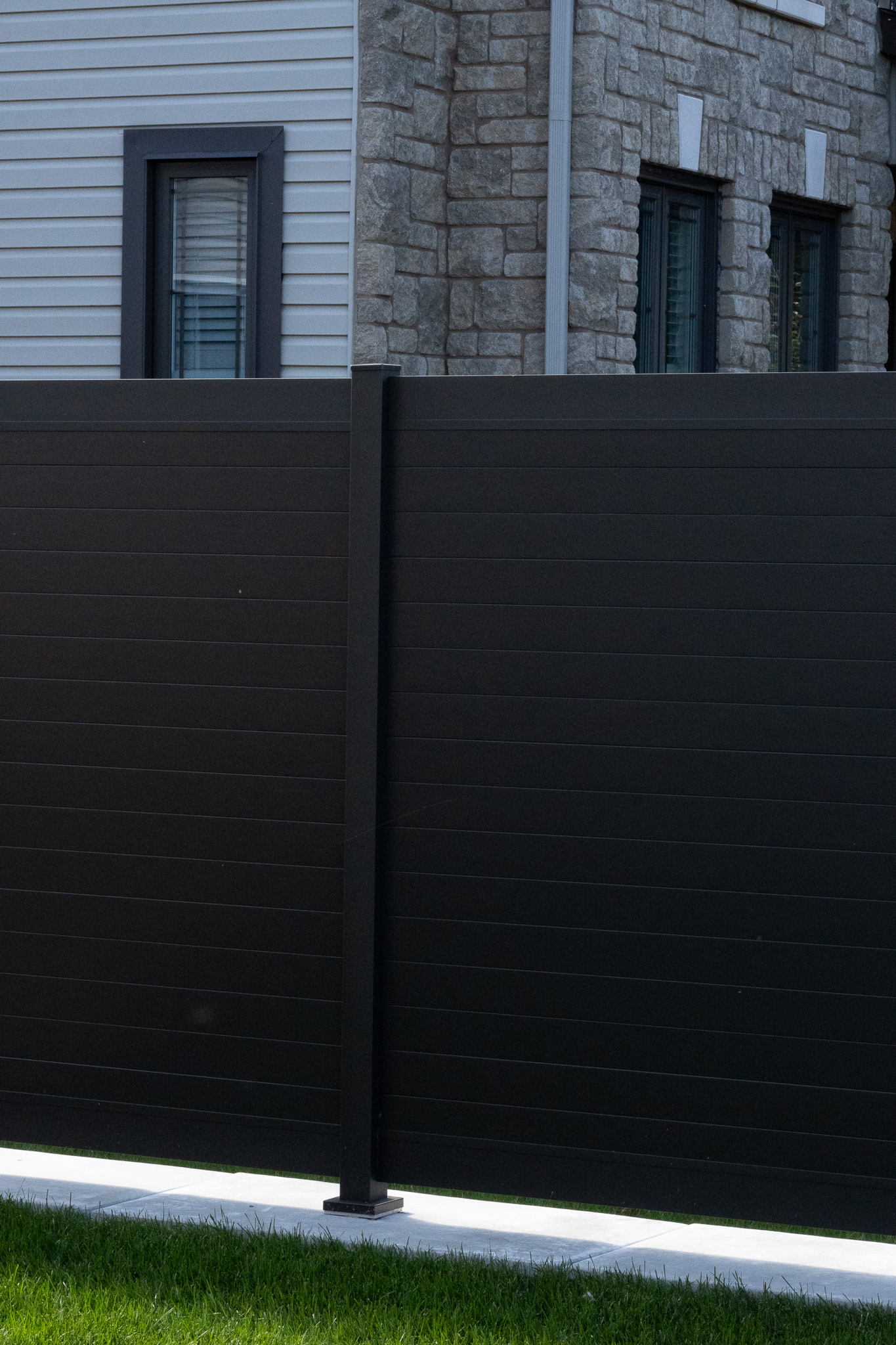
Aluminum carries none of those follow-on costs. A properly installed aluminum fence from a manufacturer like PrimeAlux requires no painting, no staining, and no sealants. The powder coat and wood-grain finish are applied in a three-layer process and are rated for decades of Canadian weather exposure. The 25-year total cost of ownership for aluminum is lower than wood or vinyl in virtually every residential application.
How Fence Height and Panel Style Affect the Per-Foot Price
A 4-foot semi-privacy panel and an 8-foot custom privacy system have very different per-foot costs, even within the same material. Post depth requirements, concrete volume, and panel weight all scale with height. Here is a breakdown of how configuration changes affect per-foot pricing relative to a base 6-foot privacy panel.
| Configuration | Price vs 6′ Standard | Post Burial Depth | Key Notes |
|---|---|---|---|
| 4′ semi-privacy panel | 10–20% less | 3 ft minimum | Smaller concrete volume; lighter panels |
| 6′ privacy panel (standard) | Base price | 3 ft | Most common residential config |
| 6′ Privacy Plus (foam core) | +20–30% | 3 ft | Heavier panel; enhanced sound attenuation; stronger substrate |
| 8′ custom privacy panel | +40–60% | 3 ft (deep concrete collar) | Larger footings; permit may be required depending on municipality |
| 6′ semi-privacy panel | Base to -10% | 3 ft | Spaced slat design; similar post requirements to solid privacy |
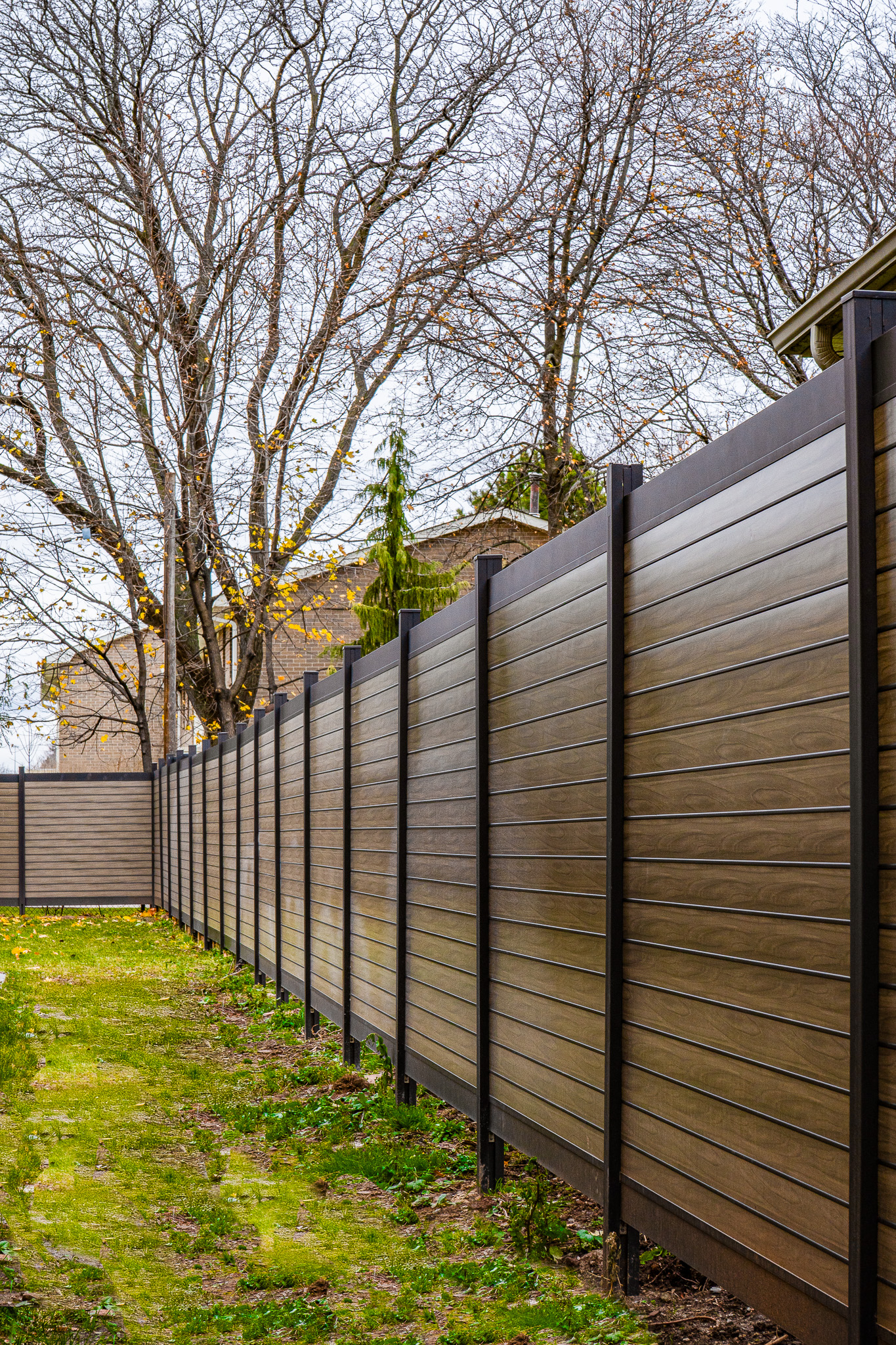
Post burial depth for all PrimeAlux aluminum fence posts is 3 feet minimum, regardless of panel height. This is the confirmed installation standard – not 2.8 feet or 2.5 feet. In frost-prone Canadian soil, a 3-foot burial below grade helps prevent heaving and keeps the fence plumb through freeze-thaw cycles.
What Aluminum Fence Costs Per Foot vs What You Get Back
Aluminum fence in the Canadian residential market runs $80–$120 per linear foot installed, depending on panel style, post configuration, site conditions, and regional labour rates. For that range, contractors and their clients get a product with a verified performance profile that most other materials cannot match.
PrimeAlux privacy aluminum fence panels are wind-load tested to 220 km/h – with documented test results, not just marketing claims. The panels carry a Class A fire rating under ASTM E84, with a Flame Spread Index of 0 and a Smoke Developed Index of 50. You can view the full test documentation at primealux.com/astm-e84-fire-test. These are the kinds of specs that matter on commercial projects, strata installations, and HOA-governed communities where liability and compliance are part of the conversation.
The panels are also built with up to 70% recycled aluminum content, which matters increasingly to commercial clients and developers who track sustainability metrics. Panel sizes range from 4×6 feet up to 8×8 feet, with custom sizes available for non-standard applications. The Privacy Plus line uses foam-core panel construction that adds structural mass and provides some acoustic benefit over standard hollow-core panels.
No painting. No staining. No rust. No rot. If a contractor is calculating what it costs to stand behind a fence system they install – callbacks, warranty claims, client complaints – aluminum is the lowest-risk material in the category. That has value beyond the per-foot price that shows up on the quote sheet.
Canadian homeowners looking at residential aluminum fence options can also explore the full product range at primealux.ca/privacy-aluminum-fence.
Contractor Quoting Framework: How to Structure Per-Foot Pricing
Most experienced fence contractors have a quoting system they’ve refined over time. For those newer to pricing aluminum or looking to sharpen their approach, here is a straightforward framework that works for residential and light commercial jobs.
Step 1: Measure the fence run. Walk the property with a measuring wheel or laser. Count every linear foot of fence line, including sections that require raking (stepping or raking on grade changes). Do not include gate openings in the linear footage count.
Step 2: Price gates separately. Gates are priced as fixed units, not per foot. A single swing gate typically runs $400–$900 depending on width and hardware. Double swing gates and sliding gates carry higher unit prices. Quote these as line items, not folded into the per-foot rate. This keeps the gate cost visible and prevents scope creep if a client later wants to add or change gate configurations. PrimeAlux aluminum gates are available in configurations to match any privacy fence system.
Step 3: Apply site condition adjustments. Level lot with normal soil is your base rate. Add a modifier for significant slopes (stepped vs raked panel decisions require extra layout time), hard soil or rock (more time per post hole), limited access (equipment constraints), or complex property line configurations with multiple corners.
Step 4: Present a range, not a fixed number, before a site visit. Give the client a per-foot range on the first call ($95–$115 per foot, for example). Confirm the exact number after walking the property. This is standard practice that manages expectations without locking you in before you’ve assessed conditions.
Step 5: Account for your material margin. Dealers and distributors sourcing from manufacturers like PrimeAlux typically apply a 25–45% markup over wholesale panel cost, depending on volume and relationship terms. Installers purchasing at dealer price apply their own labour and overhead markup on top. The final homeowner price reflects both layers. For dealers, it is worth noting that semi-privacy aluminum fence panels and Privacy Plus fence lines carry different panel costs and allow differentiated positioning in the market.
FAQ: Fence Cost Per Foot in Canada
What is the average fence cost per linear foot in Canada in 2026?
Installed costs in 2026 range from $25–$60 per linear foot for chain link, $42–$85 for cedar wood, $65–$105 for quality vinyl, and $80–$120 for aluminum. Composite and ornamental iron run $70–$145 and $100–$200+ respectively. These figures reflect professional installation on a standard residential lot.
How much does an aluminum fence cost per linear foot in Canada?
Aluminum fence installed in Canada typically runs $80–$120 per linear foot for standard privacy or semi-privacy configurations. The Privacy Plus line with foam-core construction runs slightly higher. These prices cover materials, posts, concrete, hardware, and installation labour – no additional ongoing costs are expected over the 25+ year lifespan.
Is wood fence cheaper per foot than aluminum?
Wood is cheaper per foot on day one – cedar typically runs $42–$85 per linear foot installed versus $80–$120 for aluminum. Over 10–15 years, the math reverses. Wood requires staining every 2–3 years, posts rot underground, and most wood fences need partial or full replacement before the 12-year mark. The 15-year total cost of a wood fence often exceeds that of aluminum when maintenance and replacement are included.
How do contractors calculate fence cost per linear foot?
Contractors measure total linear footage of fence run, multiply by material plus labour cost per foot, then add fixed costs for gates, corners, and post caps. Site condition adjustments are applied for slopes, rocky soil, or access constraints. The final per-foot number presented to the homeowner includes materials, installation, and markup – but not gate pricing, which is quoted separately as a unit cost.
What is included in the per-foot fence installation price?
A fully-installed per-foot price includes fence panels, posts, concrete for footings, post caps, rail connectors, installation labour, and basic cleanup. It does not typically include permits (which vary by municipality), gates (quoted separately), or any grading work required before installation. Always confirm what is and is not included before signing a quote.
Does fence height affect price per foot?
Yes, significantly. A 4-foot semi-privacy panel costs 10–20% less per foot than a standard 6-foot privacy panel. An 8-foot custom privacy system can run 40–60% more per foot than a 4-foot panel, due to deeper post requirements, larger concrete footings, and heavier materials. The labour component per foot also scales with height, since taller panels require more precise alignment and more concrete per post hole.
How can I compare fence materials on total cost, not just upfront price?
Calculate the 10-year and 25-year total cost per linear foot: take the installed price, then add maintenance costs (staining, painting, repairs) at appropriate intervals for each material. Include a replacement cost if the material is expected to fail within your time horizon. For aluminum, the total cost curve is flat – no maintenance, no replacement within a 25-year window. For wood and vinyl, the curve rises significantly over time.
What is a reasonable minimum job size for fence contractors to quote?
Most residential fence contractors set a minimum job size of 50–80 linear feet for standard panel installations. Below that threshold, the fixed costs of mobilization, post hole digging, and concrete are difficult to absorb in the per-foot rate without pricing yourself out of the market. For aluminum specifically, the panel system installs efficiently at scale, so larger jobs typically allow a more competitive per-foot price while maintaining margin.
Get Accurate Pricing and Specifications for Your Next Fence Job
Per-foot cost is the starting point, not the full picture. If you are a contractor, installer, or dealer working with aluminum fence systems in Canada, the specs and pricing structure for PrimeAlux systems are available on request. The product line covers full privacy aluminum fence panels, semi-privacy options, the Privacy Plus foam-core line, and matching aluminum gates for complete fence systems.
Contact PrimeAlux directly for contractor pricing, distributor terms, and full product documentation including ASTM E84 fire test results. Residential buyers in Canada can request a quote at primealux.ca.
