

If you’re shopping for an aluminum fence in Canada or North America, you’re probably comparing modern privacy and semi-privacy designs, clean lines, and long-term durability. But there’s a topic that often gets overlooked until late in the process: fire performance. Whether it’s a backyard with a BBQ and firepit, a commercial project with tighter clearances, or simply planning for higher-risk seasons, asking the right questions early can save you from confusion later.
The good news: you don’t need to be a code expert to evaluate fire-related documentation. You just need a practical framework and a supplier that’s organized, transparent, and built like a real system, not a mix of random parts. That’s where PrimeAlux stands out: modern aluminum fence panels designed as a matched kit (posts, rails, panels, and hardware) with manuals and third-party test resources available on request and through their resource pages.
This guide gives you exactly what to ask, what to review, and how to compare suppliers with confidence, without getting lost in technical jargon.
What “fire performance” means for fence systems
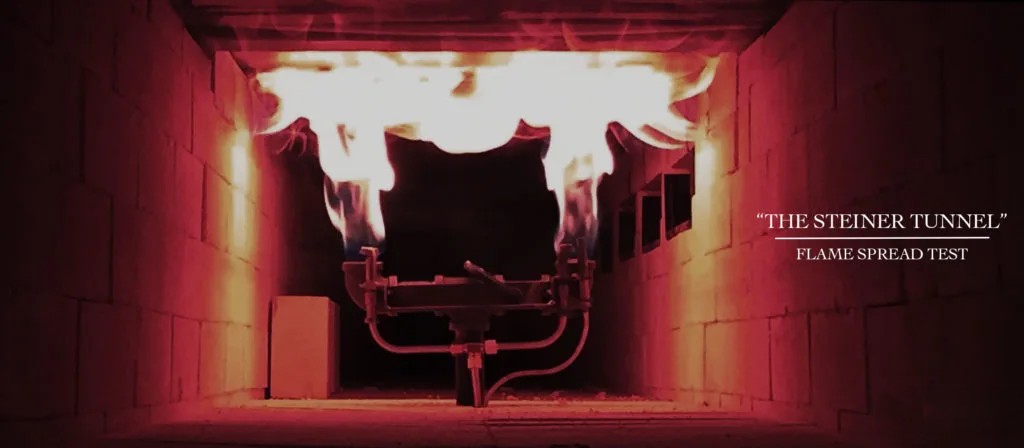
When suppliers talk about fire performance, one of the most common third-party references you’ll see is ASTM E84, a standardized lab test that reports:
Flame Spread Index (FSI)
Smoke Developed Index (SDI)
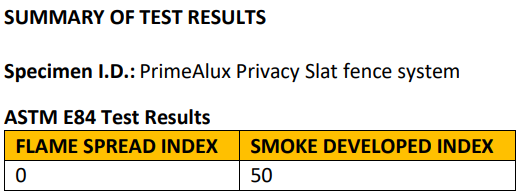
PrimeAlux makes this easy by providing an ASTM E84 resource page and an independent lab test report for the tested fence configuration. In the available Intertek report for the PrimeAlux privacy slat fence system, the results are reported as FSI 0 and SDI 50.
What matters for you as a buyer is simple: you’re not relying on marketing language, you’re reviewing a third-party test resource that documents the tested sample and results.
The “documentation pack” you should request
A premium fence system should be supported with clear documentation. Before you finalize a quote, ask your supplier for:
Fire performance resources
ASTM E84 report PDF (full report, not a screenshot)
A short summary page or link that explains what’s being shown
Installation + spec clarity
Installation manual for your exact fence style (privacy / semi-privacy)
Parts list (posts, rails, panels, hardware)
Shop drawings or system diagrams (especially helpful for builders)
Project-fit validation
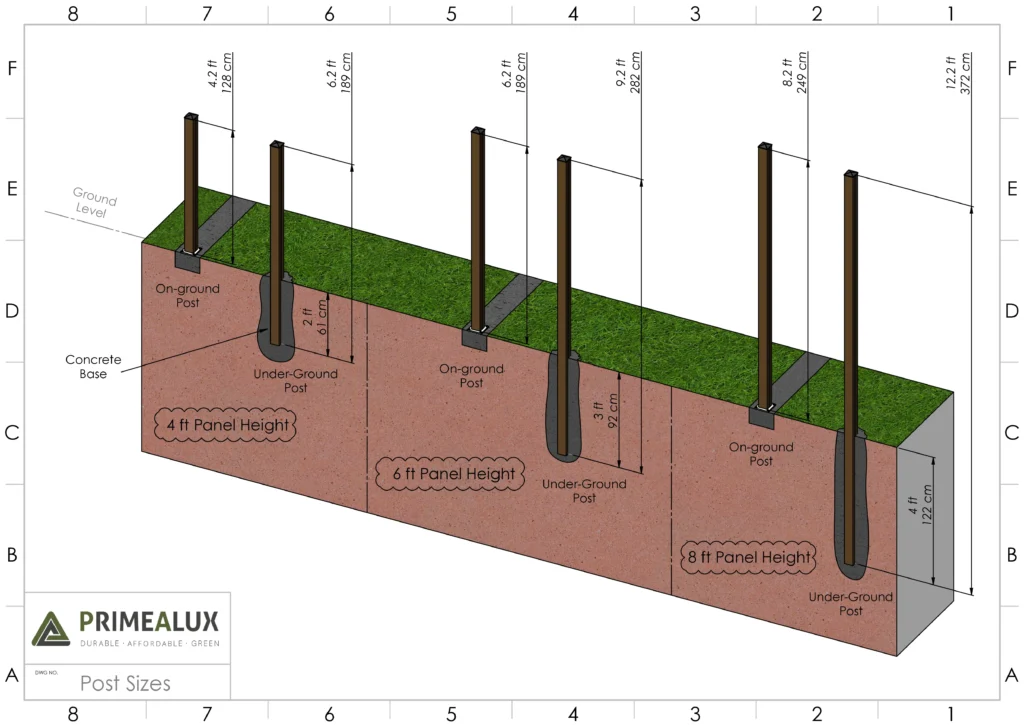
Recommended post spacing
Anchoring options (in ground vs surface mount/base plate)
Gate details if you’re adding an aluminum fence gate
PrimeAlux aligns strongly with this documentation-first approach. Their presentation emphasizes a system designed to be assembled cleanly with standardized components, and their resources include manuals and multiple testing references (fire, wind-load, OBC references, slat-load, acoustical).
What questions to ask your supplier (so you’re comparing apples to apples)
Whether you’re a homeowner looking up aluminum fence contractors near me or a builder specifying aluminum fences across multiple projects, these questions keep the comparison fair and clear.
1) “What exact fence configuration was tested?”
Fire performance resources are most useful when they match what you’re buying. Ask:
Which system style (privacy vs semi-privacy)
Panel/slat profile and thickness
Finish type (including dark modern tones or woodgrain looks)
Any foam-core or composite elements
In the PrimeAlux Intertek report, the specimen is described as aluminum coil wrapped around a polyurethane solid foam core. That’s helpful because it clearly documents what was tested.
2) “Is this a full system, or are you sourcing parts from different places?”
This is the biggest separator between premium systems and parts bins. A modern fence performs best when it’s designed as a matched kit:
Posts + rails engineered to fit the panels
Hardware that matches the system geometry
Predictable assembly steps that reduce jobsite improvisation
PrimeAlux positions its fences as a designed system with standardized components, which is exactly what builders want when timelines and consistency matter.
3) “What installation method does your documentation support?”
Ask how the fence is meant to be installed:
In ground post setting (concrete footings)
Surface mount/base plate anchoring
Post spacing guidance for privacy applications
4) “Can you show me your manuals and technical resources?”
A polished supplier doesn’t hesitate here. The best experience is when manuals and resources are already organized:
Install manuals
Product drawings
Testing pages/references (fire, wind, etc.)
PrimeAlux emphasizes having manuals and third-party style resources available and encourages customers to request documentation/samples.
Avoid these mistakes for a smoother project:
Choosing a fence based on photos only (without manuals/resources)
Mixing posts/rails/hardware from different systems
Treating gates as “later add-ons” instead of part of the system
Skipping anchoring details (surface mount vs in ground)
Not requesting the fire test resource package until the last minute
A strong supplier experience is when everything is ready: manuals, test resources, and clear system components you can spec with confidence.
PrimeAlux perspective: what to look for in a quality aluminum system
If you want an aluminum fence that looks modern, installs cleanly, and feels engineered, not improvised, here’s what to look for (and how PrimeAlux approaches it):
A complete matched system: posts, rails, panels, and hardware designed to work together as a kit.
Clear installation guidance: manuals and consistent assembly steps that reduce errors and callbacks.
Third-party test resources available: including the ASTM E84 fire test report for the tested fence configuration, plus other performance-focused references (wind-load/slat-load/OBC-style resources).
Design options that fit real projects: privacy and semi-privacy lines, modern dark tones, and woodgrain finishes for contemporary builds.
Frequently Asked Questions
Yes, especially when your supplier can provide third-party fire test resources and clear system documentation for the configuration you’re buying.
ASTM E84 is a standardized lab test that reports flame spread and smoke developed indices, and it’s commonly used as a documented reference for surface burning characteristics.
Ask which system they install, request the manual, confirm they use matched posts/rails/hardware, and ask for the technical resource package (fire and other performance references).
Yes. PrimeAlux does laboratory test reports done by firms like Intertek to evaluate real performances
