
Aluminum Fence Wind Load Ratings: What the 220 km/h Test Actually Means for Contractors and Specifiers
Aluminum fence wind load ratings indicate how much pressure a panel system can resist before deflecting or failing. For contractors and specifiers, the number that matters is the tested maximum wind speed the panel survived under ASTM-style pressure loading. PrimeAlux privacy panels are tested to 220 km/h (roughly 137 mph), well above the 3-second gust design speeds used in residential construction across most of Canada and the US. This guide explains what wind load ratings mean, how testing works, how to read a report, and what specifiers should verify before approving a panel for a project.
What is an aluminum fence wind load rating?
An aluminum fence wind load rating is the maximum wind pressure, expressed as a velocity (km/h or mph) or as a pressure load (psf or Pa), that a fence assembly can resist without permanent deformation, connection failure, or panel separation. The rating applies to the complete system: posts, panels, fasteners, and the ground anchorage. A panel alone has no meaningful wind load rating. The Aluminum Extruders Council publishes general background on aluminum structural performance that contractors can reference.
Wind pressure on a vertical surface scales roughly with the square of wind velocity. A fence that passes a 120 km/h test is not halfway to a 240 km/h rating. It is closer to one-quarter of the pressure load. That is why contractors quoting privacy fence with unverified ratings often misread the risk.
The PrimeAlux privacy aluminum fence panels are tested to 220 km/h under simulated wind pressure with a 1.5 safety factor applied to real-world design loads. That is one of the highest tested ratings in the residential aluminum fence category in North America.
How wind load testing works for fence systems
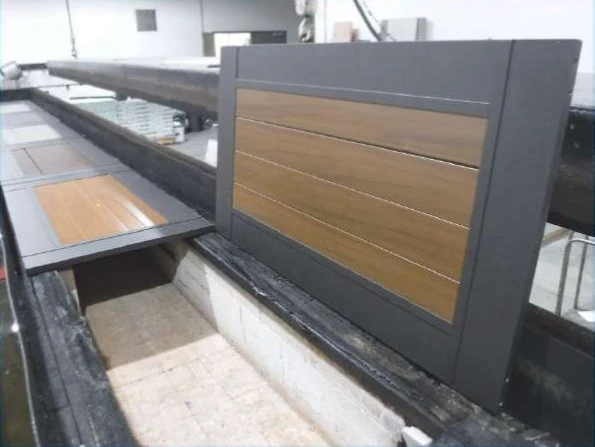
Wind load testing for fence systems follows adapted procedures from ASTM E330, the standard test method for structural performance of exterior windows, doors, skylights, and curtain walls under uniform static pressure difference. For fence panels, the test is adapted because a fence is not a sealed assembly. Labs apply a uniform pressure on one face of the panel while the opposite face is vented or referenced to ambient, then measure deflection and inspect the system for failure modes.
Specifically, the lab will:
- Mount a full-size panel between representative posts set in a test rig that mimics real anchorage.
- Apply incremental positive and negative pressure to simulate windward and leeward loading.
- Record deflection at mid-span.
- Inspect for panel deformation, picket or slat dislodgement, fastener backout, and post rotation.
- Record the peak pressure at which the assembly still meets acceptance criteria.
The reported wind speed rating is converted from the peak pressure using a pressure-velocity formula at standard air density, usually presented alongside the pressure in psf or Pa. A test signed off by a third-party lab like Intertek is the document specifiers should ask for. Manufacturer marketing sheets without a lab reference are not verification.
What 220 km/h means in context
Most of Canada has design wind speeds (3-second gust at 10 meters above grade, 50-year return period) between 100 km/h and 170 km/h for typical residential sites. Coastal British Columbia, Atlantic Canada, and parts of Southern Ontario see higher values. A fence rated to 220 km/h has meaningful margin above the design wind event for nearly every residential installation in the country. For reference, 220 km/h is stronger than a Category 2 hurricane and approaches the lower range of Category 3.
In practical terms, a contractor quoting a project in Toronto, Ottawa, Montreal, or Calgary can tell a homeowner the fence is engineered for wind loads significantly higher than anything the site will realistically experience in a 50-year window. For specifiers on commercial, campus, or multi-family projects, the 220 km/h number gives margin to cover site-specific factors like terrain exposure, parapet effects, and panel height above grade.
How wind load ratings compare across fence materials
Material substitutions have real consequences for wind performance. Here is how aluminum systems stack up against common alternatives in residential and light commercial use:
| Fence type | Typical rated wind speed | Common failure mode | Notes for specifiers |
|---|---|---|---|
| PrimeAlux aluminum privacy | 220 km/h tested | None at rated load | Tested under third-party lab conditions with full system including posts |
| Standard aluminum picket | 130 to 180 km/h (varies) | Picket or rail dislodgement | Less solid area means less load, but also lower aesthetic value for privacy |
| Vinyl privacy | Often unrated; 130 to 160 km/h when tested | Panel cracking, post snap, tongue-groove separation | Cold brittleness below -20 C reduces effective rating significantly |
| Wood privacy (6 ft) | Rarely formally tested | Post rot failure, picket loss, full-panel blowout | Performance degrades year over year; no stable rating over life of fence |
| Chain link (no privacy slats) | High, low solid area | Post leaning, mesh deformation | Ratings collapse once privacy slats or windscreen fabric are added |
| Wood or vinyl with slatted aluminum caps | Limited by weakest component | Usually post base or anchor failure | A hybrid system inherits the lowest-rated component ceiling |
The ratings in this table reflect typical ranges for residential products. Any specific panel on a specific project should be verified from a signed test report, not a marketing sheet.
How to read a wind load test report
A wind load test report for a fence panel should include several non-negotiable data points. When a specifier or commercial buyer asks for a report, the PDF should clearly state:
- Test method and standard reference. Typically ASTM E330 or an adapted equivalent.
- Specimen description. Panel size, slat thickness, post dimensions, anchorage type, and fastener schedule.
- Test conditions. Ambient temperature, humidity, pressure direction.
- Peak pressure applied. In psf, Pa, or both.
- Maximum deflection at peak load. Measured at panel mid-span.
- Failure mode, if any. What moved, bent, or dislodged.
- Converted wind velocity rating. The km/h or mph figure quoted on spec sheets.
- Third-party lab name, accreditation, report number, and date.
If any of those items are missing, the report does not support the claim. The PrimeAlux wind load documentation is available on request for commercial and contractor-led projects. Request through the main site with your project scope and the system being specified.
Design wind speeds and site-specific factors
Specifiers do not apply a panel rated wind speed directly. The design load on site is calculated from the local basic wind speed, then modified by exposure category, height above grade, topography, and importance factor. For residential fences, most authorities having jurisdiction do not require this calculation, but on commercial and municipal projects the requirement is standard. Reference documents include the International Building Code and the National Building Code of Canada.
Key site factors:
- Exposure category. Open terrain, rural land, or coastal frontage increases the design load compared to suburban or downtown exposures.
- Height above grade. A 6 ft fence on flat ground sees lower pressures than the same fence on an exposed berm or at the top of a retaining wall.
- Topography. Hilltops, escarpments, and narrow valleys all amplify wind locally.
- Fence porosity. Full-privacy panels catch the full load. Semi-privacy or picket systems let some wind pass through and see reduced pressure.
A semi-privacy aluminum fence has a lower effective load at the same wind speed than a full-privacy panel because only part of the panel face is solid. For very exposed sites, some specifiers intentionally choose a 50% semi-privacy look to reduce loads without losing the aluminum structural advantage.
What can go wrong: real failure modes in privacy fencing
Wind failures on privacy fences follow a predictable pattern. Knowing the failure modes helps contractors sell the upgrade and helps specifiers reject under-engineered products.
The most common failure modes, in order of frequency:
- Post rotation or leaning. The fence itself holds, but the anchorage gives. This is almost always an installation issue: insufficient concrete, wrong burial depth, or a missing bell at the base of the footing. The correct residential burial depth for a PrimeAlux privacy system is 3 ft, measured from grade to bottom of post.
- Fastener backout. Self-drilling screws loosen under cyclic wind load if they lack thread-locking compound or if the wrong substrate thickness was used. Specification should call out fastener grade, length, and torque.
- Panel separation from post. When brackets are undersized for the panel area and wind pressure combined, the connection yields before the panel or post fails.
- Slat dislodgement. Hollow slats with insufficient internal structure can pop out of their tracks under high load. Foam-core slats used in Privacy Plus aluminum panels resist this because the core adds stiffness without adding weight.
- Post snap. Rare in aluminum systems with proper wall thickness. Common in thin-wall aftermarket posts used to hit a lower price point.
For gate systems the math changes again. A gate leaf is a cantilever once it swings open, and the wind load on an open gate pulls at the hinges with a much higher moment arm than when the gate is closed. The hardware schedule for aluminum gates should be sized for the worst-case wind event with the gate in the most exposed position, not just the closed condition.
Specifier checklist: what to verify before approval
Before signing off a residential or commercial privacy fence specification, contractors and specifiers should confirm:
- Third-party wind load test report with pressure peak, wind velocity conversion, and deflection at peak.
- Post anchorage detail matches the project condition (in-ground vs surface mount).
- Panel size tested matches the panel size being installed. A 6 ft panel tested to 220 km/h does not automatically transfer to an 8 ft panel at the same rating.
- Fastener and bracket schedule is documented and matches the tested specimen.
- Local design wind speed for the project site has been checked against the rating with appropriate factors applied.
- Fire performance is documented separately. For commercial and multi-family projects, the panel should carry an ASTM E84 Class A rating. See our ASTM E84 fire test results for the PrimeAlux test data.
- Warranty language addresses wind-related damage, not just coating or corrosion.
For homeowner-facing projects where a contractor is pitching an upgrade, the easier pitch is comparison. A vinyl or wood panel has no published wind rating in most cases. A PrimeAlux privacy fence comes with an actual test number. That converts into a clean closing line: you are paying for a fence that has been engineered and tested, not assembled and hoped.
Frequently asked questions
What wind speed can aluminum fence panels withstand?
Aluminum fence panels vary in rating. PrimeAlux privacy panels are tested to 220 km/h (about 137 mph). Standard aluminum picket systems are typically tested in the 130 to 180 km/h range. Ratings depend on panel size, post spacing, wall thickness, anchorage, and fastener schedule. Always verify from a third-party test report, not a marketing claim.
Is an aluminum fence better than vinyl in high-wind areas?
Yes. Aluminum retains its mechanical properties across a wide temperature range, while vinyl becomes brittle below about -20 C. Aluminum panels also tend to fail more predictably at higher loads, while vinyl can crack or shatter suddenly. In coastal, prairie, and exposed-site applications, aluminum is the safer structural choice.
Do I need an engineered drawing for a residential aluminum fence?
For most residential properties no, but local bylaws vary. Commercial, multi-family, institutional, and waterfront projects commonly require an engineer letter or stamped drawing confirming the fence meets local design wind load. Ask your authority having jurisdiction before the fence is installed, not after.
How does post depth affect wind load performance?
Post depth is a direct structural parameter. A shallow post footing is the most common cause of wind failure in a residential fence. The PrimeAlux privacy system calls for 3 ft burial depth from grade to the bottom of the post, with the footing sized to the soil condition. A deeper footing or wider bell is required in loose soils or exposed sites.
Can you install an aluminum fence on a windy coastal lot?
Yes. The 220 km/h tested rating on PrimeAlux privacy panels covers essentially every residential coastal condition in Canada and the northern US. What changes is the post detail and sometimes the panel height. On very exposed sites, specifiers sometimes step down to 5 ft height or switch to semi-privacy to reduce the load without losing the material advantage.
Does the wind load rating change if I paint or modify the panel?
Factory-applied coatings do not meaningfully change the wind performance of an aluminum panel. Field modifications like cut-down panels, drilled holes, or non-original fasteners can invalidate the rating. If you need a custom panel size, order from the manufacturer so the factory can confirm the rating still applies.
Why is the 220 km/h number quoted and not a psf value?
Contractors and homeowners relate to a wind speed figure more readily than a pressure load. The psf or Pa value is in the underlying test report, along with the safety factor. Both numbers are valid. Engineers and specifiers typically work from psf; homeowners and sales conversations default to km/h.
Where can I request the PrimeAlux wind load test report?
The full third-party wind load documentation is available on request for active projects, contractors, and specifiers. Submit the project scope through the PrimeAlux contact channel and the report will be supplied with project-appropriate engineering notes.
Conclusion and next steps
Wind load rating is the structural parameter that separates a serious privacy fence from a decorative one. The 220 km/h tested rating on PrimeAlux privacy aluminum fence panels gives contractors, specifiers, and homeowners a verified performance number to work from, not a marketing claim. For Canadian residential projects it covers every typical site with headroom. For commercial projects it lets specifiers hit design loads without switching materials or over-engineering footings.
If you are quoting a privacy fence project or specifying a system for a multi-family or commercial build, request the full wind load and ASTM E84 test documentation, confirm post anchorage matches your site, and verify the panel size you are installing matches the panel size that was tested. For sourcing or distributor pricing, contact the PrimeAlux team at the main site with your project scope.
