
Quick Summary
Capping fence posts is the practical detail that decides whether a fence still looks specified five years after install. A correctly chosen post cap blocks water from entering the post cavity, hides the cut edge, finishes the column visually, and protects the coating system at its most exposed point. For aluminum systems, the right cap is press-fit or fastener-mounted, color-matched to the panel, and sized to the post profile. Wrong caps split, pop off, fade off-tone, or fail to seal. This guide covers cap types, materials, sizing logic, installation method, and the spec details contractors and dealers use when quoting an aluminum fence project.
What Capping Fence Posts Actually Does
Capping fence posts means installing a finished cover, called a post cap, on the open top end of every fence post in a run. On aluminum systems, every post is a hollow extruded section, and the top edge is the most exposed point on the entire fence. Without a cap, water enters the cavity directly, the bare cut edge stays visible from any sightline above the panel, and the coating at the top edge eventually wears under rain, snow, and UV exposure. Capping closes that opening, finishes the column, and protects the fastening hardware that often sits inside the top of the post.
For installers, the cap is also the last thing the homeowner sees on the project. A post cap that sits flush, matches the panel color, and locks tight reads as a complete system. A cap that sits crooked, fades, or rattles in wind reads as a callback. That visual difference is why dealers and contractors who spec aluminum fence systems treat cap selection as part of the panel order, not a hardware-store afterthought.
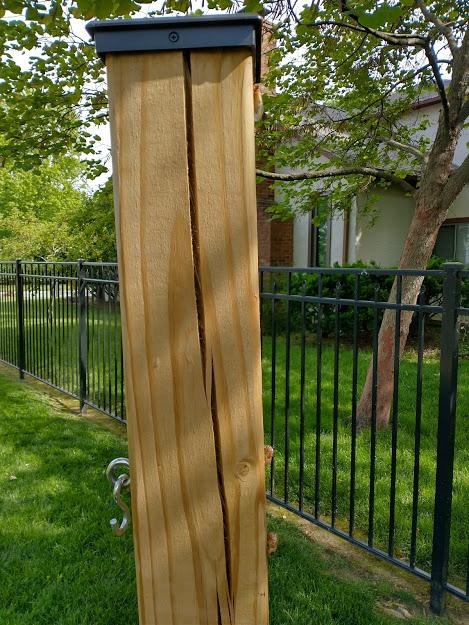
The common failure modes on bad cap installs come from three causes. Mismatched sizing leaves the cap loose, so wind pulls it off. Plastic caps on metal posts crack from freeze-thaw expansion. Caps installed without sealant or a press fit allow water to pool inside the post, which on uncoated steel posts leads to rust streaking down the visible face. Aluminum doesn’t rust the same way, but pooled water can still damage internal hardware and cause finish issues at the cap line.
Types of Post Caps and When to Use Each
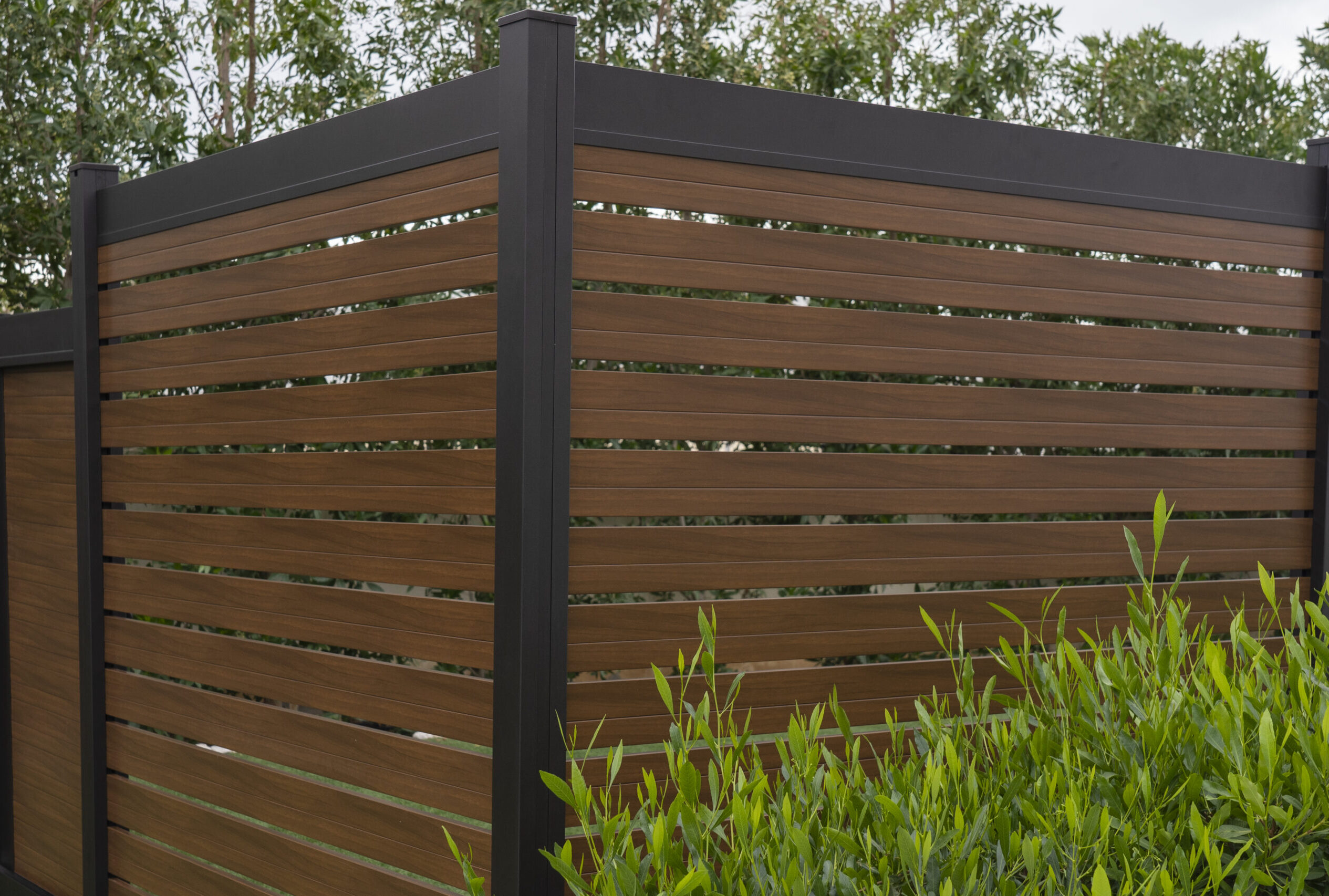
Post caps come in five practical formats for fence work. The right choice depends on post profile, panel system, finish requirement, and how the cap will be fastened. Here is the working breakdown contractors use when quoting.
Flat caps. The most common spec on modern aluminum systems. Flat caps sit flush with the post top, match the panel color exactly, and read as a clean architectural detail. They suit horizontal panel systems, contemporary residential, and commercial projects where the fence is meant to feel built-in rather than ornamental. PrimeAlux Privacy and Privacy Plus systems use flat caps as the standard.
Pyramid caps. Traditional shape with a four-sided peak. Used most often on ornamental aluminum runs where the design language is more residential-classic. Sheds water faster than flat caps because of the slope. Reads heavier visually, which works on shorter fences and ornamental pickets but can look dated on modern privacy panels.
Ball caps. Decorative spheres that mount on top of a flat or socketed post cap. Mostly aesthetic. Used on ornamental fence runs, gate posts, and entry pillars where the customer wants visual emphasis. Not common on contemporary privacy work.
Solar caps. Caps with an integrated LED and small solar panel on top. These are popular on residential fence runs along driveways and pool perimeters. They install the same way as flat caps but require post tops with internal clearance for the LED housing. Lifespan of the LED and battery is shorter than the fence itself, so these need to be planned as a wear item.
Internal sleeve caps. A cap that includes a friction sleeve which presses into the post cavity. This is the cleanest exterior look because the visible portion is just the flat top. Used most often on commercial spec where the cap must lock tight without external fasteners, and on automated gate posts where the top must accept a hinge bracket while still being weatherproofed at the very top.
For contractors quoting aluminum privacy fence panels or semi-privacy systems, flat or internal-sleeve caps are the default spec. Pyramid and ball caps are usually upcharges for ornamental projects, and solar caps are a homeowner add-on, not a system requirement.
Cap Materials: What Lasts and What Fails
Cap material decides whether the cap is still on the post and still color-matched at year ten. Five materials dominate the market, and they perform very differently in Canadian climate.
| Cap Material | Typical Lifespan | Color Stability | Common Failure Mode |
|---|---|---|---|
| Aluminum (powder-coated) | Matches fence lifespan | Holds color with the panel | None material when cap is sized correctly |
| Cast aluminum (decorative) | Matches fence lifespan | Holds color, slightly different sheen than extrusion | Heavier so loose caps can rattle in wind |
| Plastic / vinyl | 3 to 7 years before visible failure | Fades off-tone, drifts toward grey | Cracks in cold, splits at the rim, pops off |
| Wood | 2 to 5 years | Greys quickly, splits along grain | Rots, lifts off as the post moves, fasteners back out |
| Copper / brass | Long, with patina change | Patinas to brown, then green | Galvanic corrosion when paired with bare aluminum or steel posts |
The first practical takeaway is that on an aluminum fence system, the cap should also be aluminum. Matching the post material avoids two problems at once: the cap moves and contracts at the same rate as the post, and the coating system can be specified across both at the same time, so color match is exact. The Aluminum Association documents the corrosion-resistance and recyclability properties that make this material the spec choice for outdoor architectural systems where the cap is exposed at the highest point on the fence.
The second practical takeaway is plastic caps are a false economy on premium installs. Plastic looks fine in year one. By year three, the cap on the south-facing post is a different shade than the panel, and by year five it has cracked at the rim from freeze-thaw. The Government of Canada’s reference on atmospheric corrosion notes that exposure to UV, moisture, and temperature swings is the primary stressor on outdoor materials, which is exactly the cycle that takes plastic caps out.
Pro Tip
If a customer insists on copper or brass caps for a decorative look on an aluminum fence, isolate the dissimilar metals at the contact point. A nylon washer or a thin polymer pad between cap and post head prevents galvanic corrosion at the joint. The same isolation applies to stainless fasteners on aluminum, which is why most aluminum fence systems ship with aluminum or coated stainless hardware specifically chosen to avoid this contact.
Sizing the Cap to the Post
Cap sizing is the single most common spec error on field installs. Caps are sold by the post profile they are designed to fit, not by a generic dimension. The three measurements that decide whether a cap will fit are outer profile, post wall thickness, and internal clearance for any hardware that already sits in the post top.
For aluminum fence posts, the most common profiles are 2 inch by 2 inch, 2.5 inch by 2.5 inch, 3 inch by 3 inch, and 4 inch by 4 inch square sections. PrimeAlux uses a 3 inch by 3 inch primary post for most residential privacy panel installs and a heavier section for taller commercial runs. Caps are sized to the matching profile and ship with the panel order, which removes the guesswork at install.
The mistake to avoid is buying off-the-shelf caps from a hardware retailer to fit a manufacturer’s post. A cap that is even 1/16 of an inch loose will rattle in wind and eventually walk off the post. A cap that is too tight will not seat flush and the coating gets scuffed during installation. Always order the cap from the same manufacturer that supplied the post, and confirm the post profile against the spec sheet before quoting.
For tall commercial fences and gate posts, factor in internal hardware. Self-closing gate hinges, automation hardware, and electrical conduits often run inside the top of the post. The cap must clear all of that without sitting proud of the post face. Confirm internal hardware position before selecting the cap profile. Pool fence projects in particular often need to meet local building codes published in the ICC International Codes, which dictate self-closing and self-latching hardware that has to be cleared by any cap selected for the gate post.
Installation Methods That Hold Up
Three installation methods are in regular use on aluminum fence systems. Each has a place, and the right one depends on whether the cap needs to be removed in service.
Press fit. The cap has an internal sleeve sized to friction-fit into the post cavity. Tap into place with a rubber mallet. No fasteners visible. Used on most residential installs because the look is cleanest and the cap stays put. Removable for service if needed, but tight enough that it doesn’t move in wind. This is the standard method on PrimeAlux Privacy and Privacy Plus post tops.
Fastener-mounted. The cap is secured with one or two stainless or coated screws driven through the cap into the top of the post. Used on commercial spec, on tall fences, and on any post where wind exposure is unusually high. Fastener heads are color-matched or hidden under a small finish plug. More secure than press fit but requires opening the cap if internal hardware ever needs service.
Adhesive-set. A bead of structural adhesive on the inside of the cap before seating. Permanent, no fasteners visible, and the cap will not move at all. Used on solar caps to prevent theft, on ornamental ball caps to lock the decorative element, and on any install where the cap is not expected to be removed in the lifespan of the fence. Not recommended for caps over hardware-bearing posts because removal damages the cap.
For all three methods, the install detail that decides long-term performance is sealing. A small bead of polyurethane or silicone sealant rated for outdoor use, applied at the cap-to-post joint, blocks the last path for water entry. On press-fit caps the friction usually seals tight enough, but on tall posts and in regions with wind-driven rain, the bead is cheap insurance against a year-five callback.
Coating and Color Match
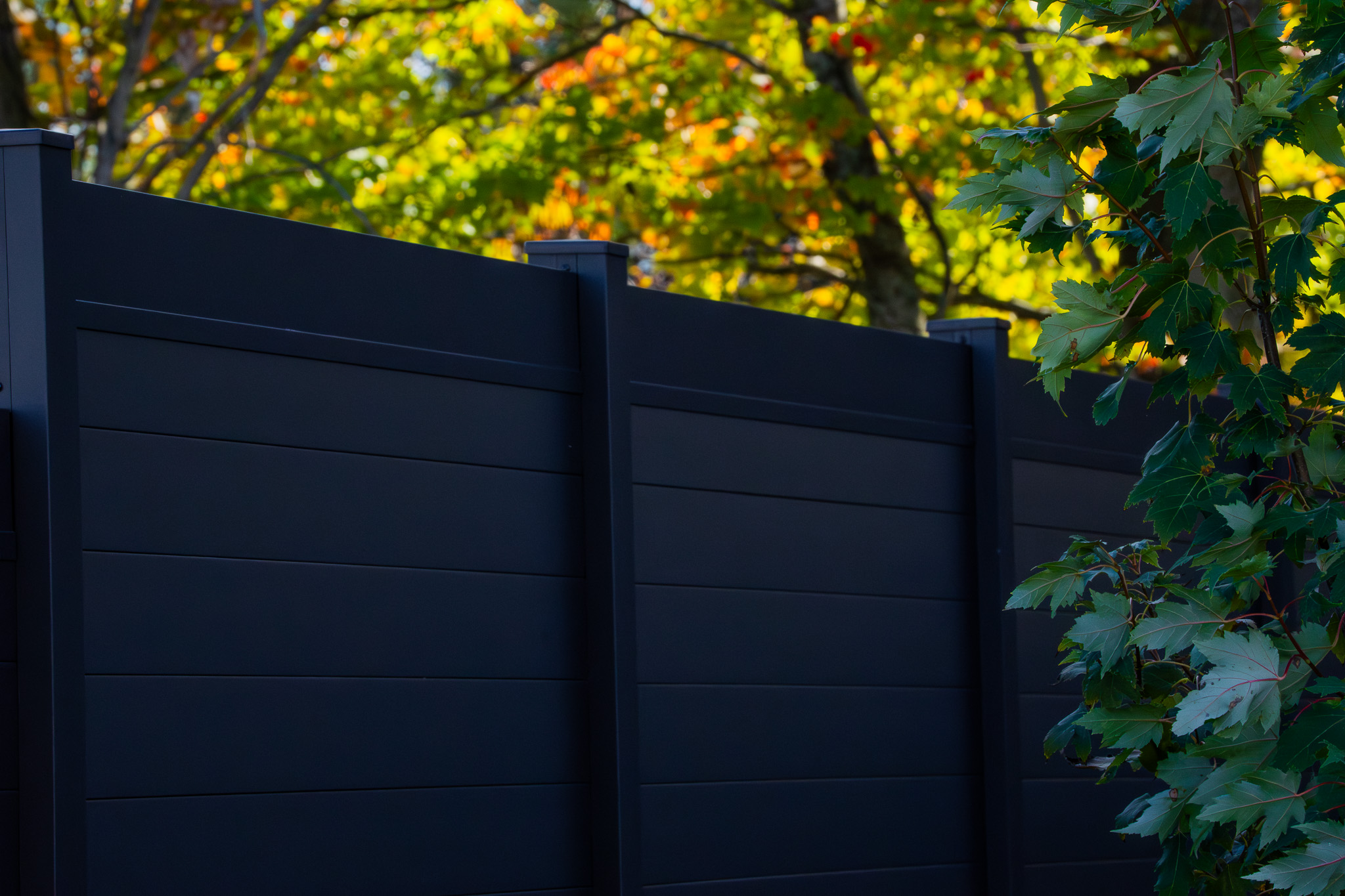
The cap finish has to match the panel finish. On wood-grain aluminum systems with a three-layer coating process, the cap goes through the same process as the post, so the finish is identical. On solid color systems with a powder-coated finish, the cap and post are coated in the same batch where possible, or to the same color reference standard.
The standards that govern coating performance for architectural aluminum are well-established. ASTM D3359 covers adhesion testing for the coating to the substrate. ASTM B117 covers salt spray exposure for corrosion resistance. ASTM D2244 covers color difference measurement, which is how a manufacturer confirms the cap color reads the same as the panel under standard lighting.
For contractors, the practical version is this: the cap should ship with the panel order, from the same manufacturer, with the same coating spec on the data sheet. If the project requires a custom color, confirm the custom run includes caps as well as panels. If the cap is sourced separately, the color match is unreliable in year five even if it looks fine on day one.
PrimeAlux uses a three-layer coating process across the entire system, including caps. Color stability is consistent across panel, post, and cap, which is the visual reason aluminum fence runs continue to read as a single system long after the install.
What Caps Cost in a Project Budget
For a typical residential aluminum fence and gate installation, post caps are a small line item. The cost lands somewhere between two and ten percent of the panel cost depending on the cap type. Flat caps are the most economical. Solar, ornamental ball, and custom-finished caps are upcharges.
For a homeowner pricing the project, the installed cost of a PrimeAlux fence is typically in the eighty to one hundred and twenty dollar per linear foot range in the Canadian residential market, including panel, posts, hardware, caps, and standard install. The cap is included in that figure on quoted projects. Contractors who break the cap out as a separate line item on a quote risk losing the homeowner to a competitor who quotes everything together at a comparable total.
For dealers and contractors quoting commercial projects, the cap spec affects quote accuracy because tall posts and oversized post profiles use larger and heavier caps. Confirm post profile and cap spec before pricing the run, especially on mixed-height fences and on gate posts which usually take a different cap than the inline posts.
Spec Checklist Before You Order
Before submitting a panel order, run through this short checklist to confirm the cap specification:
Confirm post profile in inches and post wall thickness. The cap is sized to the profile, not to a generic post family.
Confirm cap material. On aluminum systems, default to aluminum. Plastic caps are an immediate downgrade in lifespan and color stability.
Confirm coating spec matches panel. Three-layer wood-grain, single powder-coat, or anodized finish, the cap should match.
Confirm install method. Press-fit, fastener-mounted, or adhesive-set. The choice affects whether the cap can be opened later for hardware service.
Confirm gate post caps are specified separately if internal hardware sits in the post top. Standard inline caps may not clear automation, hinges, or conduits.
Confirm the cap is included with the panel order from the same manufacturer. Sourcing caps separately is the most reliable way to introduce a year-five color mismatch.
For contractors and dealers working with PrimeAlux, the standard spec sheet includes cap profile and coating in the panel package, which removes most of these decision points from the field. Quote the system as a whole and the cap is handled.
Frequently Asked Questions
Do you have to cap fence posts on an aluminum fence?
Yes. Capping protects the open top of the post from water entry, hides the cut edge, and finishes the column visually. On an aluminum fence specifically, the cap also protects internal hardware sitting at the post top and locks the panel system into a finished look. A fence install without caps reads as incomplete and exposes the most vulnerable point on the post to weather.
What size cap do I need for a 4×4 aluminum fence post?
A 4×4 aluminum post takes a 4 inch by 4 inch cap sized to the manufacturer’s specific post profile. Order the cap from the same manufacturer that supplied the post. Hardware-store caps labeled 4×4 are usually sized for wood posts and may not seat correctly on an aluminum extrusion because of the difference in wall thickness and post head shape.
Can you replace just the post cap if it gets damaged?
On press-fit and fastener-mounted caps, yes. The replacement cap should match the original post spec and finish. On adhesive-set caps the original cap usually has to be cut out, which can damage the post finish, so plan replacement carefully. For aluminum fence systems, manufacturer-supplied replacement caps are color-matched to the original run.
How do you keep post caps from blowing off in high wind?
Three steps. Confirm the cap is sized to the exact post profile so the press fit is tight. Add a bead of outdoor-rated polyurethane or silicone sealant inside the cap before seating. On exposed sites, switch from press fit to fastener-mounted with one or two stainless screws. PrimeAlux post caps are spec’d to stay seated under the same wind exposure conditions the panel system is rated for.
Are solar fence post caps worth it?
For lighting along a driveway, pool deck, or walkway, yes. The light output is modest but useful for marking a property line at night. The trade-off is lifespan: the LED and battery in a solar cap will not match the lifespan of the fence itself, so plan for replacement of the cap unit roughly every three to seven years depending on the product. The fence and post stay in service.
What happens if you skip caps entirely?
Water enters the post cavity and pools at the bottom of the section. On wood and uncoated steel posts this leads to rot and rust. On aluminum, the post itself does not rust the same way, but pooled water can damage internal hardware, freeze in winter and stress the post wall, and leave finish marks at the cap line. The visual result is also incomplete: the cut edge of the post is visible from any sightline above the panel, which on a premium install is the wrong impression for a customer to be left with.
Do post caps affect fence wind ratings?
Indirectly. The cap is not the load-bearing element on the fence, the post and panel are. PrimeAlux panels are wind-load tested to 220 km/h. The cap does not change that rating. What the cap does affect is whether the cap itself stays attached in high wind. Properly sized and seated caps remain in place under the same conditions the fence is rated for.
Can you mix cap styles on the same fence?
Mixing cap styles is sometimes used as a design choice, with decorative ball caps on the gate posts and end posts, and flat caps on the inline posts. This works visually if the materials and color match across all caps. Mixing materials, like brass caps on aluminum posts on inline runs, is usually a mistake because the materials age at different rates and the run reads as inconsistent within a few years.
Specifying Caps as Part of the System
Capping fence posts is one of the smallest line items on an aluminum fence project and one of the easiest to get wrong if it is treated as an afterthought. The fix is to spec the cap with the panel order, default to the same material and coating as the post, size it to the exact post profile, and pick the install method that matches how the customer will use the fence over time.
For contractors, dealers, and specifiers working with PrimeAlux, every panel order includes the matching cap as part of the system, with the same three-layer coating process applied across panel, post, and cap. That removes the most common failure points and keeps the project reading as a complete architectural run for the full life of the fence.
For a quote on a specific project, including post caps as part of the system, contact PrimeAlux directly through the aluminum gate page, the privacy panel page, or the main contact page. For Canadian residential projects, see the matching privacy fence options or the gate selection on primealux.ca. For full performance documentation including the ASTM E84 fire test results, the test page covers what dealers and architects request most often. Other articles in the contractor library are at the main blog hub.
p
