
Gate Hardware Kit: Everything You Need for a Professional Gate Installation
- A proper gate hardware kit includes hinges, a latch or lock, a closer (if required), and any frame or post anchoring hardware.
- Material compatibility matters: always match hardware to the gate and post material to avoid galvanic corrosion.
- Hinge selection depends on gate weight, width, and swing direction — under-spec’d hinges are the leading cause of gate sag.
- Adjustable hinges save call-backs on residential jobs; heavy-duty commercial hinges are non-negotiable on gates over 100 lbs.
- PrimeAlux aluminum gate systems include matched hardware designed for the panel system — no guesswork on fitment.
Gate hardware failures account for the majority of fence-related callbacks in the field. A gate that sags, swings open on its own, or seizes in winter was almost always set up with the wrong hardware kit from day one — not because the installer cut corners, but because not all gate hardware kits are designed for the material, weight, and climate of the job.
This guide covers what belongs in a professional gate hardware kit, how to select components for different gate types, what to watch for on aluminum gate installations specifically, and how to source hardware that will last the life of the fence system. Whether you’re a contractor outfitting a standard residential gate or a commercial installer speccing a wide commercial entry point, the component choices come down to the same core decisions.
What a Gate Hardware Kit Actually Includes
A complete gate hardware kit covers four functional categories: hinges, latches or locks, closers (where applicable), and structural anchoring. Most off-the-shelf kits cover only two or three of these and leave contractors to source the rest separately — often from a different manufacturer with different tolerances.
The four core components are hinges (which carry the gate’s weight and control swing movement), a latch or lock (which holds the gate in position and provides access control), a closer (which returns the gate to a closed position automatically, required on pool enclosures and many commercial gates), and the post-side anchoring hardware that connects everything to the fence post or wall.
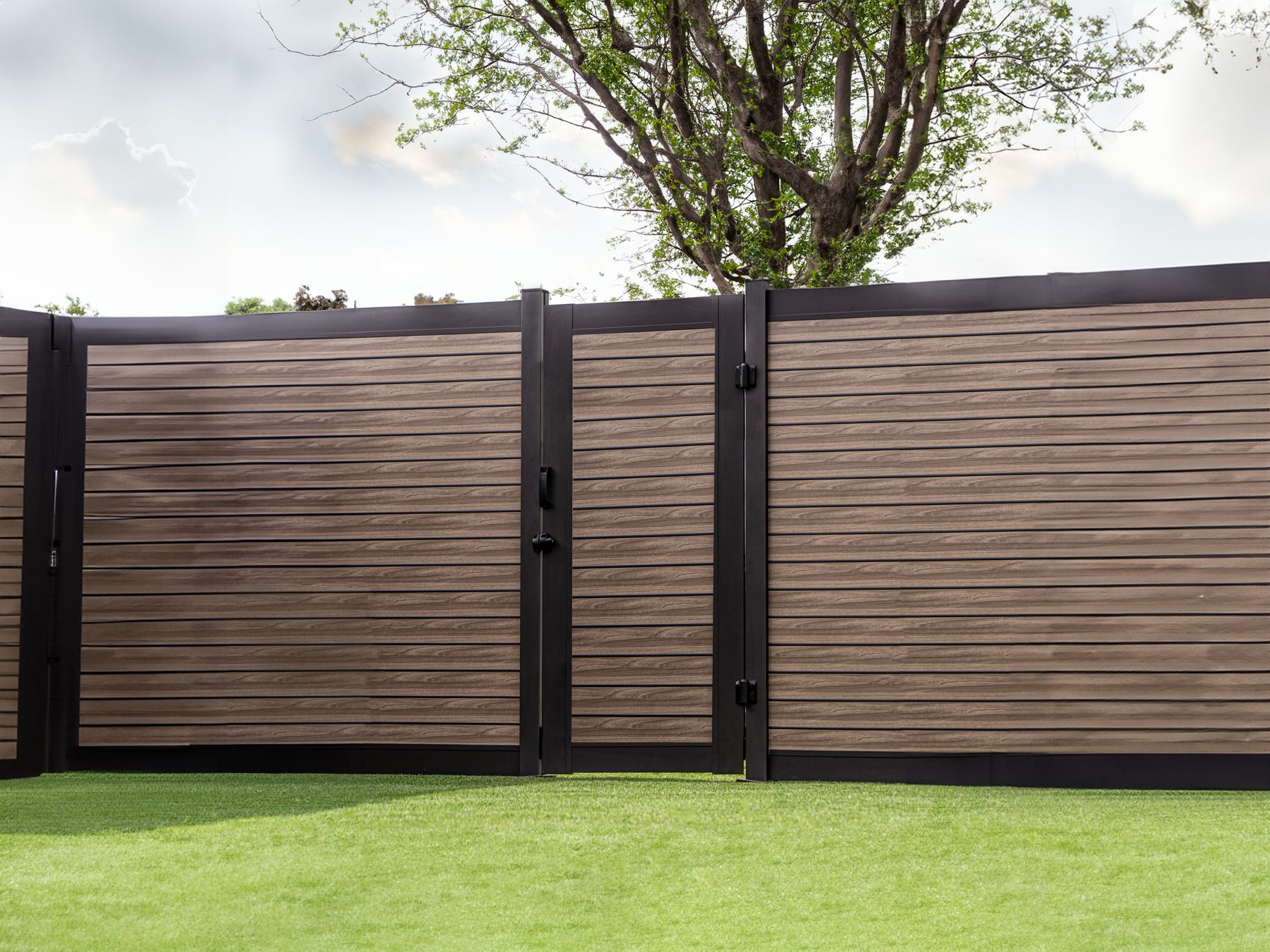
For aluminum gate systems like those from PrimeAlux, a matched kit matters more than it might on a steel or wood gate. Aluminum’s thermal expansion rate differs from steel, and mixing materials in a hardware kit — stainless hinge barrels with steel pins, for example — creates a contact point where galvanic corrosion begins. A properly specified aluminum gate hardware kit uses compatible alloys throughout and is sized for the specific gate dimensions being installed.
Hinge Selection: Where Most Hardware Failures Start
Hinges carry the gate’s full weight across millions of open-and-close cycles. Getting them wrong is the single most common source of gate sag, binding, and warranty disputes on residential jobs.
The primary variables in hinge selection are gate weight, gate width, number of hinges, and swing direction. As a baseline, a 4-foot wide aluminum gate in the 40–60 lb range requires a minimum of two heavy-duty hinges rated to carry at least 1.5x the gate’s actual weight. Wider gates — 6 to 8 feet — and heavier panel configurations should run three hinges, with the center hinge positioned slightly above the midpoint to account for the lever effect of the outer swing.
For aluminum gates, look for hinges with a stainless steel pin and an aluminum or marine-grade casting. Avoid standard steel hinges regardless of coating — the coating degrades at the contact surface with aluminum over time, and you’ll see rust staining on the gate frame within a few years in Canadian and northern US climates.
Adjustable hinges — those with multi-axis adjustment for height, depth, and side-to-side alignment — are worth the added cost on residential projects. They allow you to fine-tune the gate in the frame after installation without removing and re-drilling. On commercial projects where gates are used dozens of times daily, non-adjustable heavy-duty butt hinges or weld-on hinges are typically more appropriate.
Latch and Lock Options by Application Type
The latch or lock is the component that gets touched most often — and the one that fails earliest when under-spec’d for the application. Hardware selection here depends on three factors: whether the gate needs to be operable from both sides, whether it needs to lock (and with what level of security), and whether it needs to self-latch automatically.
For standard residential backyard gates, a gravity latch with a thumb-lift is the most common choice. These are simple, reliable, and easy for homeowners to operate. For pool enclosures subject to local code requirements, the latch must be self-closing and self-latching with the release mechanism positioned at the top of the gate or on the pool-side only. Always confirm the local pool barrier bylaw for the jurisdiction — Ontario, Quebec, and BC each have specific requirements that differ from the national model code defaults.
For front yard gates or properties that need actual keyed access control, a deadbolt-style gate lock or a padlock-compatible cane bolt setup is appropriate. On commercial properties, consider whether the gate will be integrated into an access control system — in that case, the hardware kit needs to accommodate an electric strike or magnetic lock receiver, and the gate closer becomes a code-required component rather than an optional add-on.
Gate Closers: When They’re Required vs. When They Add Value
A gate closer returns the gate to the closed and latched position after each use. They are legally required on pool gates in most Canadian provinces and many US states. Outside of pool applications, they’re a quality upgrade that reduces wear on latches, prevents gates from being left open in high-traffic commercial settings, and is often requested by property managers on multi-unit residential projects.
The two main types are hydraulic closers (like door closers mounted on the gate frame) and spring-loaded closers integrated into one of the hinges. Spring-loaded hinges are the simpler installation — they replace one of the standard hinges in the hardware kit and require no separate mounting. Hydraulic closers provide more precise control over closing speed and are better suited for heavier commercial gates where a slamming gate would cause hardware fatigue.
In cold climates, choose a hydraulic closer rated for the full temperature range the gate will experience. Standard hydraulic closers lose closing force below -20°C — the oil thickens and the spring can’t overcome it. Look for products rated to -40°C for installations in Alberta, Saskatchewan, or northern Ontario where extreme cold is a realistic operating condition.
Hardware Comparison: Aluminum Gate vs. Steel Gate vs. Vinyl Gate
| Gate Type | Recommended Hinge Material | Max Practical Width (Residential) | Hardware Kit Lifespan | Common Failure Point |
|---|---|---|---|---|
| Aluminum (PrimeAlux) | Stainless/aluminum alloy | 8 ft (custom wider available) | 15–25+ years with matched hardware | Galvanic corrosion if steel hardware mixed in |
| Galvanized Steel | Heavy-duty steel or galvanized | 10 ft (commercial) | 10–15 years (coating dependent) | Rust at weld points and pin surfaces |
| Vinyl/PVC | Aluminum or powder-coated steel | 4–5 ft (limited by frame rigidity) | 5–10 years (frame cracks before hardware) | Frame cracking at hinge mount point in cold |
| Wood | Stainless or heavy galvanized | 4–6 ft (heavier, more sag-prone) | 3–8 years (wood expansion warps frame) | Hinge screw pullout as wood deteriorates |
Post-Side Anchoring: The Part Most Kits Get Wrong
The hinge-side post is the anchor for the entire gate system. If the anchoring hardware that connects the hinge to the post is undersized, or if the post itself isn’t set deep enough, the gate will migrate out of plumb regardless of how well the hinges are spec’d.
On aluminum systems using surface-mount hinges attached to extruded aluminum posts, use the manufacturer’s specified lag bolts or through-bolts — never wood screws or drywall anchors. The wall thickness of an extruded aluminum post is typically 3–5mm, and improper fasteners will strip or crack the post wall under repeated gate swing loads.
For in-ground post installations, PrimeAlux specifies a minimum 3 ft burial depth for fence posts, with gate posts set at least 6 inches deeper than standard fence posts to account for the additional lateral and torsional loads a gate produces. In frost-susceptible soils, posts should be set below the local frost line — 4 ft in most of Ontario, deeper in Manitoba, Saskatchewan, and Alberta. Setting a gate post above frost line is the most common reason for a gate that works fine at installation and then goes out of alignment by spring.
Sourcing a Gate Hardware Kit That Matches Your Fence System
The most reliable approach is to source the hardware kit from the same manufacturer as the gate and fence system. Matched kits are engineered for the specific extrusion profiles, post wall thicknesses, and design loads of that system — which eliminates the guesswork around fitment and compatibility.
When sourcing from a third-party hardware supplier, ask for the load rating of every hinge in the kit (not just the “maximum gate weight” claim on the box), the base alloy of all components, and whether the closer is rated for the temperature range the installation will see. Kits without published specifications on these points are typically residential-grade at best and should not be used on commercial projects or wide residential gates.
PrimeAlux aluminum gate systems are available as complete kits — panels, posts, and hardware specified together. For contractors who are sourcing hardware separately to match an existing aluminum fence system, the PrimeAlux gate page covers compatible system configurations and includes the panel specifications you need to spec hardware correctly. The Canadian residential gate page covers the residential panel sizing options for jobs where the client is the end homeowner.
For broader context on the fence system the gate is part of, the privacy fence panel specs, semi-privacy fence specs, and Privacy Plus panel details give you the post sizing and rail configuration to match hardware properly.
Common Gate Hardware Mistakes Contractors Make
After seeing what generates callbacks on fence jobs, the pattern is consistent. Hardware failures almost always trace back to one of five mistakes: mismatched materials between gate and hardware; hinges sized for weight only without accounting for width and swing frequency; latches that aren’t self-latching on gates that require it by code; failing to account for frost line depth on the hinge-side post; and using a standard-duty closer on a commercial gate that opens 50 or more times per day.
A sixth mistake that’s less obvious: installing a swinging gate that opens over a slope. If the gate swings open downhill, the bottom corner of the gate will drag into the ground within a season or two as the hinge-side post settles. Always check the clearance arc before finalizing the swing direction, and if the site dictates uphill swing, spec the hinges with a slight upward cant or use a sliding gate system instead.
The sliding gate hardware guide on this blog covers the alternative in detail, including track sizing and roller selection for aluminum sliding systems.
Installation Checklist for a Gate Hardware Kit
Before you begin the gate hardware install, confirm the following: the hinge-side post is plumb in both axes (not just visually — use a level); the post has been given adequate cure time if concrete was used; the gate frame diagonal measurement is equal on both diagonals (confirming it’s square); and all hardware components are compatible in material and load rating.
During installation: set both hinges before attaching the latch side, pre-drill all pilot holes to the correct diameter for the fastener being used (over-drilling weakens the post wall; under-drilling risks splitting or cracking), and hang the gate before attaching the latch to confirm the gate swings freely through its full arc without binding.
After install: cycle the gate 20 times and re-check hinge fastener tightness. Hardware that was properly torqued at install will sometimes loosen slightly during the first cycles as the bearing surfaces seat in. This is normal and expected — catching it before you leave the job saves a call-back. Leave the client with the hardware manufacturer’s care instructions, particularly for the closer mechanism, which may require seasonal adjustment on hydraulic models.
For more on the fence system side of a gate installation, the aluminum fence gate guide and the fence post sizing and installation guide cover the structural elements in detail. The ASTM E84 fire rating documentation is useful if the gate installation is on a commercial property with fire code requirements — aluminum gate panels that match the fence system carry the same Class A rating.
Frequently Asked Questions
What hardware is included in a standard gate hardware kit?
A standard gate hardware kit typically includes two or three hinges, a latch or lock, and mounting fasteners. Better kits also include a gate closer and post-side anchoring hardware. Always verify what’s included before ordering — many kits marketed as “complete” leave out the closer or the wall anchors.
How many hinges does an aluminum gate need?
A standard 4-foot wide aluminum gate requires a minimum of two heavy-duty hinges. Gates 5 feet wide or heavier than 60 lbs should use three hinges. For double gates or gates over 6 feet wide, a third hinge at the midpoint helps distribute the load and prevent sag over time.
Can I use standard steel hardware on an aluminum gate?
Not recommended for long-term performance. Dissimilar metals in contact with each other create a galvanic cell, and in wet conditions — which all outdoor gates experience — the aluminum or steel at the contact point will corrode. Use stainless steel or aluminum-alloy hardware specifically rated for use with aluminum fence systems.
What is the minimum post depth for a gate post?
Gate posts should be set at least 6 inches deeper than standard fence posts to handle the additional lateral and torsional loads a gate generates. For most residential fence systems in Ontario, that means a minimum of 3.5 to 4 ft of burial depth. In regions with deep frost lines — Manitoba, Saskatchewan, northern Alberta — go deeper to keep the post footing below the frost line.
Is a gate closer required by code in Canada?
Gate closers are required on pool barrier gates in all Canadian provinces that have adopted pool enclosure regulations. Ontario, Quebec, and BC each have specific requirements. Outside of pool applications, closers are not generally code-required on residential gates but are frequently required on commercial properties by property managers and insurers.
What causes a gate to sag after installation?
Gate sag after installation typically traces to one of three causes: hinges undersized for the gate weight or width; the hinge-side post not set to adequate depth (causing the post to tip under load); or a gate frame that was not perfectly square at install. Adjustable hinges can correct minor sag in the first category, but post movement requires resetting the post.
What gate hardware works with the PrimeAlux aluminum fence system?
PrimeAlux aluminum gate systems are available as matched kits with panel, post, and hardware specified together. For contractors sourcing hardware separately, the key is to match hinge mounting points to the post wall profile and to use hardware rated for the gate’s weight with appropriate material compatibility. Contact PrimeAlux directly for hardware compatibility guidance on specific configurations.
How do I choose between a swing gate and a sliding gate for a wide opening?
For openings up to 8 feet, a double swing gate with a center drop rod is typically the most cost-effective solution. For openings over 8 feet, or where swing clearance is limited by the approach (driveways with vehicles close to the gate), a sliding gate is often the better choice. Sliding gates require a track system and cantilever hardware but eliminate the swing arc issue entirely.
The Right Hardware Kit Makes the Gate Last
A gate is the highest-wear component in any fence system. It moves every day, carries its own weight through a full swing arc, and takes the brunt of wind loading that a fixed fence panel simply transfers to the posts. The hardware kit that connects all of that movement is where the system either holds together or starts breaking down.
Contractors who use matched hardware kits — hinges, latches, closers, and anchors specified for the specific gate weight and width — see dramatically fewer callbacks. The difference isn’t the brand or the price point; it’s whether the components were selected for the actual job conditions or simply grabbed off the hardware store shelf.
If you’re specifying or supplying aluminum fence and gate systems, PrimeAlux offers complete gate system documentation and direct contractor support. Visit the aluminum gates page for current specifications, or contact the team directly to discuss project requirements and bulk supply options. For Canadian residential projects, the PrimeAlux CA gate page has the residential configurations most commonly spec’d for Ontario, BC, and Alberta installations.
