
Metal Fence Posts: Steel vs Aluminum vs Galvanized Compared
The post is the foundation of every fence line. Get the post selection wrong and it does not matter how good the panels look. You will be dealing with rust, heaving, or structural failure within a few years, and the callback will fall on you. Metal fence posts come in three main categories: aluminum, galvanized steel, and hot-dip galvanized steel. Each performs differently under Canadian soil and climate conditions, and each carries a different installed cost and maintenance profile.
This guide covers what contractors and installers need to know before specifying metal fence posts on a residential or commercial job: material comparison, sizing, installation depth, cost, and the conditions where each post type actually holds up over time.
What types of metal fence posts are available?
Metal fence posts are available in three main materials: aluminum, electrogalvanized steel, and hot-dip galvanized steel. A fourth option, powder-coated steel, also appears in the market. It offers less corrosion protection than true galvanizing or aluminum unless the substrate is properly primed and the coating is applied at commercial thickness.
Aluminum posts are extruded from 6000-series aluminum alloy, which delivers solid structural strength at roughly one-third the weight of steel. Aluminum resists corrosion without any surface treatment because it forms a stable oxide layer on contact with air. That oxide layer reforms immediately when scratched. Damage from handling or installation does not create a corrosion entry point the way a scratch on painted or galvanized steel does.
Galvanized steel posts are mill-rolled steel coated with zinc, applied either by electrolytic deposition (electrogalvanized) or by immersion in molten zinc (hot-dip galvanized). Hot-dip galvanizing produces a thicker, more durable zinc layer, typically 45 to 65 microns, compared to 5 to 15 microns for electrogalvanized finishes, according to the American Galvanizers Association. That coating thickness difference matters significantly in high-moisture or road salt environments.
Here is how the main post types compare across the factors contractors care about most:
| Post Type | Corrosion Resistance | Weight vs Steel | Typical Lifespan (Canada) | Maintenance Required |
|---|---|---|---|---|
| Aluminum | Excellent (no coating needed) | ~3x lighter | 25+ years | None |
| Hot-Dip Galvanized Steel | Good (zinc barrier, degrades over time) | Baseline | 15-25 years (inland) | Inspect coating every 5-7 years |
| Electrogalvanized Steel | Moderate (thinner zinc layer) | Baseline | 8-15 years | Regular inspection; patch if scratched |
| Powder-Coated Steel | Variable (not true corrosion protection) | Baseline | 5-15 years | Inspect annually; repaint when coating fails |
dges and weld points where coverage is absent.
What post sizes do contractors use for aluminum fencing?
Post sizing depends on fence height, panel weight, wind exposure, and post spacing. For most residential aluminum privacy fence installations, the standard is a 2.5-inch or 3-inch square aluminum post at 8-foot on-center spacing. For taller systems, heavier panels, or exposed sites, a 4-inch square post is the right spec.
The PrimeAlux aluminum fence system is wind load tested to 220 km/h. That rating is based on correct post sizing, adequate burial depth, and proper concrete footings. Installing undersized posts or spacing them beyond the tested configuration compromises wind load performance regardless of panel quality. Testing was conducted against ASTM standards, and the fire rating (Class A, Flame Spread Index 0, Smoke Developed Index 50 under ASTM E84) applies to the panel system as a whole including post-to-panel connections. See the PrimeAlux fire and performance test page for full system test data.
Corner posts and gate posts always step up one size from line posts. For a standard 6-foot privacy fence using 3-inch line posts, corner and gate posts should be 4-inch minimum, more for wide gate spans or automated gate applications. The aluminum gate system pages include gate post sizing guidance by gate type and span.
| Fence Height | Typical Line Post | Corner and Gate Post |
|---|---|---|
| Up to 4 ft | 2″ x 2″ or 2.5″ x 2.5″ | 2.5″ x 2.5″ |
| 5-6 ft (standard privacy) | 2.5″ x 2.5″ or 3″ x 3″ | 3″ x 3″ or 4″ x 4″ |
| 7-8 ft (privacy plus or pergola) | 3″ x 3″ | 4″ x 4″ |
Always confirm post sizing with the panel manufacturer before ordering. Proprietary fence systems may specify minimum post dimensions to maintain warranty coverage and system performance ratings under wind and structural loading.
For full installation guidance including post sizing by application, see Aluminum Fence Posts: Sizing, Depth and Installation for Contractors.
How deep should metal fence posts be set in Canadian soil?
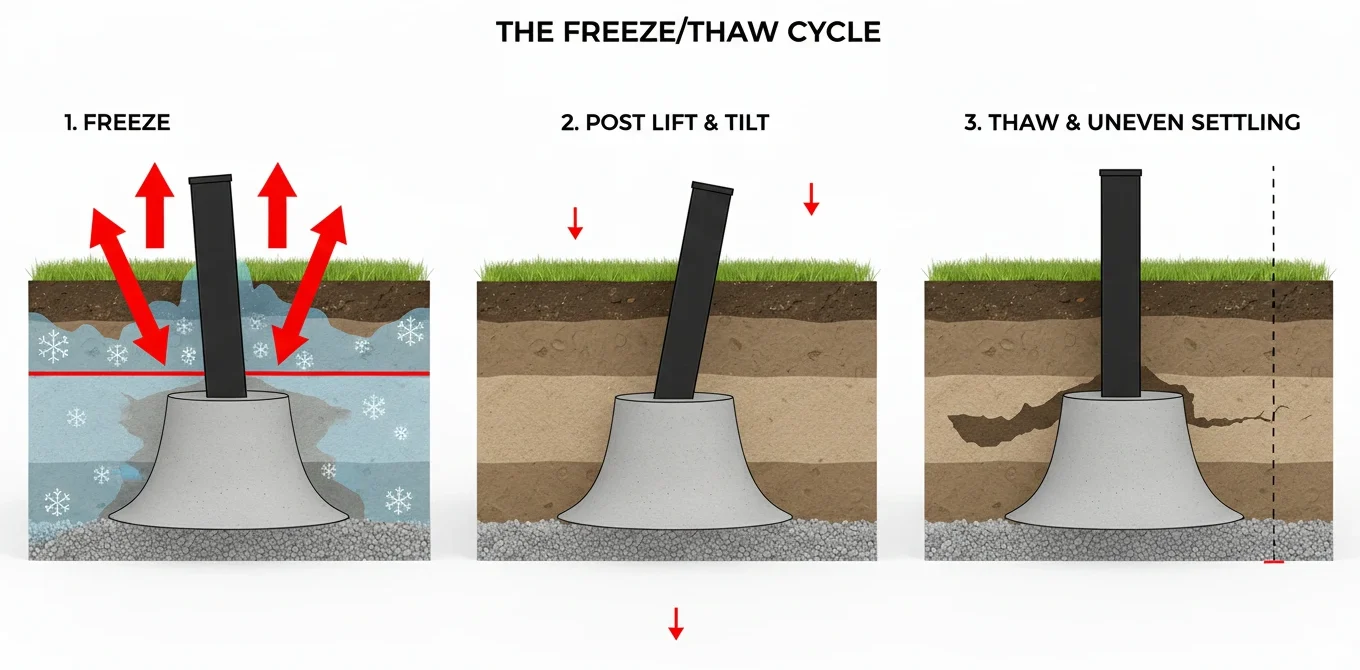
Metal fence posts must extend below the local frost line to prevent frost heaving. Set at the correct depth, a properly poured concrete footing stays anchored through freeze-thaw cycles. Set too shallow, the footing heaves seasonally and the fence line shifts over time. The burial depth required varies significantly across Canada, from roughly 0.5 metres on the BC coast to over 2.4 metres in parts of northern Ontario and the Prairie provinces, according to Natural Resources Canada frost depth data.
For most southern Ontario and major urban installations, a burial depth of 3 feet (approximately 0.9 metres) clears the local frost line and provides adequate holding in standard soils. This is the minimum burial depth specified for PrimeAlux aluminum fence post installations. In regions with deeper frost penetration, confirm local requirements before setting footings.
posts cost more upfront. Whether that premium makes sense depends on soil conditions, the job environment, and what the contractor is willing to stand behind over time. In aggressive soil conditions, high moisture, road salt exposure, or acidic pH, galvanized steel posts that cost less upfront can cost significantly more when callbacks and replacements are factored over a 10 to 15 year window. That math shifts fast when you add a single replacement job. For contractors who stand behind their work, post material is a risk decision as much as a cost decision.
For system posts matched to PrimeAlux aluminum privacy panels, contractor and dealer pricing is available through the PrimeAlux network. See primealux.com/privacy-aluminum-fence-panels/ for panel and post system specs, or contact primealux.com directly for contractor pricing. Canadian homeowners can view product options at primealux.ca.
For more on why post material choice matters across full privacy fence system builds, see Privacy Fence with Metal Posts: Why Aluminum Posts Outperform Wood and semi-privacy aluminum fence specifications for post requirements by panel type.
Frequently asked questions about metal fence posts
Are metal fence posts better than wood posts?
Metal fence posts outlast wood posts in Canadian conditions. Wood posts rot underground, particularly in wet clay soils, often within 7 to 10 years regardless of treatment. Aluminum posts do not rot, are not affected by insects, and do not warp or crack through freeze-thaw cycles. Any fence system carrying a wind load rating or fire performance rating requires metal posts to maintain those specifications.
Do aluminum fence posts rust?
Aluminum does not rust. Rust is iron oxide, and aluminum contains no iron. Aluminum forms a natural surface oxide layer when exposed to air, but this layer is stable and protective. Unlike steel, aluminum’s oxide layer reforms within seconds when scratched, which means installation handling damage does not create a corrosion vulnerability the way it does with coated or painted steel.
What is the difference between schedule 20 and schedule 40 fence posts?
Schedule refers to wall thickness. Schedule 40 posts have thicker walls and higher load-bearing capacity than schedule 20. For residential light-duty applications, schedule 20 is common. For commercial fencing, high-wind zones, or gate posts supporting heavy or automated gates, schedule 40 is the more appropriate specification. Always confirm schedule requirements when specifying against a structural code or wind load standard.
How deep should metal fence posts be installed in Canada?
Set metal fence posts below the local frost line. For most Canadian residential installations, a minimum burial depth of 3 feet (approximately 0.9 metres) clears the frost line and provides adequate anchoring in standard soils. In regions with deeper frost penetration, confirm local frost depth requirements. Always place gravel drainage at the base of the hole before pouring concrete to reduce frost heave pressure.
Can you use galvanized steel posts with aluminum fence panels?
You can mix materials, but galvanic corrosion is a risk wherever aluminum and steel make direct metal-to-metal contact. Use neoprene or plastic isolation washers at all connection points to prevent an electrolytic pathway between the two metals. For consistent system performance and matching finish, aluminum panels work best paired with aluminum posts from the same manufacturer.
rable, but that situation is narrower than the market tends to suggest.
For contractors building with aluminum fence systems, a matched aluminum post and panel combination keeps things simple. One material, one finish standard, one manufacturer to deal with if anything needs attention after the job is done.
For specs on PrimeAlux privacy and semi-privacy panel systems along with compatible post configurations, start at PrimeAlux privacy aluminum fence panels. For higher-load commercial builds, see the commercial aluminum fence guide. For horizontal-style systems, see horizontal fence panels contractor guide. Questions on finish durability and powder coating on post systems are covered in Aluminum Fence Powder Coating: What Contractors Need to Know.
