
Metal fence panels span more materials, styles, and price points than any other fence category. For contractors, installers, and distributors choosing what to spec, stock, or recommend, the right call comes down to a few straightforward questions: which material performs in a Canadian climate, which system saves labor on installation, and which product your client will still be happy with in 15 years.
This guide covers every major metal fence panel type, how they compare on durability, what they cost installed, and what to verify before sourcing from a supplier.
What are metal fence panels?
Metal fence panels are pre-fabricated fence sections made from aluminum, steel, galvanized wire, or wrought iron, installed between posts set in concrete with panels spanning 6 to 8 feet between post centers. Unlike wood or vinyl systems, metal panels are engineered for measurable structural performance: rated for wind loads, fire resistance, and long-term material stability. For contractors and distributors, the category question is not whether to spec metal, but which metal and why.
The global metal fencing market was valued at over USD $18 billion in 2023 and is projected to grow at a compound annual growth rate of 4.8% through 2030, according to Grand View Research, driven largely by aluminum’s growing share of residential and light commercial applications as contractors move away from painted steel and maintenance-heavy wrought iron.
The four types of metal fence panels and how they compare
There are four main metal fence panel families a contractor or distributor will encounter. Each has a different weight class, corrosion behavior, maintenance profile, and price point. The table below covers the core performance differences under Canadian conditions.
| Material | Weight (typical panel) | Corrosion risk | Lifespan (Canadian climate) | Maintenance | Best applications |
|---|---|---|---|---|---|
| Aluminum | 15–25 lbs | None (inert metal) | 25+ years | Zero | Residential, commercial, pool, architectural |
| Steel (powder coated) | 35–60 lbs | Rust once coating is compromised | 10–20 years with maintenance | Periodic inspection, repainting | Industrial, high-load, security perimeter |
| Wrought iron | 40–70 lbs | High (weld points and joints rust first) | 15–25 years with maintenance | Rust treatment, repainting every 3–5 years | Ornamental, heritage, high-security |
| Galvanized chain-link | Variable | Low (galvanized coating) | 15–20 years | Low | Industrial, utility, temporary |
Aluminum has become the contractor default in Canadian residential and mid-commercial markets for a straightforward reason: it delivers the structural performance of metal without rust risk, weight penalty, or ongoing maintenance cost. The other three materials each serve specific use cases, but they require upfront acceptance of either ongoing cost (steel, wrought iron) or a trade-off on privacy and appearance (chain-link).
Why aluminum panels outperform every other metal fence panel type
Aluminum outperforms other metal fence panel materials on the three factors that drive long-term contractor reputation and client satisfaction: corrosion resistance, installed weight, and verified structural performance. The gap is not marginal.
Corrosion resistance is absolute. Aluminum is an inert metal. It does not rust, it does not oxidize into surface damage, and it does not require repainting. In Canadian climates where freeze-thaw cycling, road salt spray, and prolonged moisture create sustained corrosion pressure on steel and iron, this distinction is structural, not cosmetic. A steel fence that was properly installed with quality powder coating will still develop rust at weld points, cut edges, and fastener penetrations within 5 to 10 years. Aluminum panels simply do not have this failure mode.
Weight directly affects install labor. A standard aluminum privacy panel weighs 15 to 25 lbs. A comparable steel panel runs 35 to 60 lbs. That weight difference compounds across a full residential job: faster panel handling, fewer crew-hours, and lower risk of jobsite injury. For a contractor running multiple crews, the labor savings from aluminum panels versus steel are real and repeatable.
Documented performance specs are available. PrimeAlux aluminum fence panels carry a Class A fire rating under ASTM E84 (Flame Spread Index 0, Smoke Developed Index 50) and are wind-load tested to 220 km/h. These are independently verified test results that contractors can present to commercial clients, building departments, and HOAs. These are independently verified test results, not marketing claims. In a market where most fence suppliers offer wind resistance claims with no test data behind them, having real numbers to show is a meaningful differentiator.
According to the Aluminum Association, use of aluminum in outdoor architectural applications has grown by over 30% in the past decade, with fence and railing systems representing one of the fastest-growing sub-categories as contractors recognize the total cost advantage over steel.

Privacy, semi-privacy, and decorative: the three metal fence panel configurations
Metal fence panels are available in three primary privacy configurations. Which one you specify depends on the project’s privacy requirement, wind exposure, and any applicable municipal or HOA guidelines.
Privacy panels use a continuous solid-slat construction with no gaps between slats. They deliver full visual privacy, the highest acoustic performance, and maximum wind resistance. PrimeAlux privacy panels come in sizes from 4×6 up to 8×8 feet. The Privacy Plus line adds a foam-core construction to each slat for added rigidity and acoustic dampening, which is a meaningful upgrade on projects where noise reduction is part of the value proposition.
Semi-privacy panels use spaced slats, typically 1 to 2 inches apart, to allow air movement and partial sightlines while maintaining a clear physical boundary. These are common for pool enclosures, commercial properties where code requires some visual openness, and sites where the wind load of a fully solid panel would be an issue.
Decorative and ornamental panels use open picket-style designs. Aluminum ornamental panels are a direct functional replacement for wrought iron in heritage and high-end residential applications, without rust risk or the weight that makes wrought iron installation labor-intensive.
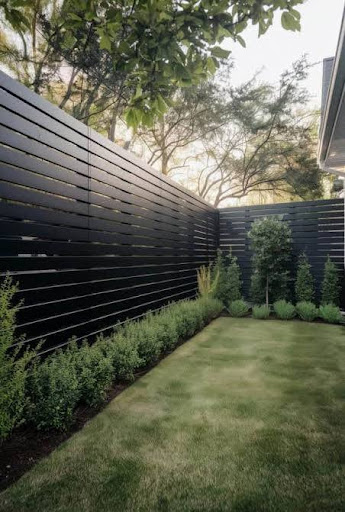
For a full breakdown of horizontal fence panel systems, which represent a growing share of premium residential installs. The Privacy Plus line covers both the structural and aesthetic requirements that contractors are increasingly asked to meet.
Specifying metal fence panels for commercial projects
Commercial metal fence panel work requires tighter spec documentation than residential. Several parameters should be confirmed before quoting, both to protect your margin and to ensure the installed product performs as specified.
Post spacing and panel span. Most aluminum fence systems are designed for 6-foot on-center post spacing, with some systems extending to 8 feet. Spacing beyond the system design spec creates flex points that will cause panels to bow or rack under wind load. This is a common callback trigger that contractors can eliminate entirely by staying within the manufacturer’s designed span.
Post burial depth. The standard burial depth for aluminum fence posts in Canadian conditions is 3 feet below grade, regardless of post height. This accounts for frost heave in northern climates. Shallower burial depths are one of the leading causes of fence lean and settlement in cold-weather markets. For more on post installation standards, the aluminum fence post sizing guide covers depth requirements by post height and soil type.
Wind load documentation. Any commercial project in an exposed location (rooftops, waterfront properties, open industrial lots) will require documented wind resistance. At 220 km/h wind-load tested, PrimeAlux panels are specifiable in high-wind zones where unverified structural claims are not acceptable to a building department or insurer.
Fire rating for institutional and multi-family projects. Projects with fire code requirements (schools, care facilities, multi-unit residential) need fence systems with documented fire ratings. The ASTM E84 Class A fire rating (Flame Spread Index 0) that PrimeAlux panels carry is one of the few independently verified fire ratings in the aluminum fence market. Most suppliers do not publish this data at all.
A broader discussion of fire performance requirements by project type is covered in the commercial aluminum fence guide on this site.
Metal fence panel costs: what to expect installed
Installed prices for metal fence panels vary considerably by material. These estimates reflect mid-market quality products in Canadian conditions, not budget imports and not custom architectural work. All prices are installed (panels, posts, concrete, hardware, and labor).
| Material | Installed price (CAD/linear foot) | 10-year cost note |
|---|---|---|
| Aluminum (e.g., PrimeAlux) | $80–$120 | No maintenance cost added |
| Steel panel fence | $90–$140 | Add $5–$10/LF per maintenance cycle (repainting) |
| Wrought iron | $120–$200+ | Custom fabrication adds cost; rust treatment required |
| Quality vinyl | $65–$105 | Replacement cost risk in cold climates (brittleness) |
| Galvanized chain-link | $20–$45 | No privacy or aesthetic value (different category) |
Steel and wrought iron often end up above aluminum on total 10-year cost once powder coating touch-up, anti-rust primer, and periodic repainting are factored in. Steel panel fencing at $90–$140/LF installed looks price-competitive against aluminum at first glance. Add two repainting cycles and a rust treatment over the first decade and that advantage disappears.
Composite fence materials vary widely. Quality composite can run $70–$145/LF installed, meaning it sometimes comes in above aluminum. Unlike aluminum, composite cannot be repaired when panels fail; full sections need replacement. For a full material cost breakdown across the fence market, the fence lifespan comparison guide covers 10-year cost data by material.
What to look for when sourcing metal fence panels in Canada
When sourcing metal fence panels for the Canadian market, the key distinctions to verify before committing to a supplier are the ones that won’t show up in a product photo or a sales sheet.
Alloy grade and coating construction. “Aluminum” is not a single material. The alloy grade, wall thickness, and coating process determine actual field performance. PrimeAlux panels use a three-layer coating process applied to aluminum alloy profiles (polyurethane primer, base coat, and textured finish), producing the wood-grain appearance without the maintenance liability. Panels that show coating failure within three to five years almost always trace back to a single-coat process or a lower alloy grade.
Panel construction for premium projects. Hollow-profile aluminum slats and foam-core slats look similar in a product photo. On a job site, the difference is obvious: foam-core panels (the Privacy Plus line) feel structurally solid, reduce panel vibration in wind, and provide measurable acoustic performance. On premium residential installs and commercial projects where the end product needs to feel substantial, this matters.
Recycled content documentation. PrimeAlux panels contain up to 70% recycled aluminum content. For municipal contracts, sustainable building specifications, or projects where a client wants sustainability documentation, this is a verifiable spec that most steel and vinyl panel suppliers cannot match.
Contact PrimeAlux directly for distributor and dealer program information, product specs, and commercial project support. The privacy aluminum fence product page and Privacy Plus aluminum fence page on primealux.ca cover the residential product line in detail.
Frequently asked questions
What are the strongest metal fence panels?
For most residential and commercial applications, aluminum fence panels provide the best combination of strength and practical performance. Steel and wrought iron are denser metals and can absorb higher point loads, but they are also heavier, rust without consistent maintenance, and typically cost more installed once long-term upkeep is factored in. PrimeAlux aluminum panels are wind-load tested to 220 km/h, which exceeds the structural requirement for virtually every Canadian residential and commercial project.
What is the most durable metal fence panel material in Canada?
Aluminum is the most durable metal fence panel material for Canadian climates. It is an inert metal that does not rust or corrode, holds its finish through freeze-thaw cycling and road salt exposure, and requires no maintenance over a 25-plus-year lifespan. Steel and wrought iron are structurally denser but deteriorate faster in wet climates without consistent rust treatment and repainting.
How long do metal fence panels last?
Quality aluminum fence panels last 25 years or more with no maintenance. Steel panels typically last 10 to 20 years depending on the quality of the anti-corrosion coating and maintenance consistency. Wrought iron can reach 15 to 25 years with regular rust treatment and repainting every 3 to 5 years. Chain-link lasts 15 to 20 years but does not address privacy or aesthetics.
Are metal fence panels more expensive than wood?
Aluminum fence panels have a higher upfront installed cost than cedar or pressure-treated wood. Aluminum installs at roughly $80–$120 per linear foot in Canadian residential markets, compared to $42–$85 for cedar. Over a 10-year period, however, the total cost of ownership often favors aluminum once staining, repainting, and early replacement costs for wood are accounted for. Wood fences that are not consistently maintained will need repairs or full replacement within 8 to 12 years in most Canadian climates.
What sizes do metal fence panels come in?
Standard metal fence panel sizes range from 4×6 feet to 8×8 feet. PrimeAlux offers custom panel sizes for projects requiring non-standard spans or heights. Standard post spacing is 6 feet on center, which covers most residential and light commercial applications. Posts should be buried at a minimum 3-foot depth in Canadian conditions to account for frost heave.
Can metal fence panels be used around pools?
Yes. Aluminum fence panels are a common choice for pool enclosures across Canada. They meet the structural and safety requirements for pool fence applications in most provinces when installed at the proper height with self-closing, self-latching gates. Semi-privacy aluminum panels are often specified for pool fencing because they allow air circulation while meeting the visual barrier requirement. Pool fence code requirements vary by province, so confirm local requirements before quoting.
Do metal fence panels need painting or sealing?
Aluminum fence panels require no painting, sealing, or staining. The factory-applied finish does not need maintenance over the lifespan of the fence. Steel and wrought iron panels do require periodic repainting to prevent rust, typically every 3 to 5 years depending on climate and exposure. This ongoing maintenance cost is a key reason contractors in Canadian markets have shifted to aluminum as the standard metal fence panel choice.
What colors are available for metal fence panels?
Black is the most popular color for aluminum fence panels in North America. PrimeAlux offers five wood-grain finish options applied via a three-layer coating process: Natural Walnut, Grey Walnut, Walnut, Dark Walnut, and Grey Brown. Wood-grain finishes are increasingly popular on premium residential projects where homeowners want the visual warmth of wood without the maintenance requirement. For color-matching requirements on commercial projects, contact PrimeAlux for current finish availability and lead times.
