
Metal privacy fence panels have taken a growing share of the residential and commercial fence market in Canada. The reason isn’t marketing. According to Grand View Research (2024), the North American ornamental and privacy fence market has shifted meaningfully toward metal systems over the past decade, driven by lifespan, finish durability, and low maintenance costs that the alternatives can’t match over a 20-year window.
For contractors and dealers, that shift means more clients asking for metal, more suppliers claiming to sell premium product, and more pressure to spec the right system the first time. This guide covers what metal privacy fence panels actually are, which materials hold up in Canadian climates, what specs separate quality product from commodity imports, and what contractors need to know before they quote a job or source material at volume.
What counts as a metal privacy fence?
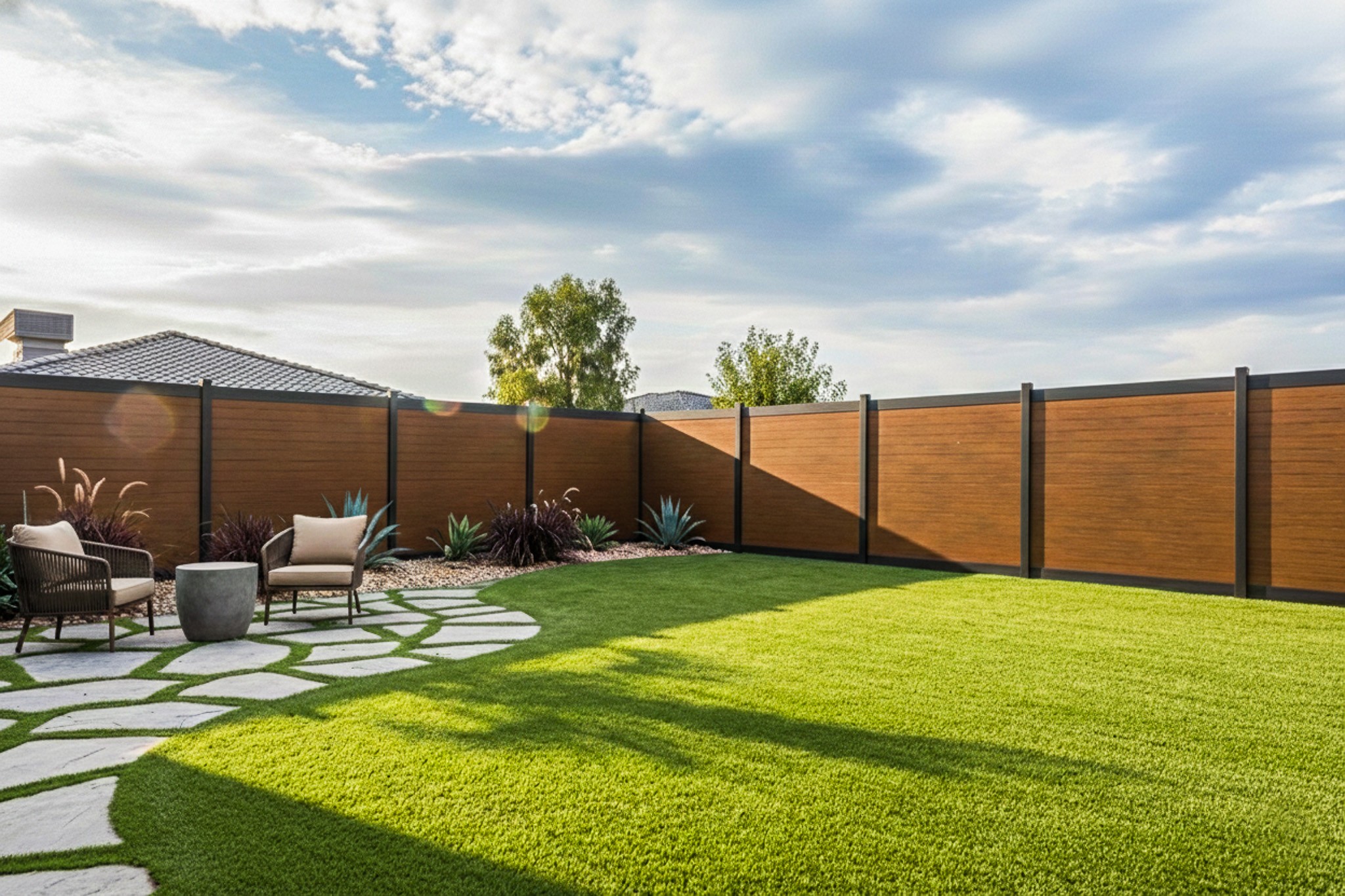
A metal privacy fence panel is a solid or near-solid fencing system built from a metal frame and slat construction, providing full sightline blockage from one side to the other. The slats sit tightly together (butted, overlapping, or interlocking) with no significant gaps through the panel face.
Aluminum is the dominant material for residential and commercial privacy fence installations across Canada. Steel and galvanized steel appear more often in industrial perimeter applications. Wrought iron, while a historic metal fence material, uses open picket designs that don’t provide privacy, which puts it in a different product category.
For any job where the client needs actual privacy, the realistic material choice is aluminum. Steel privacy panels exist, but they carry tradeoffs on weight and corrosion that make them a poor fit for most residential and commercial applications in Canadian climates.
According to the Metal Construction Association, aluminum accounts for the majority of architectural exterior metal products specified in North American residential and commercial construction, driven by corrosion resistance, coating performance, and weight advantages over competing metals.
Aluminum vs steel for metal privacy fence: which holds up?
Aluminum is the right call for Canadian privacy fence installations. It doesn’t oxidize the way steel does, tolerates freeze-thaw cycling without significant dimensional movement, and holds coating finish far longer than powder-coated steel under outdoor exposure.
Steel privacy panels can make sense in specific industrial contexts (perimeter security, vehicle containment) where weight and rigidity matter more than finish quality over time. For a residential property or a commercial facility manager looking at 20-plus years of service, aluminum wins on total cost of ownership.
That cost argument matters on job sites because steel panels are cheaper upfront. Some suppliers lean on that price gap to push steel into applications where aluminum should be the spec. When a client asks why the aluminum quote runs higher, the answer is maintenance cost and replacement timeline, not just material quality.
A steel privacy fence panel will start showing surface oxidation within a few years in wet climates, particularly at cut edges and fastener penetrations. Aluminum panels with quality multi-layer coatings show no comparable degradation under normal service conditions. After 15 years in a Canadian backyard, a quality aluminum privacy fence panel looks close to what it looked like on install day.
| Feature | Aluminum Privacy Fence | Steel Privacy Fence |
|---|---|---|
| Corrosion resistance | Naturally non-rusting | Rusts at cut edges and fasteners |
| Weight | Light (roughly one-third of steel) | Heavy, increases install labor |
| Finish lifespan | 25+ years with quality coating | 5–10 years before refinishing needed |
| Cold-weather performance | Dimensional stability across temperatures | Can stress welds in extreme cold |
| Best application | Residential, commercial, HOA | Industrial and perimeter security |
| Installed cost (Canada) | $80–$120 per linear foot | $75–$115 per linear foot |
What specs define a quality metal privacy fence panel?
The spec sheet tells you almost everything about whether a metal privacy fence panel will perform for your clients over time. Five things worth checking before you quote:
Slat construction. Some privacy fence panels use hollow aluminum extrusions. Foam-core slat panels, where expanded foam fills the aluminum slat profile, are structurally stiffer, have better acoustic properties, and resist denting from point impacts. For clients asking about noise reduction alongside privacy, foam-core is the right answer. PrimeAlux’s Privacy Plus panels use this foam-core construction as a standard feature.
Wind load rating. Privacy fence panels catch full wind pressure because they have no open gaps. Panels tested to 220 km/h have verified structural performance under that load; most generic imported panels carry no independent test data. Wind load testing should come from an accredited facility, not a manufacturer’s own claim. For more on what the test results actually mean, see the PrimeAlux performance testing documentation.
Coating system. A three-layer coating process (primer, base coat, top coat) creates better adhesion and color retention than a single powder-coat application. This matters most for wood-grain finishes, which depend on layered application to hold visual depth and prevent peeling. The coating process directly affects how the fence looks at year five, year ten, and year fifteen.
Panel sizing range. Quality manufacturers offer panels from 4’x6′ up to 8’x8′, with custom sizing available. Product ranges that top out at 6′ panels limit your options on taller residential and commercial applications, and require awkward panel stacking or custom fabrication in the field.
Post burial depth. For Canadian installations, the correct burial depth for aluminum privacy fence posts is 3 feet below grade. Not 2.5 feet, not 2.8 feet. The correct depth is 3 feet. Under-buried posts are the leading cause of lean and failure over time, and the problem gets worse with heavy solid-panel wind load. See the aluminum fence post sizing guide for more on post depth and footing specs.
According to the Canadian Standards Association, structural adequacy for fence installations depends on post depth relative to the local frost line. In most of Ontario and Quebec, frost penetrates to 4 or 5 feet, meaning post burial depth is necessary but not sufficient on its own. Proper concrete fill and post geometry matter equally.
What is ASTM E84 fire rating for fences, and when does it matter on your jobs?
ASTM E84 is the standard test method for surface burning characteristics of building materials. It measures two values: Flame Spread Index (FSI) and Smoke Developed Index (SDI). A Class A fire rating under ASTM E84 means FSI of 25 or less and SDI of 450 or less. It’s the same classification system used for interior wall finishes, roofing assemblies, and structural panels. The same rating system applies to fence panels installed in building-adjacent locations.
For privacy fence, this rating matters more often than most contractors expect. Commercial properties, multifamily residential developments, HOA communities, and any project near a building egress path may require or request fire-rated materials. Some municipal building departments and fire marshals are beginning to ask for fire performance documentation on fence installations that abut occupied structures. Specifying fire-rated panels from the start, rather than revising the spec after a reviewer raises it, saves project delays and avoids awkward conversations with clients.
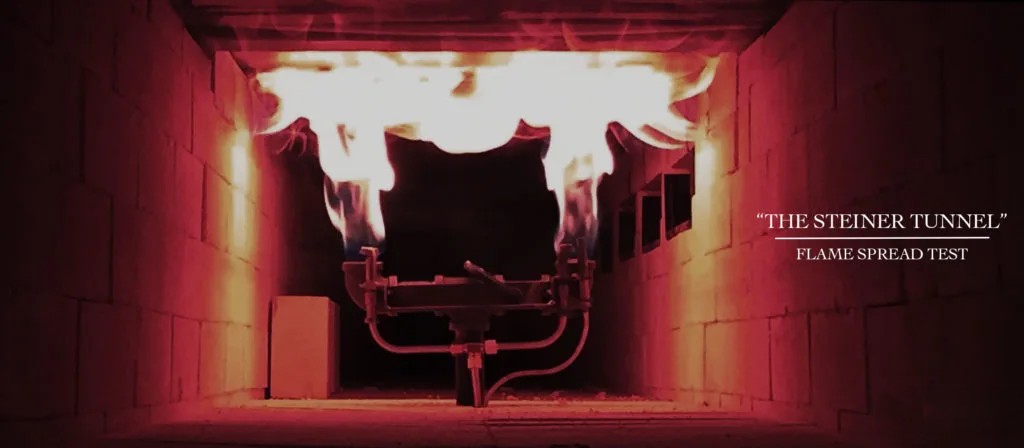
Wood fence panels are combustible by definition and carry no fire rating. Vinyl privacy fence panels melt, drip, and emit toxic smoke when exposed to flame, a failure mode that has led to their exclusion from fence specifications near occupied structures in some jurisdictions.
Aluminum metal privacy fence panels with ASTM E84 Class A certification (Flame Spread Index 0, Smoke Developed Index 50) are available from manufacturers who have completed the testing. PrimeAlux aluminum privacy fence panels carry this Class A rating, with full test documentation at primealux.com/astm-e84-fire-test.
When a GC or building official asks for fire rating documentation on a fence spec, being able to provide the ASTM E84 Class A certificate is a real differentiator on commercial and mixed-use jobs. Suppliers who can’t provide it are selling product with unknown fire performance.
Metal privacy fence panel installation: what’s different from standard fence work?
Metal privacy fence panels install on the same basic post-and-rail frame as standard aluminum fence, with a few considerations specific to solid-panel systems.
Post spacing. Privacy panels catch full wind load across the panel face. Standard residential aluminum picket fence can run 8-foot post centers without issue; solid-panel systems benefit from 6-foot centers on exposed runs or locations with consistent high wind. Check local building codes for minimum requirements on your application.
Concrete cure before panel loading. Metal privacy panels are heavier than open-picket panels at the same height. Standard 48-hour cure before loading posts applies; for taller panel runs on exposed sites, 72 hours is a safer margin.
Horizontal vs vertical slat options. Aluminum privacy panels run slats in either orientation. Horizontal slat configurations have become the most-requested residential style. Clients who saw a horizontal fence on a recent build often specifically ask for it. The post-and-rail attachment is the same regardless of orientation; the visual difference is significant. Knowing which panel configurations your supplier carries in horizontal profiles saves a sourcing conversation at exactly the wrong moment. For installation details on horizontal-slat systems, see the horizontal fence panels contractor guide.
Surface-mount anchoring on hardscape. For concrete driveways or patio slabs, surface-mount post anchors eliminate core-drilling and allow clean installation against hardscape. Confirm the anchor spec for the panel weight you’re installing. Heavier solid-panel systems need heavier anchor hardware than standard picket fence.
For contractors who work commercial jobs, the commercial aluminum fence guide covers code compliance and specification considerations for large-scale installations.
Metal privacy fence vs vinyl and composite: the cost and performance comparison
When clients compare metal privacy fence panels against vinyl or composite options, the conversation usually starts on price. The gap narrows considerably once you bring maintenance costs and realistic lifespan into the calculation.
| Material | Installed Cost (Canada) | Realistic Lifespan | Maintenance | Fire Rating |
|---|---|---|---|---|
| Aluminum (e.g. PrimeAlux) | $80–$120/LF | 25+ years | None required | ASTM E84 Class A available |
| Quality vinyl | $65–$105/LF | 10 years before cracking and fading | Cleaning; cracks require panel replacement | None (melts under flame) |
| Composite | $70–$145/LF | 12–20 years (varies widely by product) | Some cleaning; fading common | Varies by product |
| Cedar wood | $42–$85/LF | 8–12 years structural; looks poor sooner | Stain or paint every 2–3 years | None (combustible) |
Vinyl looks attractive at $65–$105/LF installed. Quality vinyl holds up better than cheap imported product, but even mid-market vinyl privacy panels begin showing UV fading, stress cracking at post brackets, and brittleness in extreme cold between years 5 and 10. Below -20°C, lower-grade vinyl can shatter on impact. A cracked vinyl panel has to be fully replaced, not patched. That’s a maintenance reality the upfront price doesn’t show.
Composite fence products vary so widely in quality that the installed price range ($70–$145/LF) is nearly meaningless as a comparison point. Premium composite performs reasonably well; budget composite fades and warps on a timeline similar to low-grade vinyl. Without knowing the specific product, composite is a difficult spec to stand behind on a client’s behalf.
Aluminum holds color and dimension. After 15 years installed in a Canadian climate, a quality aluminum privacy fence panel, with its multi-layer factory coating and alloy-grade slats, looks close to what it looked like on the day it was installed. No repainting, no replacement sections, no staining schedules.
For a full breakdown of how aluminum fence holds up against wood, see the aluminum privacy fence complete guide. For the cost side specifically, the Privacy Plus aluminum fence overview covers premium panel performance versus standard options.
How contractors and dealers source metal privacy fence panels
Volume sourcing for metal privacy fence panels comes down to a few questions worth asking before you commit to a supplier:
What’s the alloy grade? Not all aluminum fence panels use the same alloy. Higher-grade alloy performs better under mechanical stress and holds coating adhesion longer. Suppliers who can’t specify the alloy are selling on price alone, which is useful information.
What’s the coating process? Three-layer factory application in controlled conditions outperforms field powder-coat every time. Ask for the coating spec in writing. A supplier who treats this as an unusual request probably doesn’t have a strong answer.
What panel sizes are stocked vs made to order? Standard sizes ship quickly. Custom sizes add lead time. For commercial jobs with non-standard heights or runs, confirm custom availability and lead time before committing the job schedule.
What does the warranty actually cover? Many fence warranties contain conditions that effectively void coverage: annual inspection requirements, specific cleaning product mandates, narrow claim windows. Reading the warranty language rather than the headline number is basic due diligence that protects your clients and your reputation.
PrimeAlux offers aluminum privacy fence panels, Privacy Plus foam-core panels, and semi-privacy aluminum fence systems in natural walnut, grey walnut, walnut, dark walnut, and grey brown wood-grain finishes. Panels range from 4’x6′ to 8’x8′, with custom sizes available. All panels carry the ASTM E84 Class A fire rating and are tested to 220 km/h wind load. For finish selection and coating durability, see the aluminum fence powder coating guide. For volume sourcing and dealer program inquiries, see the Canadian privacy aluminum fence overview.
Frequently asked questions about metal privacy fence panels
What is the best metal for a privacy fence?
Aluminum is the best metal for a privacy fence in Canadian climates. It resists corrosion without any surface treatment, holds factory coating for 25 or more years without repainting, and weighs significantly less than steel, which matters for shipping costs and installation labor. For both residential and commercial privacy applications, aluminum has a stronger total-cost case than any competing metal.
How long do metal privacy fence panels last?
Quality aluminum privacy fence panels last 25 or more years with no required maintenance beyond occasional cleaning. Steel privacy panels show surface oxidation and finish failure much sooner, typically within 5 to 10 years in wet or salty environments. Vinyl and wood privacy fence have shorter lifespans and ongoing maintenance costs that aluminum avoids entirely.
Are metal privacy fence panels fire rated?
Some aluminum privacy fence panels carry ASTM E84 Class A fire ratings, which means a Flame Spread Index of 0 and Smoke Developed Index of 50. Wood and standard vinyl privacy fence panels are not fire rated. Wood is combustible and vinyl melts under flame exposure. For commercial, multifamily, and HOA applications where fire ratings may be reviewed or required, aluminum panels with documented ASTM E84 certification are the appropriate specification.
How deep should posts be for metal privacy fence panels?
Posts for metal privacy fence panels should be buried at least 3 feet below grade in Canadian installations. This depth accounts for frost heave dynamics and provides adequate structural support for the wind load that solid panels generate. Shallower installation is a leading cause of fence lean and post movement over time. For details on post sizing and concrete specs, see the aluminum fence posts guide.
Can metal privacy fence panels be installed horizontally?
Yes. Aluminum privacy fence panels are available with horizontal slat configurations and are among the most popular styles in current residential and commercial installations. Horizontal panels attach to the same post-and-rail frame as vertical designs. The horizontal fence panels contractor guide covers installation specifics and what to expect from clients who request this style.
What is the difference between privacy and semi-privacy fence panels?
Privacy panels use solid or near-solid slat coverage with no significant gaps between slats, providing complete sightline blockage. Semi-privacy panels use spaced slats that allow air circulation and partial visibility. Contractors typically specify full privacy panels for pool enclosures, property boundary screening, and commercial privacy applications, while semi-privacy panels suit residential jobs where clients want more airflow without fully open picket fencing. See semi-privacy aluminum fences for panel options.
What do metal privacy fence panels cost installed in Canada?
Aluminum metal privacy fence panels typically cost $80 to $120 per linear foot installed in Canada, covering panels, posts, concrete, hardware, and labor for standard residential jobs. That’s roughly 10 to 20 percent more than quality vinyl fence ($65–$105 per linear foot installed) and significantly more than cedar wood ($42–$85 per linear foot) but aluminum carries zero maintenance cost over its 25-plus-year lifespan, which changes the total cost picture on any job you’re quoting across a multi-decade horizon.
What wind load rating should I look for in a metal privacy fence?
For Canadian installations, look for panels tested to at least 140 to 180 km/h under controlled conditions with documentation from an accredited test facility. PrimeAlux aluminum privacy fence panels are tested to 220 km/h. Panels with no documented wind load test data carry unknown structural risk, particularly on exposed sites or runs near structures that concentrate wind pressure. For commercial applications, check local building codes for minimum wind load requirements in your region.
The bottom line on metal privacy fence panels
Metal privacy fence panels perform because aluminum does what the other materials can’t sustain over time. The finish holds. The slats don’t warp. The posts don’t rot. And when a fire marshal or building inspector asks about ratings on a commercial job, the ASTM E84 Class A documentation is there.
For contractors quoting metal privacy fence for clients, the spec conversation starts with material quality: alloy grade, coating layers, and documented test performance. Not just panel price per square foot. That’s what separates a fence that still looks good at year fifteen from one that becomes a customer service problem at year six.
Review the full PrimeAlux aluminum privacy fence panel lineup or contact PrimeAlux for volume sourcing, dealer program inquiries, and custom sizing availability.
