
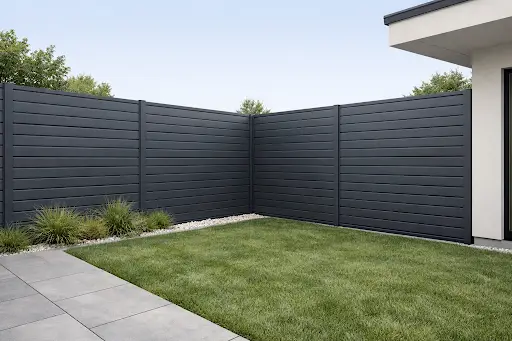

Aluminum privacy fence panels are full-height solid-slat panels designed for complete visual blockage. For contractors and dealers specifying privacy fencing for residential, commercial, or multi-unit projects, they are the product category that holds up under real Canadian conditions, with no rot, no warp, and no callback cycle.
This guide covers what contractors need to know to spec, source, and quote aluminum privacy fence panels: panel configurations, technical ratings, installation requirements, and how to position the product against wood and vinyl when presenting to clients.
What are aluminum privacy fence panels?
Aluminum privacy fence panels are interlocking slat panels where each slat fits tightly against the next, leaving no visible gaps between boards. Unlike semi-privacy panels with designed spacing between slats, privacy panels create a solid visual barrier from ground level to cap rail. Standard configurations run from 4×6 to 8×8 feet, with custom sizing available for non-standard bays or commercial applications.
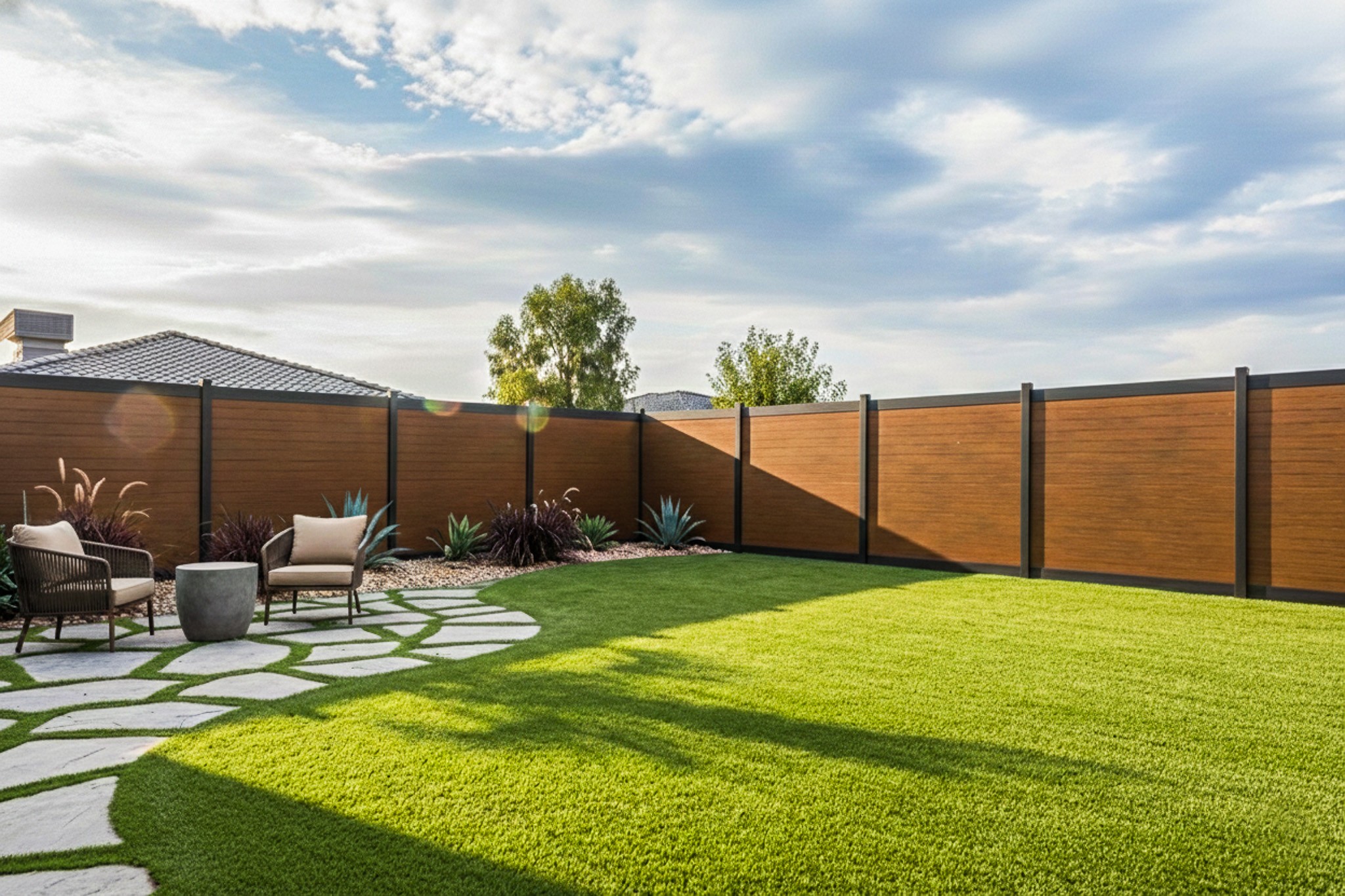
The structural difference from wood privacy fencing is straightforward: aluminum slats don’t absorb moisture, swell, or develop the cracking and greying that shows up in Canadian cedar within one to two seasons. PrimeAlux aluminum privacy fence panels use a three-layer wood-grain coating system that produces a finish close to natural timber without any ongoing painting or staining requirement.
The North American fencing market has shifted toward aluminum and low-maintenance materials over the past decade, with contractors and property managers driving adoption by moving away from products that generate maintenance callbacks. The Grand View Research fencing market report projects the aluminum fencing segment to grow at a compound annual rate of approximately 4% through 2028, with commercial and residential property applications accounting for the bulk of that growth.
Privacy panel configurations: choosing the right spec for the project
PrimeAlux offers three panel configurations for privacy and partial-privacy applications. Each serves a different performance requirement. Choosing the right one before quoting avoids scope changes after the client approves pricing.
Standard Privacy Fence Panels
The standard Privacy Fence Panels use solid aluminum slats with zero gap spacing for complete visual blockage. Available in sizes from 4×6 to 8×8 feet in five wood-grain finishes: Natural Walnut, Grey Walnut, Walnut, Dark Walnut, and Grey Brown. These are the correct spec for most residential projects, rental properties, and commercial boundary applications where cost efficiency and long-term durability are the primary criteria.
Privacy Plus Fence Panels
The Privacy Plus Fence Panels add foam-core construction inside each slat. The result is increased panel rigidity, a noticeably heavier feel, and better acoustic performance than standard hollow-slat alternatives. Privacy Plus panels have passed the ASTM E90 airborne sound transmission loss test, making them the appropriate spec for projects near roads, commercial zones, or dense residential areas where sound reduction is a client priority. For high-end residential, commercial screen walls, or any bid where the client is asking about panel quality, Privacy Plus is the product to quote.
Semi-Privacy Fence Panels
The Semi-Privacy Fence Panels use spaced slats for airflow and partial visibility. They’re not a privacy panel in the strict sense, but they frequently appear on the same project scope: front yard runs, sideyard sections, or areas where an HOA or municipal bylaw limits solid fence coverage while the client still wants boundary definition.
Panel configuration comparison
| Feature | Privacy Panel | Privacy Plus Panel | Semi-Privacy Panel |
|---|---|---|---|
| Visual blockage | 100% | 100% | Partial |
| Slat construction | Solid aluminum slats | Foam-core aluminum slats | Spaced aluminum slats |
| Acoustic performance | Standard | Enhanced (ASTM E90 tested) | Minimal |
| Panel rigidity | Standard | Higher | Standard |
| Best application | Residential, rental, commercial boundary | High-end residential, commercial, urban | Front yards, partial-boundary applications |
| Available heights | 4′ to 8′ | 4′ to 8′ | 4′ to 6′ |
Technical specs that matter when sourcing aluminum privacy panels
For contractors responding to commercial bids, insurance-sensitive applications, or HOA-governed communities, these are the ratings to reference and request documentation for.
Wind load rating
PrimeAlux panels are wind load tested to 220 km/h. That’s a lab-tested result, not an estimate. In Canadian markets where spring and fall storm systems generate sustained wind speeds well above what a wood fence can handle, a verified wind load rating is something clients will actually remember when explaining to their insurance broker why they chose aluminum.
Many fence suppliers quote wind resistance numbers with no supporting test data. Before specifying any panel system on a commercial or HOA project, ask the supplier to produce documentation. PrimeAlux’s 220 km/h result is on file and available on request.
Proper post installation is the other half of the wind resistance equation. Aluminum fence posts for privacy panel systems must be buried to a minimum of 3 feet and set in concrete. This is the confirmed spec for PrimeAlux systems, not a general rule of thumb. Posts buried shallower than 3 feet risk heave-related lean in Canadian frost conditions, especially in clay-heavy or poorly draining soils.
Fire rating
PrimeAlux aluminum privacy fence panels carry a Class A fire rating under ASTM E84, with a Flame Spread Index of 0 and a Smoke Developed Index of 50. Class A is the highest fire resistance classification for building materials under the standard. For projects involving multi-unit residential buildings, commercial structures, or any application where fire code compliance is a requirement, this rating is directly relevant.
According to the National Fire Protection Association (NFPA), Class A materials are mandated in many commercial occupancies and are increasingly specified in high-density residential development projects. Vinyl fence panels cannot meet this standard. Vinyl becomes a fire accelerant at elevated temperatures, a fact worth stating plainly when a client is comparing quotes.
Recycled aluminum content
PrimeAlux panels contain up to 70% recycled aluminum content. For contractors working with developers tracking LEED credits, sustainability commitments, or ESG metrics, this is a specification to include in bid packages. It requires no extra cost or process. It’s built into the material.
Coating system
All wood-grain finishes on PrimeAlux panels use a three-layer coating process. This isn’t a single paint application. The three-layer system creates adhesion, UV resistance, and color depth that a single coat can’t replicate. Vinyl fence products fade and yellow within 10 years under normal Canadian exposure, and cheaper imported vinyl products often show visible deterioration significantly sooner. Aluminum’s coating holds for decades without intervention.
Installation: what contractors need to know about aluminum privacy fence panels
Privacy panel installation follows the same fundamentals as any aluminum fence system, with a few specific considerations for taller panels and wind-exposed sites.
Post spacing and depth
Standard post spacing for 8-foot panel widths is 8 feet on center. Posts must be buried to a minimum of 3 feet and set in concrete. This is the confirmed PrimeAlux installation spec and applies regardless of local “frost line” rule-of-thumb guidelines that sometimes suggest shallower burial. For 6-foot or 8-foot tall panels, assess soil condition at each site. Soft soils, clay-heavy ground, or sites with high water tables may warrant a slightly larger post diameter or a deeper concrete collar to ensure long-term stability.
Sloped terrain
Solid-slat privacy panels are typically installed in stepped sections on sloped terrain. Because zero-gap panels don’t flex gradually around a slope the way spaced panels can, continuous racking doesn’t produce a clean result on meaningful grades. For slopes steeper than approximately 5 degrees, plan for stepped installation and account for the reveal gap at the bottom of each panel step when calculating material quantities and post placement.
Gate integration
Privacy fence projects with access points require matching aluminum gates. PrimeAlux gates are manufactured to match the privacy panel profile and finish, so the system reads as a continuous product rather than a mismatched assembly. For pool enclosure applications specifically, self-closing and self-latching hardware is required under Canadian pool fencing regulations. A full breakdown of hardware selection and compliance requirements is available in the aluminum fence gate guide.
For commercial or multi-panel privacy screen applications, also review the commercial aluminum fence specifications for larger-format installations.
How to price aluminum privacy fence panels to residential clients
The installed price range for aluminum privacy fence panels in Canada runs roughly $80 to $120 per linear foot. That range includes the fence system, posts, concrete, hardware, and contractor margin. The high end applies to 6-foot or 8-foot height configurations, Privacy Plus panels, or projects with significant cut waste from terrain or layout complexity.
The comparison that closes most conversations with clients considering wood is the long-term cost view. Cedar installed at $30 to $50 per linear foot looks cheaper at purchase. It doesn’t look cheaper at year 5 when posts are leaning, slats are cracking, and the client is calling for a staining job. Most cedar fences in Ontario and Quebec that aren’t maintained on a consistent 2 to 3-year staining cycle show visible deterioration (greying, warping, and cracking) within one or two Canadian seasons.
Vinyl is positioned similarly. Quality vinyl under normal conditions holds for approximately 10 years before cracking, fading, and warping become visible. Cheaper imported vinyl products, which make up a significant share of the market, can reach that point considerably sooner. Once vinyl fails, it can’t be repaired. The entire section comes out. Aluminum doesn’t have that conversation.
10-year cost comparison: privacy fencing materials (Canada)
| Material | Install Cost/LF | 10-Year Maintenance | Likely Replacement | Total 10-Year Estimate |
|---|---|---|---|---|
| Aluminum (PrimeAlux) | $80-$120 | Near zero | Not expected | $80-$120/LF |
| Cedar Wood | $30-$50 | $10-$20/LF (staining) | Often needed by year 8-10 | $70-$120/LF |
| Pressure-Treated Wood | $25-$45 | $8-$18/LF | Often needed by year 7-10 | $60-$110/LF |
| Vinyl | $25-$50 | Low | Likely by year 10-15 (cheaper imports sooner) | $55-$100+/LF |
These figures are reference ranges for client conversations. Actual costs vary by region, labor market, and product tier. For project-specific pricing, direct clients to request a quote directly from PrimeAlux.
Sourcing and specifying aluminum privacy fence panels
For dealers and distributors looking to add aluminum privacy panels to their product line, PrimeAlux operates from its Canadian facility in Mississauga, Ontario, with the full product line available through its North American network. Product specs, finish samples, and technical documentation are available on request through the product pages.
For contractors building their standard spec library, the full PrimeAlux privacy lineup covers standard privacy panels, Privacy Plus panels, and semi-privacy panels alongside matching gate systems. The ASTM E84 fire test documentation is available on the PrimeAlux website for projects where code compliance requires written certification.
Aluminum privacy fence panels are one of the few exterior products where you can tell a client honestly: install it once, maintain it never, and expect it to look the same 20 years from now. That’s not a position wood or vinyl can hold.
Frequently asked questions
What is the difference between standard and Privacy Plus aluminum privacy fence panels?
Standard aluminum privacy fence panels use solid aluminum slats with zero gap spacing. Privacy Plus panels use the same profile with foam-core construction inside each slat, which increases rigidity, adds panel weight, and improves acoustic performance. Privacy Plus has passed the ASTM E90 acoustic test and is the right spec for high-end residential projects, commercial screen walls, or urban applications where clients are asking about panel quality or sound reduction.
What post burial depth is required for aluminum privacy fence panels?
Posts for PrimeAlux aluminum privacy fence panels must be buried to a minimum of 3 feet and set in concrete. This is a confirmed installation spec, not a general guideline. Posts buried shallower than 3 feet risk frost heave movement in Canadian conditions, particularly in clay-heavy or poorly draining soils. For taller panel heights, assess site conditions and consider larger post diameters on soft ground.
Are aluminum privacy fence panels fire rated?
Yes. PrimeAlux aluminum privacy fence panels carry a Class A rating under ASTM E84, with a Flame Spread Index of 0 and a Smoke Developed Index of 50. This is the highest fire resistance classification under the standard. It applies to commercial applications, multi-unit residential developments, and any project where fire code compliance is a specification requirement.
What wind load do aluminum privacy fence panels support?
PrimeAlux panels are wind load tested to 220 km/h. This is a lab-tested result available in documentation form. Many suppliers claim wind resistance without testing data to back it up. For projects where the client or building owner requires verified performance ratings (commercial bids, HOA applications, or insurance documentation), this rating is on file and available on request.
Can aluminum privacy fence panels be installed on a slope?
Yes, typically using stepped installation rather than continuous racking. Solid-slat privacy panels don’t flex gradually around a grade the way spaced panels can. For terrain with slopes steeper than approximately 5 degrees, plan for stepped sections and calculate panel quantities accounting for the reveal gap at the bottom of each step. Post spacing and foundation depths remain the same as on level ground.
How do aluminum privacy fence panels compare to vinyl privacy fence panels?
Aluminum outperforms vinyl on long-term durability, temperature resistance, and repairability. Vinyl fades, yellows, and becomes brittle within approximately 10 years under normal Canadian exposure. Cheaper imported vinyl products often reach that point sooner. Aluminum holds its finish and structural performance across decades of freeze-thaw cycles. Below -20°C, vinyl can crack or shatter. Aluminum shows no change in performance at those temperatures. When vinyl fails, you replace the section. When aluminum is damaged, individual components can typically be replaced.
What sizes are available for aluminum privacy fence panels?
Standard PrimeAlux configurations run from 4×6 to 8×8 feet. Custom sizing is available for non-standard bays, oversized commercial screen walls, or unusual height requirements. Contact PrimeAlux directly for custom sizing availability and lead times.
What finish options are available?
PrimeAlux aluminum privacy fence panels are available in five wood-grain finishes applied through a three-layer coating process: Natural Walnut, Grey Walnut, Walnut, Dark Walnut, and Grey Brown. The three-layer coating provides UV resistance and color retention significantly beyond what a single-coat system delivers. No additional finishing, painting, or surface treatment is required after installation.
