
Aluminum vs Steel Fence: Which Material Actually Wins?
Aluminum wins for most commercial and residential fence installations where total cost of ownership matters more than raw impact strength. Steel rusts once galvanizing wears through at cut ends and below grade, requiring ongoing repainting and rust treatment. Aluminum lasts 25+ years with zero maintenance. For contractors, that means predictable margins and no warranty callbacks. For facility managers, it means one fewer line item in the maintenance budget.
Steel still makes sense for heavy-duty industrial perimeters where direct impact resistance justifies the maintenance overhead. But for the other 90% of projects? Aluminum is the better spec. This comparison uses verified third-party testing data and real-world cost numbers to help you decide.
How Do Aluminum and Steel Compare on Material Properties?
Aluminum weighs about one-third as much as steel, resists corrosion without coatings, and costs less to install despite higher material prices. Steel is stronger per unit volume but heavier, harder to handle, and requires ongoing protection against rust. The table below breaks down the key specs contractors and specifiers need to compare.
| Property | Aluminum (6063-T6) | Galvanized Steel | Stainless Steel |
|---|---|---|---|
| Density (lbs/cu in) | 0.098 | 0.284 | 0.273 |
| Weight, 6×6 panel | ~22 lbs | ~65 lbs | ~62 lbs |
| Corrosion resistance | Excellent (self-healing oxide layer) | Good until coating fails | Excellent |
| Maintenance | None (20-year powder coat warranty) | Annual inspection + repaint every 5-7 yrs | Occasional cleaning |
| Expected lifespan | 25+ years | 12-18 years | 30+ years |
| Material cost per linear foot | $20-35 | $15-25 | $40-60 |
| Installation cost | Lower (lighter, faster) | Higher (heavier, more labor) | Higher (specialized labor) |
| Recyclability | 100%, high scrap value | 100%, lower scrap value | 100%, moderate scrap value |
According to the International Aluminium Institute, 6063-T6 aluminum delivers 240 MPa tensile strength. That strength-to-weight ratio is what makes it practical for fence systems where panels need to resist wind loads without requiring heavy equipment to install.
Is Aluminum Strong Enough for Commercial Projects?
Yes. Properly engineered aluminum systems meet or exceed commercial load requirements in every standard application. The misconception that aluminum is “weak” comes from comparing raw material strength without accounting for profile engineering. A 6063-T6 aluminum post with 80mm x 80mm profile and 2mm wall thickness handles the same wind zones as most galvanized steel fence posts of equivalent size.
Third-party load testing on PrimeAlux systems confirms this. A 6×6 privacy panel withstands 169.8 km/h wind loads. Underground posts tested to 226 km/h. Reinforced slats (100mm x 20mm) support 220 to 363 lbs horizontal load depending on panel width. Those numbers exceed typical Canadian commercial wind zones.
Steel can match or exceed those ratings, but it requires heavier profiles to get there. That extra weight adds labor time and equipment costs on site. For applications short of maximum-security detention or military installations, aluminum specs are more than adequate.
Post burial depth matters equally for both materials: 3 feet underground to develop proper lateral resistance in standard soil conditions. The difference shows up over time. Aluminum posts stay structurally sound below grade indefinitely. Steel galvanizing wears through at soil contact within 5-8 years in moist soil, and once rust starts below grade, you cannot see it until the post fails.
How Does Corrosion Resistance Compare Between Aluminum and Steel?
Aluminum forms a thin oxide layer that prevents corrosion and repairs itself automatically when scratched. Steel relies on applied coatings (galvanizing or paint) that degrade over time, especially at cut ends, weld points, and below-grade contact. Once that protection fails, rust spreads fast and requires hands-on treatment.
Galvanized steel holds up for 12-18 years in normal conditions. Coastal environments, road salt, and de-icing chemicals cut that timeline. According to Angi survey data, galvanized steel fences in saltwater regions show visible rust within 8-10 years and need repainting every 3-5 years. Stainless steel solves the rust problem but costs 2.5-3x more than aluminum, which makes it hard to justify outside of premium or chemically harsh environments.
PrimeAlux aluminum fencing includes up to 20-year finish warranties on powder coat. Even if the coating gets scratched, the base aluminum does not rust. It develops white aluminum oxide (chalking) that is cosmetic only. Contractors working in coastal BC and Atlantic Canada report zero maintenance beyond an annual hose-down, while steel installations in the same regions need annual inspection and repainting every 5-7 years.
Below-grade corrosion is where steel really falls apart. Underground sections buried 3 feet deep lose galvanizing protection within 5-8 years in moist soil. Replacing corroded steel fence posts at 15-20 year intervals is labor-intensive and expensive. Aluminum avoids the problem entirely.

Which Applications Favor Aluminum vs Steel?
Aluminum is the better choice for most commercial, residential, and institutional fence projects. Steel only pulls ahead in high-impact industrial security applications where brute strength matters more than lifecycle cost. The table below maps each application to the right material choice.
| Application | Aluminum | Galvanized Steel | Stainless Steel |
|---|---|---|---|
| Residential privacy fencing | Excellent | Acceptable (repaint every 5-7 yrs) | Cost not justified |
| Commercial property boundaries | Excellent (low TCO) | Good (higher maintenance) | Acceptable for high-visibility |
| Coastal / salt spray | Excellent | Poor (fails within 8-10 yrs) | Excellent but expensive |
| High-impact industrial security | Good | Excellent | Excellent |
| Pool and wet environments | Excellent (chlorine-resistant) | Poor (chemicals accelerate rust) | Excellent but expensive |
| Agricultural / farm | Good | Fair (ammonia accelerates rust) | Overkill |
| Schools and government buildings | Excellent (low maintenance budgets) | Acceptable | Acceptable |
| Data centers and telecom | Excellent | Fair (rust in humid climates) | Good |
How Much Faster Is Aluminum to Install?
Aluminum installs 30-40% faster than equivalent steel fencing. The weight difference is the main reason. A two-person crew can handle aluminum panels and posts by hand, position them quickly, and move on. Steel panels at 65 lbs each slow everything down, often requiring equipment rental or a third crew member.
For a 200-linear-foot commercial project, the weight difference is nearly 3,000 lbs total. A typical crew installs 80-120 linear feet of aluminum per day versus 40-80 linear feet of steel. That speed gap compounds on multi-site commercial contracts. Contractors running 8-10 projects monthly save $3,000-8,000 per project in labor costs by specifying aluminum over steel.
Steel also introduces welding complexity. Welded connections on some steel systems require certified welders, adding both cost and schedule risk. Galvanized steel carries specific welding requirements to preserve corrosion protection at weld seams. Aluminum fencing systems like PrimeAlux use bolt-together field assembly, so no welding is needed on site.
What Does 25-Year Total Cost of Ownership Look Like?
Aluminum costs more upfront but less overall. A 200-linear-foot commercial installation runs roughly $4,000-7,000 in aluminum versus $3,000-5,000 in galvanized steel. Steel looks cheaper on the purchase order. It does not look cheaper on year 7 when the first full repaint is due.
Steel maintenance adds up: repainting every 5-7 years at $800-2,000 per project, rust treatment at $400-600 annually, and eventual post replacement at $1,200-3,000 every 15-20 years. Aluminum requires none of that. Over 25 years, aluminum saves $5,000-12,000 per 200-foot run compared to galvanized steel. That is why municipalities, school boards, and healthcare facilities increasingly specify aluminum. They want to eliminate maintenance from their operational budgets, not just defer it.
Stainless steel eliminates maintenance too, but at 2-3x the material cost of aluminum. It makes sense for visible premium applications or chemically harsh environments. For everything else, aluminum is the more practical specification.
What Testing and Compliance Data Backs Up Aluminum Performance?
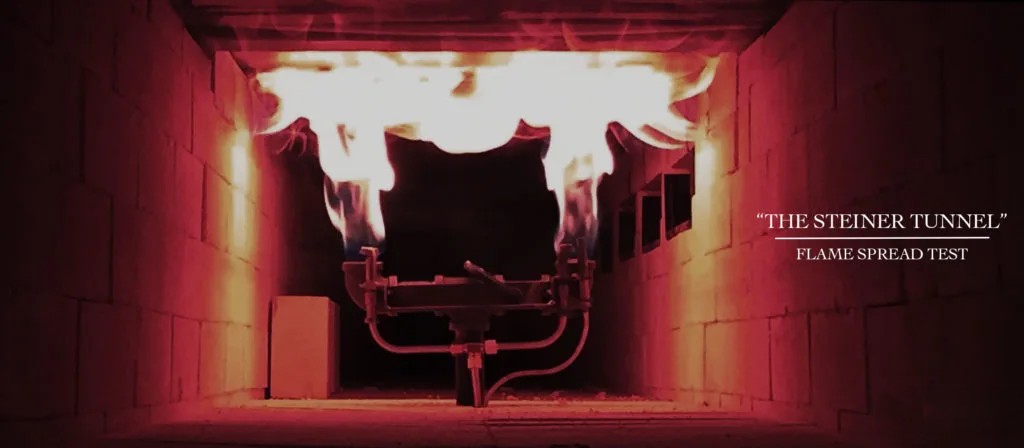
PrimeAlux aluminum fencing has third-party test documentation relevant to commercial specifications. Fire performance is Class A under ASTM E84 (Flame Spread Index 0, Smoke Developed Index 50), which matters for fencing near structures or in fire-prone regions. Acoustic testing under ASTM E90 shows STC 22 and OITC 19 on Privacy Plus panels, useful for noise reduction near roadways or industrial boundaries.
The Aluminum Association publishes alloy specifications and material certifications for 6063-T6 aluminum. ASTM International maintains the testing standards (E84, E90, D7032) referenced in commercial fence specifications. The National Research Council of Canada provides corrosion and environmental durability guidelines relevant to Canadian installations.
For steel, no equivalent single-source performance dataset exists because steel fencing is not typically tested as a system. Individual components carry their own ratings, but system-level wind, fire, and acoustic testing comparable to PrimeAlux’s dataset is uncommon in the galvanized steel fencing market.
What About Design Flexibility?
Aluminum accepts any powder coat color without cost premiums, which matters for projects with specific architectural palettes. Steel is typically limited to gray, black, or brown. Aluminum profiles can be engineered into privacy, semi-privacy, and horizontal configurations, with matching gate systems and privacy screens. These integrate with aluminum pergola structures for consistent site aesthetics across large campuses.
Steel requires custom fabrication for non-standard profiles, which adds weeks to timelines and thousands to budgets. According to Grand View Research, the aluminum fencing segment is growing faster than steel in North America, partly driven by architects and specifiers choosing aluminum for its design versatility and lower lifecycle costs.
Frequently Asked Questions
Is aluminum strong enough for commercial security fencing?
Yes. PrimeAlux privacy panels resist 169.8 km/h wind loads and reinforced slats support 220-363 lbs horizontal load. That exceeds standard commercial security requirements. Aluminum is already specified for government buildings, corporate campuses, and schools. Steel only pulls ahead for maximum-security or direct-impact applications.
How long does aluminum fencing last compared to steel?
Aluminum lasts 25+ years without structural degradation or replacement. Galvanized steel lasts 12-18 years before rust compromises the coating. Stainless steel matches aluminum on lifespan but costs 2-3x more. Over a 25-year period, aluminum’s total cost of ownership is significantly lower than galvanized steel.
Why does aluminum cost more upfront if it weighs less?
Aluminum alloy costs more per pound than carbon steel. But lighter panels mean faster installation, so labor costs are 30-40% lower. Zero maintenance over 25 years eliminates repainting, rust treatment, and post replacement expenses. Most projects reach cost parity by year 5-6 when steel’s first major repaint cycle hits.
Can aluminum fencing be welded on site?
Aluminum can be welded but it requires different techniques than steel. Most commercial aluminum fence systems use bolt-together assembly instead, which preserves the powder coat finish and avoids heat-affected zones. PrimeAlux systems are designed for factory customization and field bolt assembly with no on-site welding needed.
How does aluminum perform in coastal salt spray environments?
Aluminum outperforms galvanized steel in coastal conditions. The natural oxide layer and powder coat finish resist salt spray indefinitely. Galvanized steel shows visible rust within 8-10 years in coastal areas. For seaside commercial projects, aluminum is the most cost-effective long-term material choice.
Does aluminum fencing conduct electricity?
Yes, aluminum is conductive. For installations near power infrastructure or sensitive electronics, non-conductive hardware (insulating bolts and gaskets) is available. Steel is equally conductive. For most commercial fence applications, conductivity is not a practical concern and does not affect fence performance.
How do I specify aluminum fencing in a commercial tender?
Specify alloy (6063-T6), wall thickness (2mm minimum), post profile (80mm x 80mm), burial depth (3 feet), wind load rating, fire rating if required (ASTM E84), and finish warranty (20-year powder coat recommended). Request third-party test reports for wind, fire, and acoustic performance from the manufacturer. Contact PrimeAlux for specification documents.
What is the payback period for choosing aluminum over steel?
Labor savings during installation recover 30-50% of the material premium in the first year. Payback typically occurs around year 5-6 when steel’s first major repainting cycle is due. After year 10, the gap widens as steel needs post replacement and additional maintenance. For a 200-foot installation, aluminum saves $5,000-12,000 over 25 years.
Bottom Line for Contractors and Specifiers
Specify aluminum for commercial projects where lifecycle cost, maintenance elimination, and installation speed matter. Specify steel only when maximum impact resistance justifies the ongoing maintenance overhead. Specify stainless steel only when appearance and corrosion resistance justify 2-3x material cost.
For contractors switching from steel to aluminum specs: expect faster installs, fewer callbacks, and better client satisfaction within the first year. Review PrimeAlux’s company background and test documentation, and check the FAQ page for common specification questions. Visit the PrimeAlux blog for more installation guides and material comparisons.
Need specification documents or samples? Get in touch with PrimeAlux or visit PrimeAlux Canada for regional support.
