
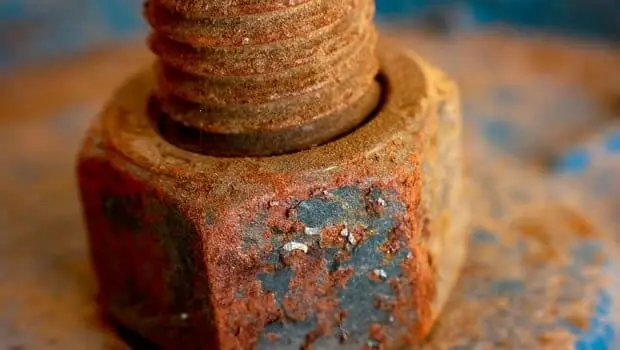

The hidden problem behind early fence hardware failures
Fence panels often get the attention, but fence hardware is where many long term problems begin. Homeowners and contractors are often surprised when screws stain, connectors seize, or metal gate locks stop operating smoothly after only a few seasons. In many cases, the cause is galvanic corrosion triggered by mixing incompatible metals in outdoor conditions.
Understanding how galvanic corrosion works helps explain why some fence systems age gracefully while others develop corrosion at fasteners, brackets, and gates even when the panels themselves look fine.
Key takeaways at a glance
- Galvanic corrosion occurs when dissimilar metals contact each other in the presence of moisture
- Fence hardware is especially vulnerable because it concentrates metal to metal contact
- Mixed metals in connectors, fasteners, and gate locks accelerate corrosion
- Coatings, material matching, and tested system design reduce long term risk
- Modular fence systems benefit from controlled hardware compatibility

What galvanic corrosion actually is
Galvanic corrosion is an electrochemical reaction. When two different metals touch and moisture is present, one metal becomes the anode and corrodes faster, while the other becomes the cathode and is protected.
Outdoor fences provide ideal conditions for this reaction:
- Rain, snow, and condensation act as electrolytes
- Fasteners and brackets force direct metal contact
- Temperature swings drive moisture in and out of joints
This is why fence hardware often shows corrosion first, even when fence panels are aluminum and inherently corrosion-resistant.
Why fence hardware is more at risk than fence panels
Fence panels are typically large, continuous components with uniform coatings. Fence hardware is different. It includes screws, metal fence connectors, brackets, hinges, and metal gate locks, all packed into tight assemblies.
These components experience:
- Higher stress concentration
- Repeated movement at gates
- Direct exposure at cut edges and fastener penetrations
When metals are mismatched, these stress points become corrosion initiation sites.
Common mixed metal combinations that cause problems
Galvanic corrosion is not about one metal being bad. It is about incompatible pairings.
Typical problem areas include:
- Aluminum fence panels fastened with carbon steel screws
- Stainless steel fasteners contacting coated aluminum without isolation
- Zinc coated hardware paired with bare aluminum in wet zones
In each case, corrosion tends to appear at the smaller or less noble metal, often the fastener or connector that is hardest to replace later.
The role of coatings and finishes
Coatings slow galvanic corrosion but do not eliminate it if metals are incompatible. Once a coating is scratched during installation or worn through by movement, corrosion can begin.
According to PrimeAlux, structural components are powder coated and pickets are three layer coated to support durability and surface protection. These coatings are designed to resist weathering and corrosion in general outdoor exposure. However, coatings must be supported by compatible hardware selection to perform as intended over time.
This is why hardware design and material pairing matter as much as coating thickness.
Contractor notes on installation details
Installers play a critical role in corrosion prevention, especially at hardware interfaces.
Key field considerations include:
- Avoid substituting fasteners unless material compatibility is verified
- Ensure base plates and post anchors drain properly to avoid standing water
- Pay special attention to gate planning where hinges and locks move under load
On sloped sites or retaining walls, hardware sees additional forces. This increases the importance of matched metals and proper isolation.
Gates and moving hardware deserve extra attention
Gates concentrate risk. Hinges and metal gate locks combine dissimilar metals, movement, and load. Even small corrosion can cause binding or misalignment.
PrimeAlux gates are shown as pre-assembled and designed to integrate with the surrounding fence system. A system approach helps control material interfaces, reducing the guesswork that often leads to mixed metal failures at gates.
What PrimeAlux does differently
Based on the PrimeAlux presentation and site materials:
- Fence systems are modular and engineered as matched assemblies
- Structural components are powder-coated, and pickets use layered coatings
- Hardware and components are designed to work together within the system
- Wind load testing demonstrates how loads are transferred through posts and connectors
This system-based approach reduces random material mixing that often causes galvanic corrosion in piecemeal fence builds.
FAQ
What is the main cause of galvanic corrosion in fence hardware
It is caused by direct contact between dissimilar metals in the presence of moisture.
Are stainless steel fasteners always safe
Not always. Stainless steel can accelerate corrosion in aluminum if not properly isolated.
Do coatings prevent galvanic corrosion?
They help, but scratches or wear can expose metal and allow corrosion to start.
Why do gates fail before fence panels?
Gates combine movement, load, and multiple metal interfaces, making them higher risk.
Can installers reduce galvanic corrosion risk?
Yes. Using specified hardware, maintaining drainage, and avoiding substitutions all help.
How long does galvanic corrosion take to appear
It varies. In wet or coastal environments, it can appear within a few seasons.
Fence hardware may be small, but it determines how long a fence system actually lasts. Galvanic corrosion is one of the most common and misunderstood causes of premature failure, especially when mixed metals are introduced without a system-level plan.
By choosing compatible materials, respecting engineered hardware systems, and understanding how loads and moisture affect connectors and gates, both homeowners and contractors can avoid costly repairs and extend the life of modern aluminum fencing.
