
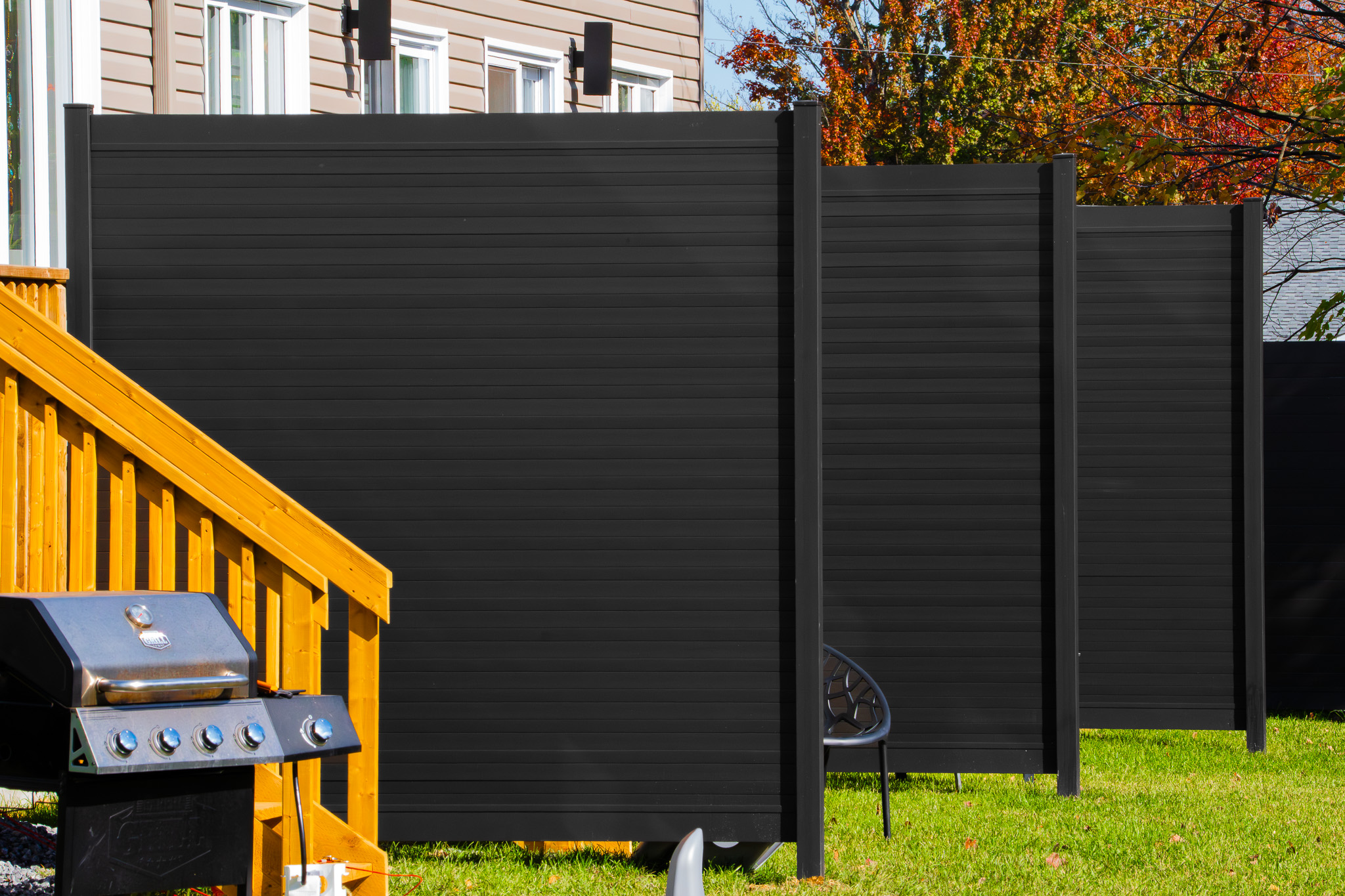

Choosing a privacy fence is about more than blocking the street view. The right fence affects wind flow, long-term stability, maintenance, and even how secure your backyard feels. Many homeowners focus only on how the fence looks. The smarter approach is to understand how different privacy levels perform over time.
This guide explains what to consider before selecting a privacy fence for your home.
Semi Privacy vs Full Privacy: What Is the Real Difference?
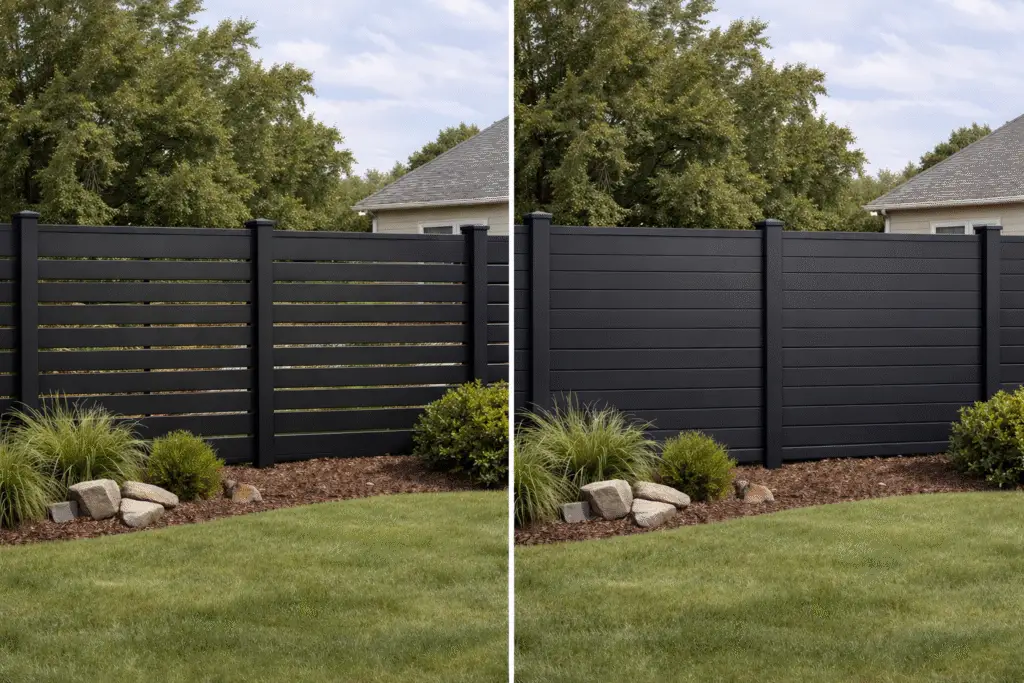
At first glance, a semi-privacy and a full privacy fence may look similar. The difference is spacing.
A semi-privacy fence has small gaps between slats. These gaps allow air and some light to pass through. This creates a more open feeling while still providing separation from neighbours.
A full privacy fence has no gaps. The surface is solid. This gives you maximum visual screening and a stronger sense of enclosure.
The important difference is not just visual. When wind hits a fence, it pushes against the surface. A semi-privacy fence allows some air to pass through, reducing pressure. A full privacy fence blocks airflow, which increases wind force. That extra force must be supported by the posts and foundation.
If your backyard is open or exposed to strong winds, this difference matters.
How Wind Affects Privacy Fences
Many homeowners do not think about wind until after installation. Wind applies pressure across the entire face of the fence. The more solid the fence panel, the more pressure it experiences.
In sheltered neighbourhoods surrounded by homes and trees, wind exposure may be moderate. In open areas, corner lots, or properties near fields or water, wind can be much stronger.
A full privacy fence in open areas should be installed with stronger anchoring methods. In many cases, posts embedded in concrete provide greater long-term stability than posts mounted on a surface.
The goal is not just to install a fence. It is to install one that remains stable, quiet, and straight for years.
What Makes a Privacy Fence Strong and Durable?
Strong privacy fences are built as systems, not just individual boards.
First, the slats themselves matter. Aluminum slats with internal reinforcement are designed to stay flat and resist bending. Unlike wood, aluminum does not absorb moisture, swell, or twist over time.
Second, reinforcement rails between slats increase stiffness. These rails distribute pressure across the fence panel and reduce movement in high wind conditions.
Third, the posts and anchoring method are critical. The fence is only as strong as the connection to the ground. Properly embedded posts help resist leaning and long-term shifting.
When all of these components work together, privacy fences maintain their appearance and structure over time.
Choosing a Privacy Fence for Different Areas of Your Home
Backyard Property Lines
If your backyard is mostly enclosed by neighbouring homes, a semi-privacy fence may offer a good balance of airflow and screening. They reduce wind pressure while still creating separation.
If your yard is more exposed, full privacy may still be the right choice, but the installation should be adjusted to accommodate the increased wind demand.
Pool Areas
Pool enclosures often require greater visual privacy. Full privacy fences are common for this application. Because pools are often located in open yard areas, stability is important. Strong anchoring and reinforcement help ensure long-term performance.
Deck Privacy Panels
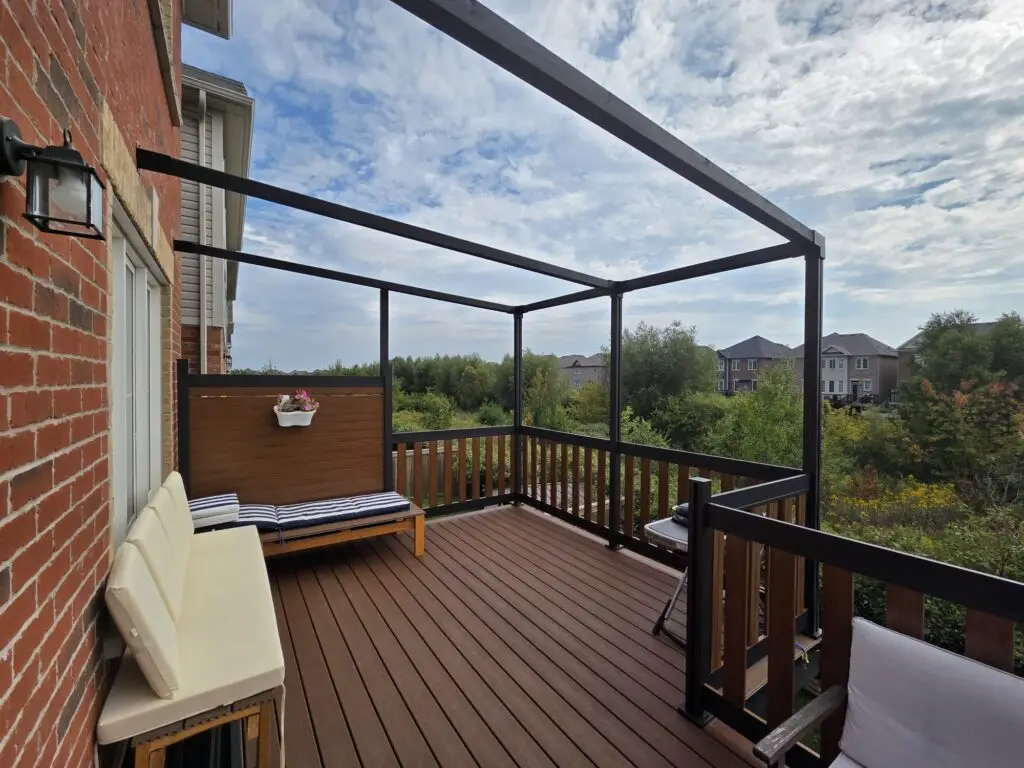
Some homeowners install a privacy fence around raised decks for added comfort and screening. In this case, local building code may apply, especially if the panels function as a guard or railing. Height and spacing requirements may need to be followed.
If you are using a privacy fence as deck privacy panels, confirm that the configuration meets local requirements before installation.
Equipment Screening
Privacy fence panels are also used to screen air conditioning units and utility equipment. Full privacy panels are common here. Because these are often installed near buildings, airflow and structural support should still be taken into account.
Maintenance and Long-Term Value
Wood fences often require repainting, staining, or replacement of warped boards. Over time, moisture and insects can weaken the structure.
Aluminum privacy fence resists moisture damage and does not warp. They do not require repainting. This reduces maintenance and long-term costs.
Cleaning typically involves simple washing to remove dirt or debris. Because the material does not rot or crack, it maintains a consistent appearance year after year.
The long term value of a privacy fence depends on both material quality and correct installation.
Questions to Ask Before You Decide
Is my property exposed to strong winds?
Do I prefer maximum privacy or some airflow?
Will this fence be used around a deck or an elevated surface?
Are posts being embedded in concrete or mounted on a surface?
How wide are the panel spans?
These questions help ensure you are selecting the right configuration for your home.
Conclusion
Privacy fences are not one size fits all. Semi-privacy and full privacy look similar, but they behave differently under wind and long-term use. The more solid the surface, the greater the pressure it must withstand.
The strongest and most durable fences are built as complete systems. Slats, reinforcement rails, posts, and anchoring methods all work together. When chosen thoughtfully, a privacy fence provides screening, security, and stability for many years with minimal maintenance.
Choosing the right configuration protects your investment and gives you confidence that your fence will remain straight, quiet, and secure over time.
