

How Long Do Fences Really Last? Wood vs Vinyl vs Composite vs Aluminum
When you’re choosing a fence, you’re not just asking, “How long will it stand?”
You’re really asking: “How long will it stand and still look good, without constant repairs and headaches?”
In this guide, we’ll compare wood, (PVC) vinyl, (WPC) composite and aluminum based on:
- What guides and manufacturers claim on paper
- What actually tends to happen in Canadian and northern US conditions
We’ll conclude by examining why a well-designed aluminum system, such as PrimeAlux, often delivers the best long-term value.
Lifespan & Maintenance at a Glance
Use this table as a quick side-by-side comparison.
| Material | Lifespan (real-world) | Maintenance level | Visual aging summary |
|---|---|---|---|
| Wood | Practical “good-looking” life in many Canadian / northern US backyards is often 5–10 years before greying, warping and repairs become obvious; with heavy upkeep, some better cedar builds can reach the 15–20 year range. | High – stain/paint, repairs | Greys, warps, cracks; boards twist and cup; repaired sections look patchy and mismatched. |
| (PVC) Vinyl | Many homeowners report that vinyl looks its best for around 8–15 years before chalking, hairline cracks or warping start to show; structurally, quality lines may still stand 20–25 years or more if not abused. | Low – mostly washing | Fading, chalking, cracking and an obvious plastic sheen; noticeable colour mismatch on repaired sections. |
| (WPC) Composite | The “designer” look can soften in as little as 8–15 years due to fading, staining and slight movement; framing that’s done well can keep it structurally standing for 20–25 years or more. | Low–Medium – washing, spot cleaning | Colour softens and flattens; boards pick up stains; slight warping or sagging can appear in long spans, especially in heat. |
| Aluminum (PrimeAlux) | Realistically 30+ years in service. Visually sharp for decades when coatings and engineering are high quality; aesthetics usually drive replacement rather than failure. | Very low – occasional wash, checks | Keeps shape and colour far better; stays straight and architectural when the finish is high-end. |
If you want the logic behind those numbers (and how each material ages visually), keep reading. If you just wanted the ranges, you already have them.
What Really Determines Fence Lifespan?
For any material, a few big factors decide how long it actually lasts:
Material type
- Wood: absorbs water, swells or shrinks with changes in humidity, and can rot and split over time due to exposure.
- Vinyl/composite: made from types of plastic that are sensitive to ultraviolet (UV) light from the sun, heat, cold, and the stresses that build up inside the material over time, which can cause damage.
- Aluminum: non-rotting metal; the main risk is coating or structural design, not decay.
Climate
- Freeze-thaw cycles.
- Intense sun and heat.
- Wind loads.
Build quality
- Post depth and concrete.
- Drainage and grading.
- Correct spacing, rails, and fasteners.
Maintenance level
- Whether anyone actually stains, paints, washes or fixes problems on time.
Keep these four factors in mind as we examine each material next.
Wood Fence Lifespan
In real backyards, a typical wood fence gives you a “nice” phase of roughly 5–10 years before greying, cupping, and patchy repairs start to stand out. In harsher Canadian and northern US climates, many builder-grade fences are being replaced somewhere in that 7–10 year window, especially when they’re never re-stained or sealed and posts crack or move in the soil.
With much better species (like quality cedar), upgraded construction and consistent maintenance, some fences can be kept going toward the 15–20 year mark—but that usually involves repeated staining, board replacement and post repair. Without that level of attention, they simply don’t stay attractive for that long.
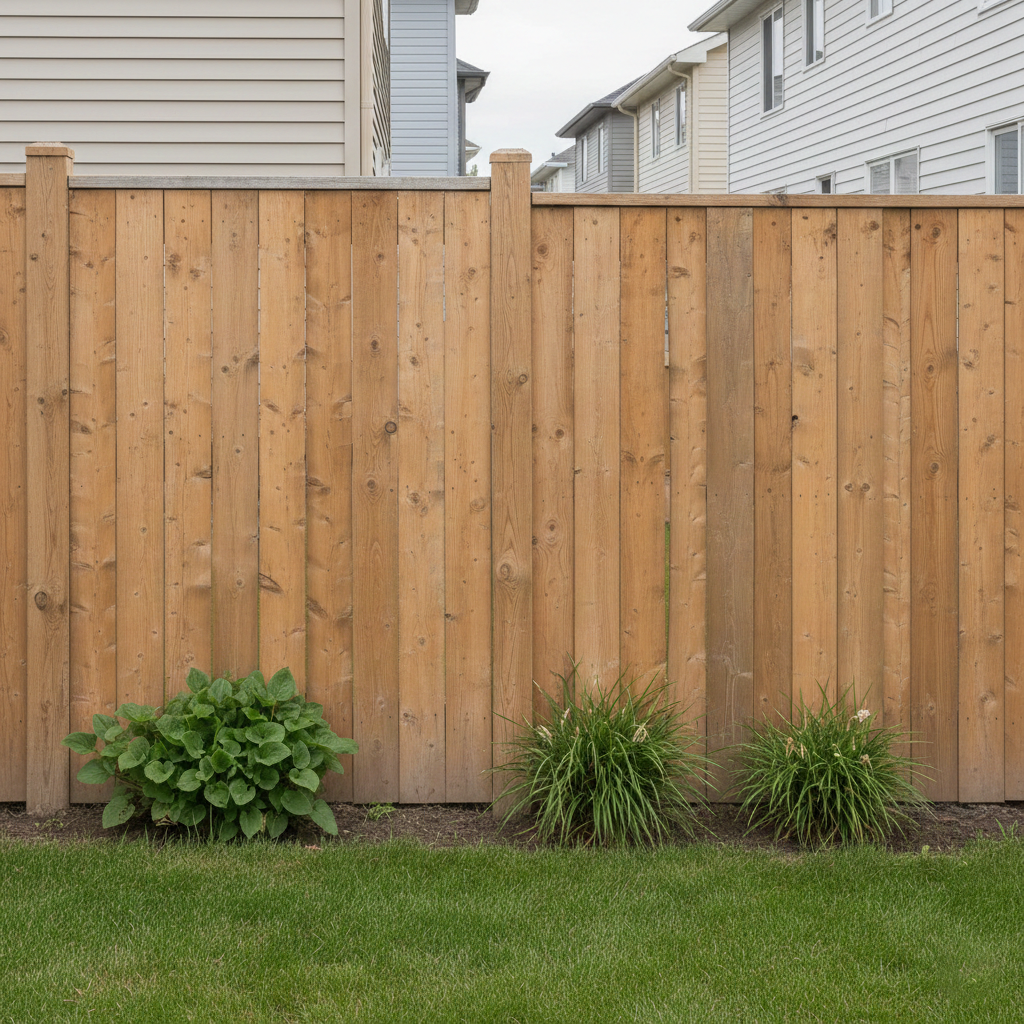
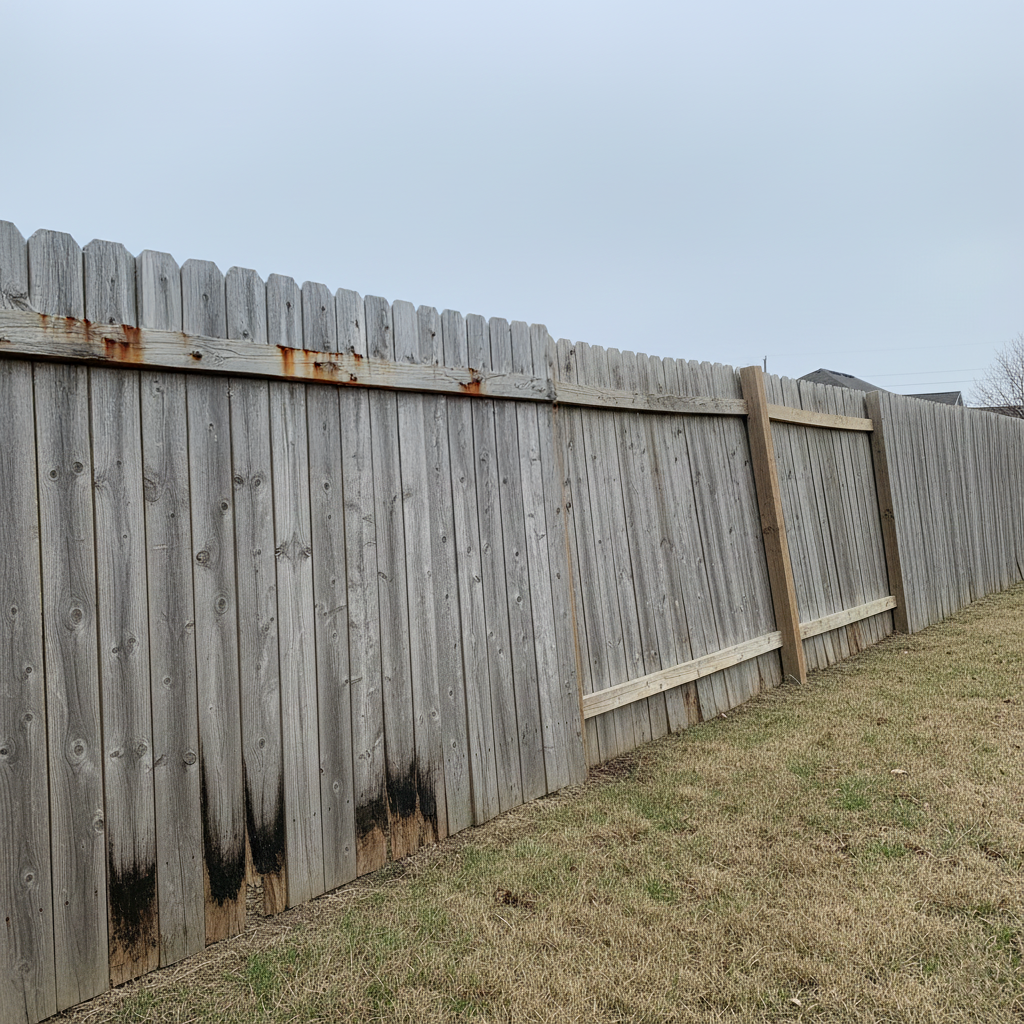
Wood Fence – Aging Timeline
How a typical wood fence changes from “new” to “time to replace.”
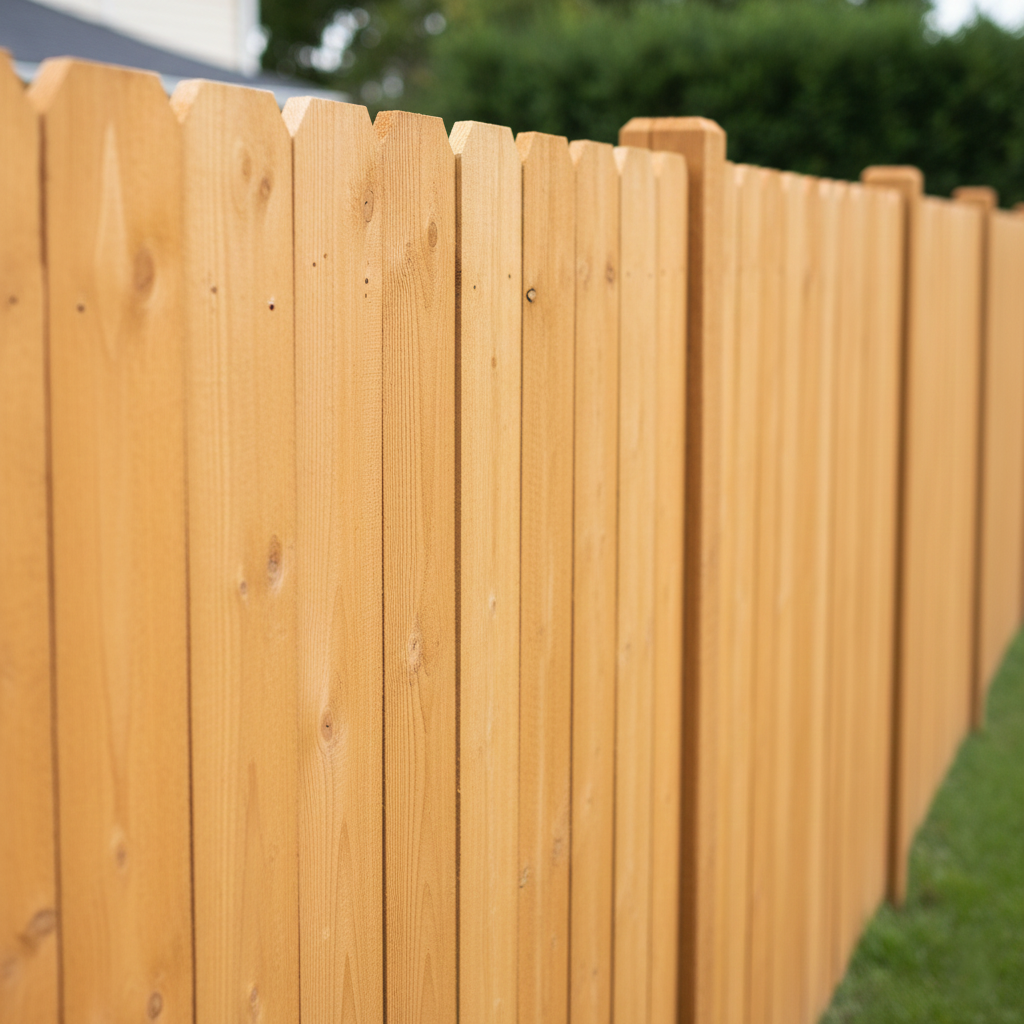
The honeymoon
Fresh, warm colour. Boards are straight. With good stain or paint, it looks great.
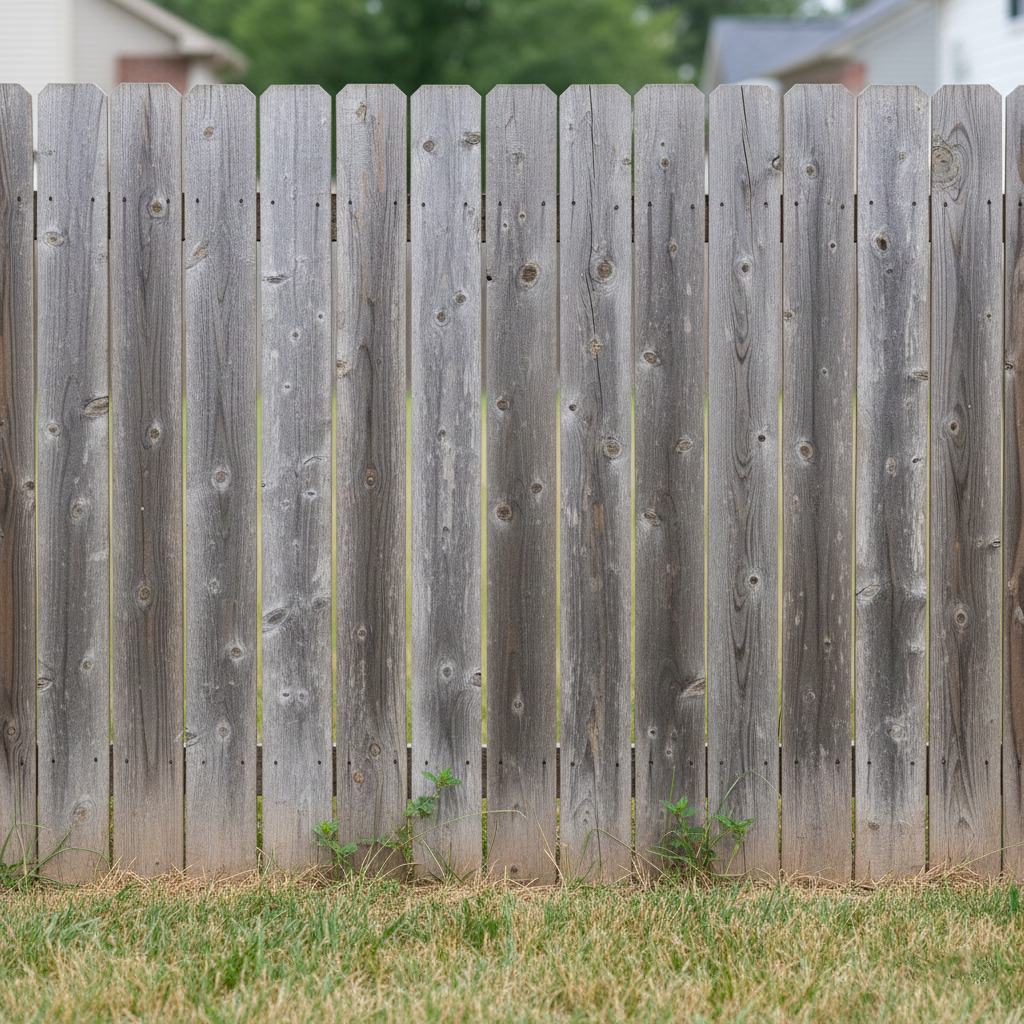
Weather sets in
Finish starts to dull or peel. Unprotected wood greys out, especially on sun-exposed faces. Small cracks, checks and slight warping appear.
Tired or ready to replace
Rot and splitting show up at the board ends and near the ground. Rails loosen. Panels start to lean. Repaired sections rarely match in colour or weathering; many fences become a patchwork of repairs and move onto the replacement list.
Maintenance reality
- Staining or painting every 2–3 years is usually needed to keep it looking presentable.
- Boards can crack or split, and even pressure-treated posts often develop checks and splits over time.
- Periodic fixes for leaning sections, loose fasteners and rotted boards are common.
Wood in one sentence: It can look beautiful at first, but without constant maintenance you often get 5–10 good-looking years before greying, warping and repairs start to dominate.
Vinyl Fence Lifespan
PVC vinyl is often sold as “low maintenance and long lasting,” and structurally it can stay standing a long time. But in terms of appearance, many homeowners report that vinyl looks its best for roughly 8–15 years before chalking, hairline cracks, warping or sagging sections start to appear— especially in strong sun or big temperature swings. After that, it can still be physically intact, yet look visibly tired.
Vinyl Fence – Aging Timeline
When vinyl looks fresh, and when its plastic side really shows.
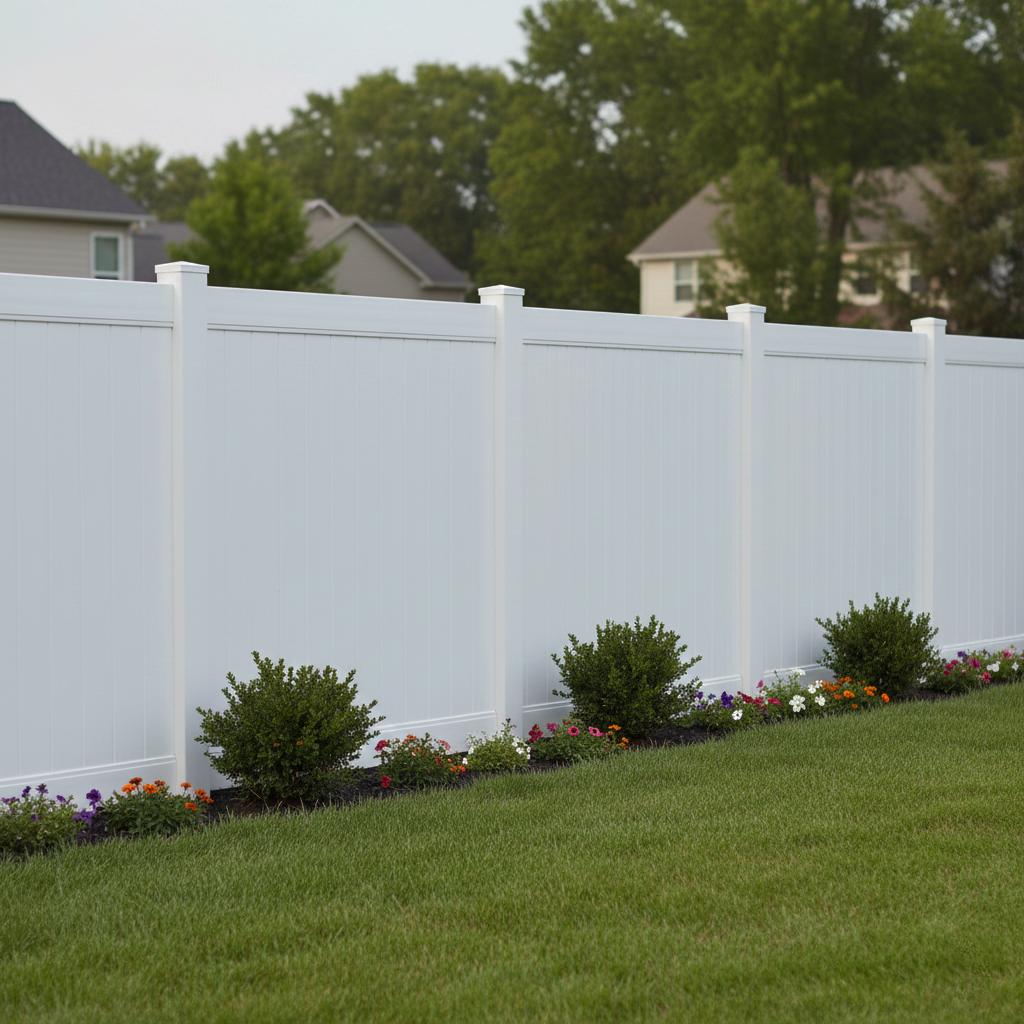
Fresh and clean
Smooth, uniform colour; very little maintenance beyond a quick wash. Some people already notice the plastic sheen compared to real wood or metal.
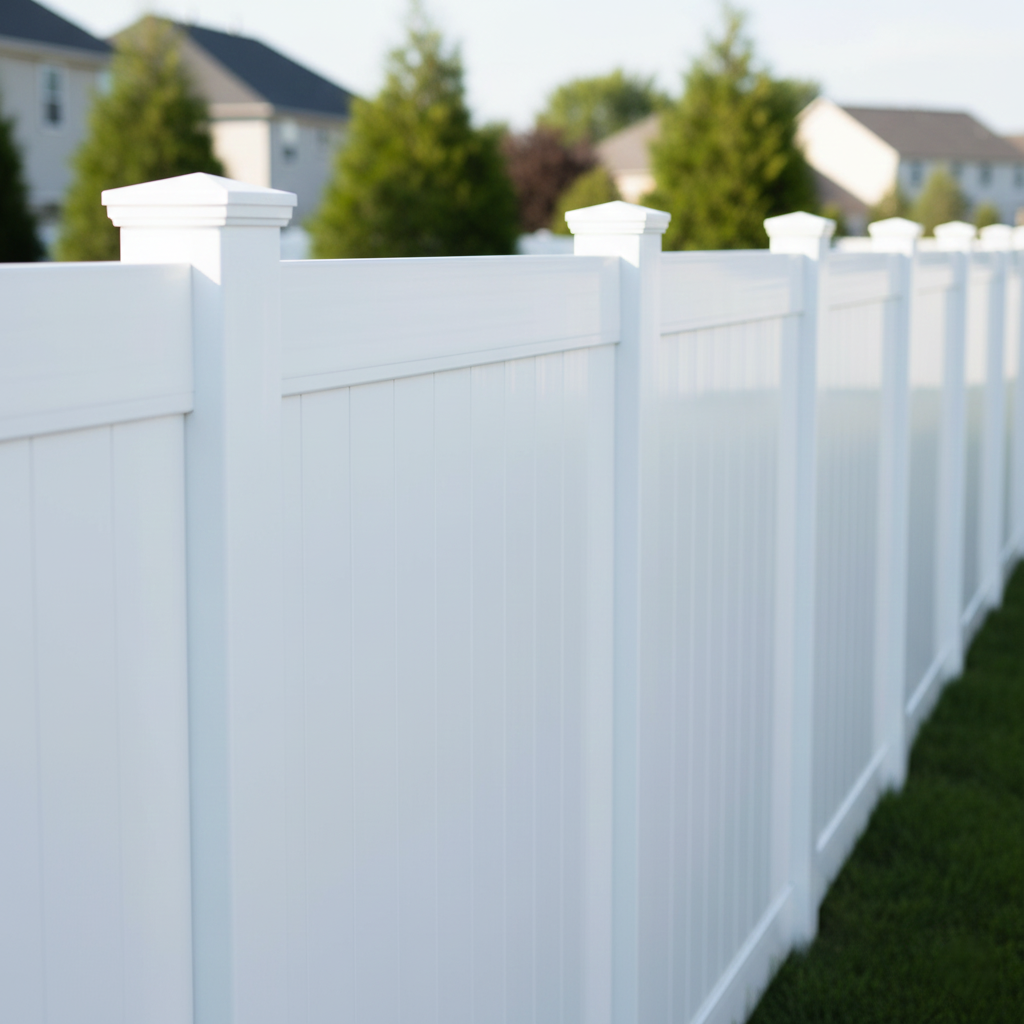
Diverging paths
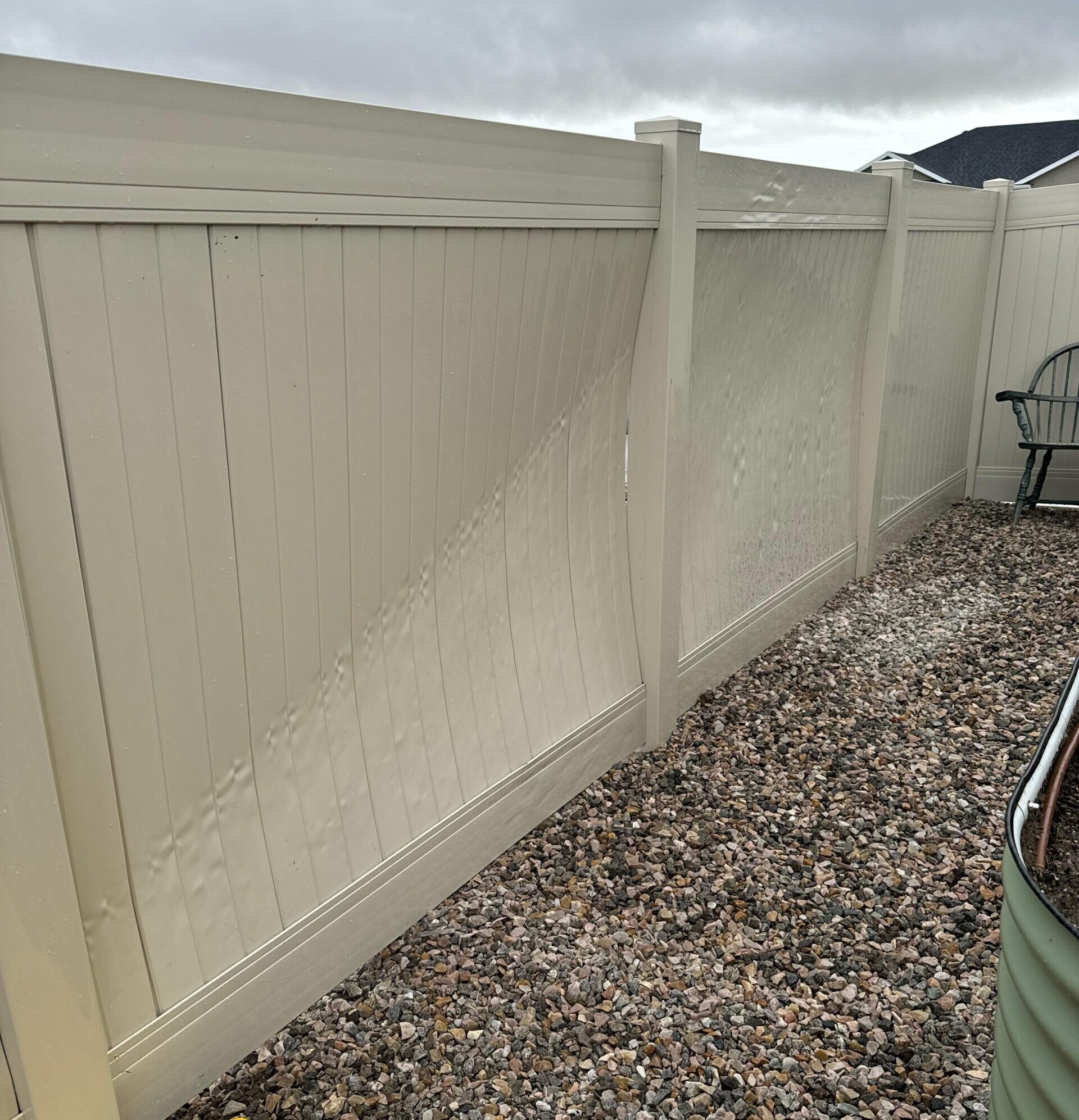
Better vinyl with strong UV inhibitors mostly holds colour, just picks up surface dirt that washes off. Cheaper or imported lines start fading, chalking, and showing hairline cracks and slight discolouration, especially on sunny sides or near fasteners.
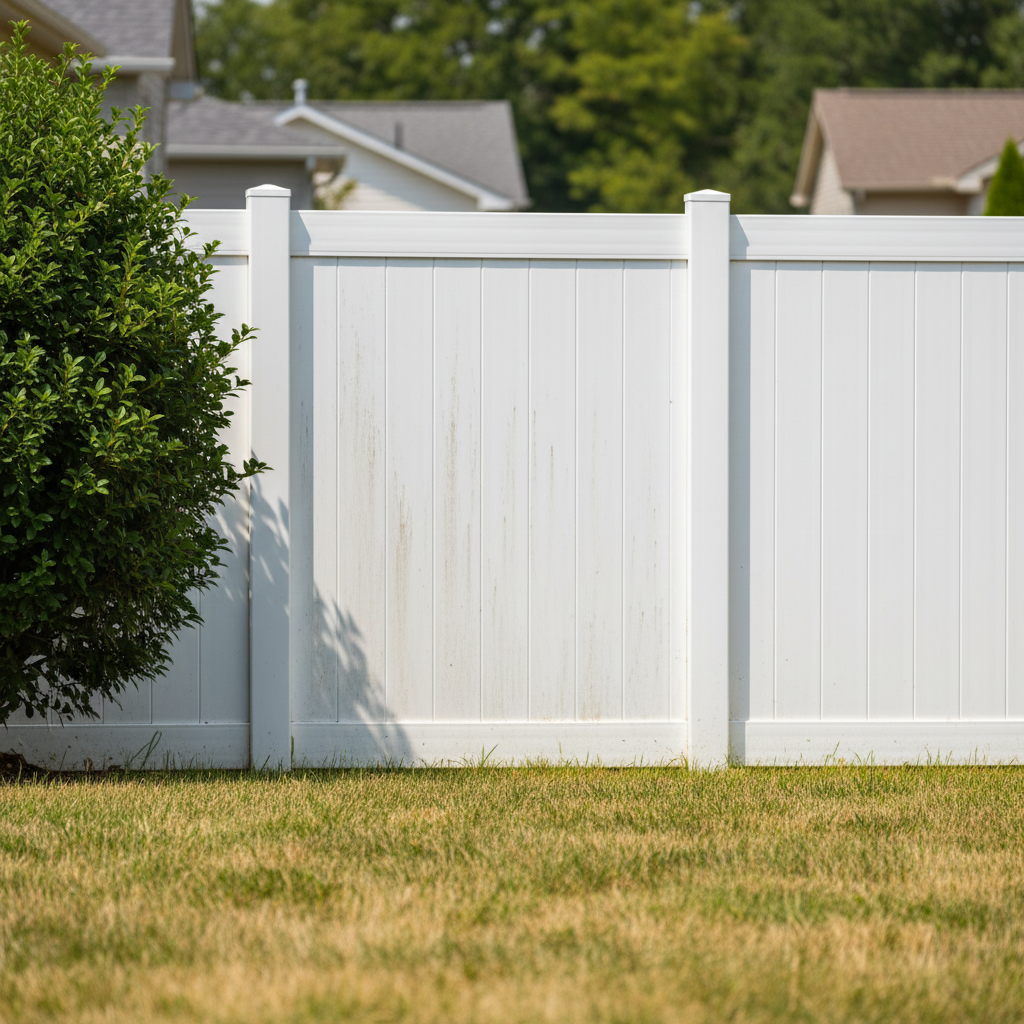
Long-term reality
On many everyday installs, panels begin to warp or sag between posts, and chalking or brittleness show up. Cracks around impact points or hardware are common. Quality systems may remain structurally sound beyond 20 years, but the “new fence” look is long gone by then.
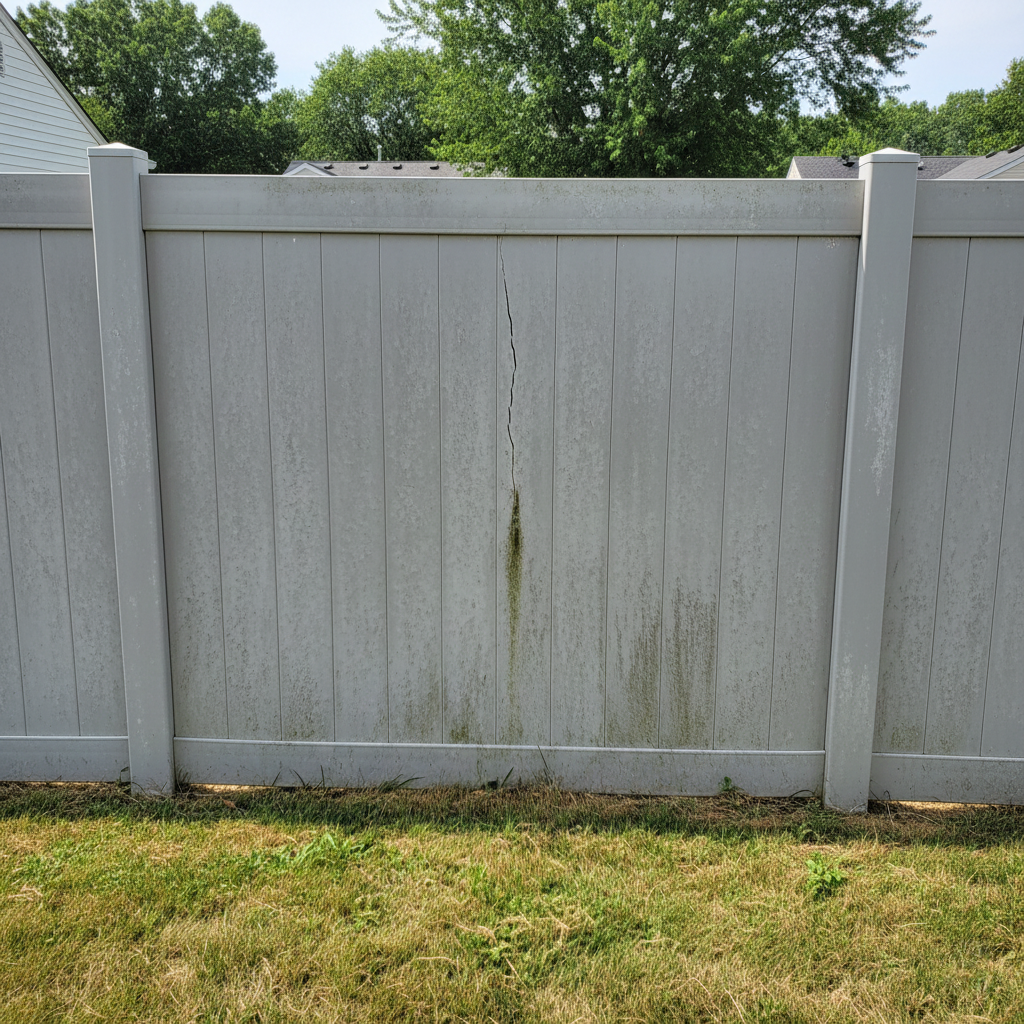
Structural behaviour
- Vinyl doesn’t rot, but it can become brittle in deep cold, making cracks and breaks from impacts or shifting posts more likely.
- Solid privacy panels act like sails in the wind; weak posts or shallow footings can lead to leaning or damage.
Vinyl in one sentence: It can stand for decades, but many real-world fences only look “clean and crisp” for 8–15 years before chalking, warping and an obvious plastic look start to dominate.
Composite Fence Lifespan
Composite (WPC) fences are often marketed with 25–30 year or even “lifetime” expectations. In practice, the sharp, modern appearance usually has a shorter window. For many homeowners, the fence looks its best for roughly 8–15 years before fading, staining and subtle warping begin to change the feel of the design. With decent framing, though, it can still stand structurally for 20–25 years or more.
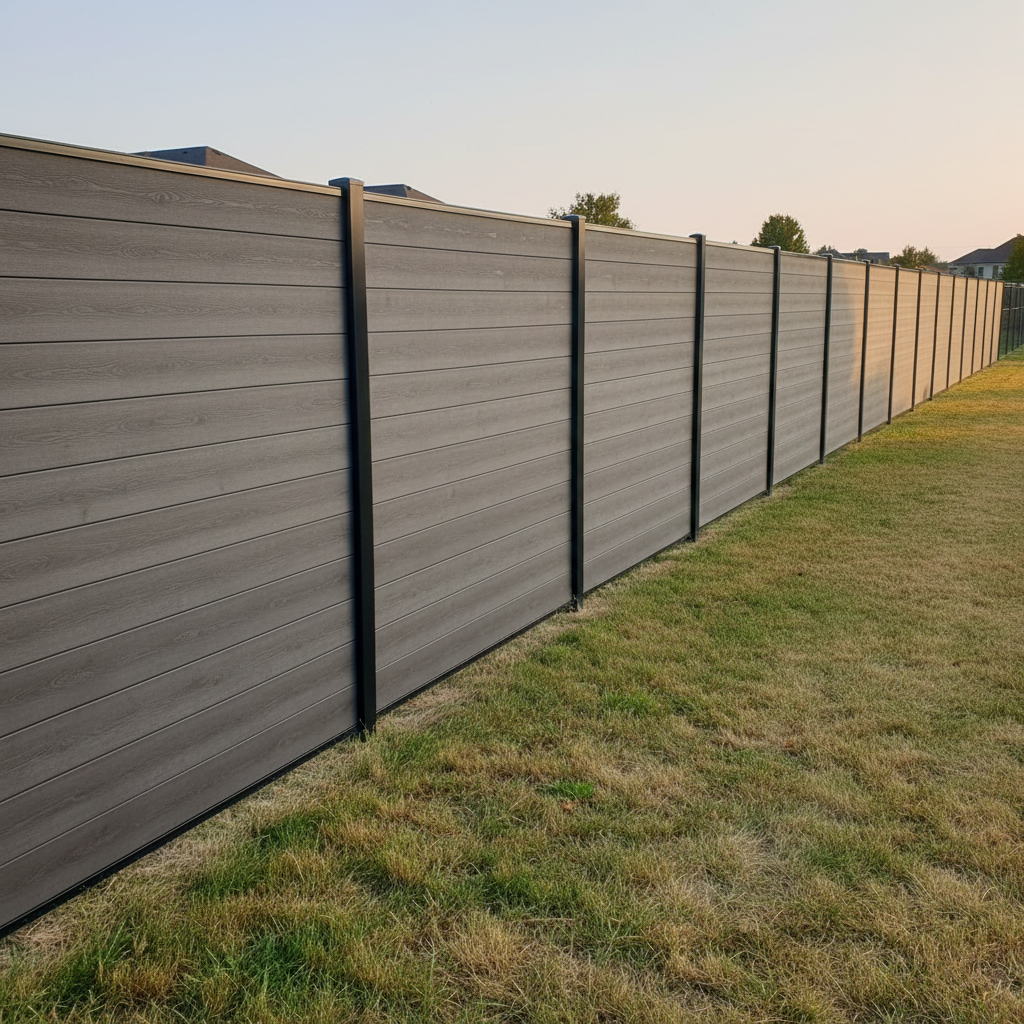
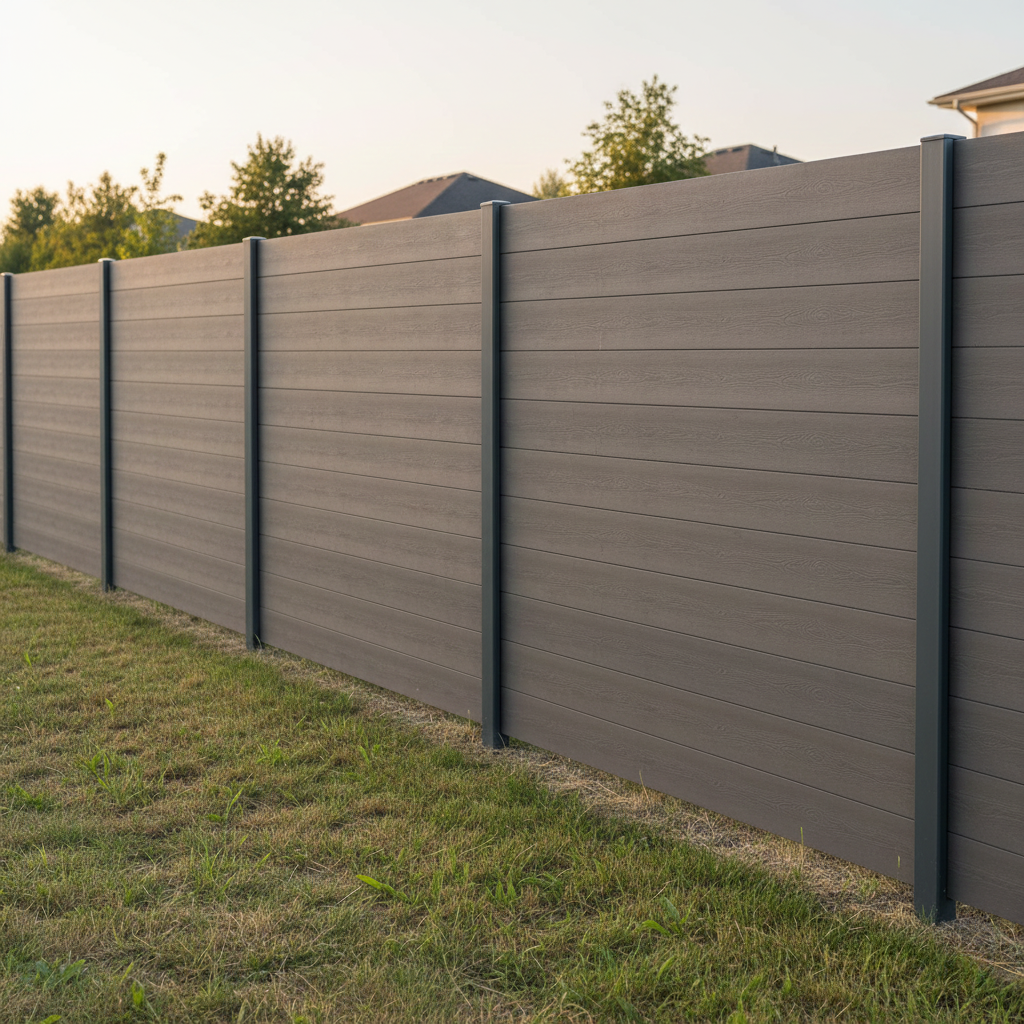
Composite Fence – Aging Timeline
How composite usually transitions from “designer” to “softened.”
Modern and crisp
Boards look solid and uniform. Colours are rich. The fence feels more “architectural” than vinyl.
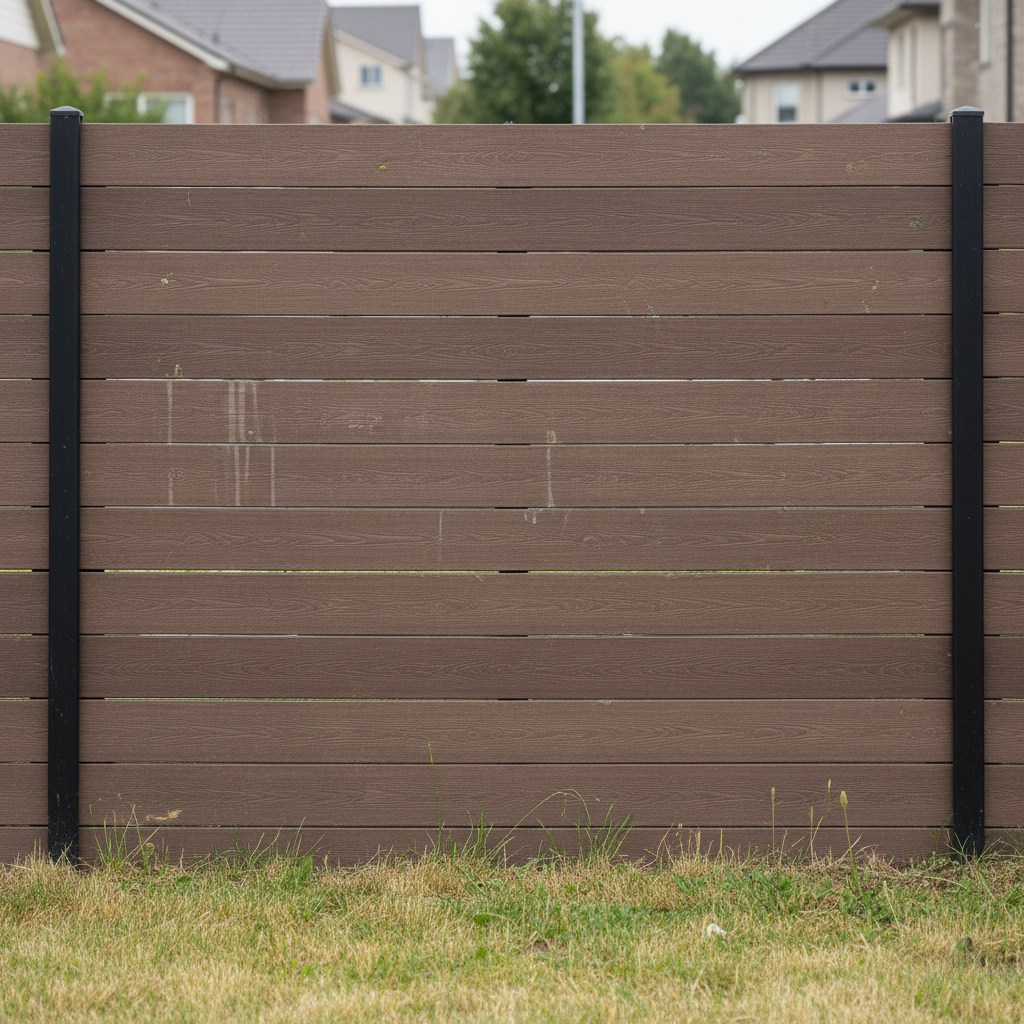
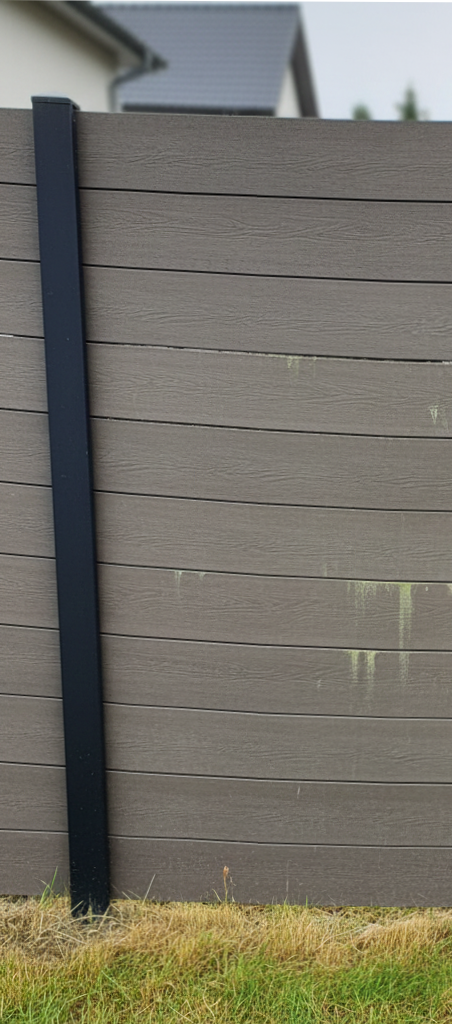
Subtle changes
UV exposure starts to soften the colour, especially on darker tones. Some boards pick up stains, watermarks, or organic growth in damp or shaded areas.
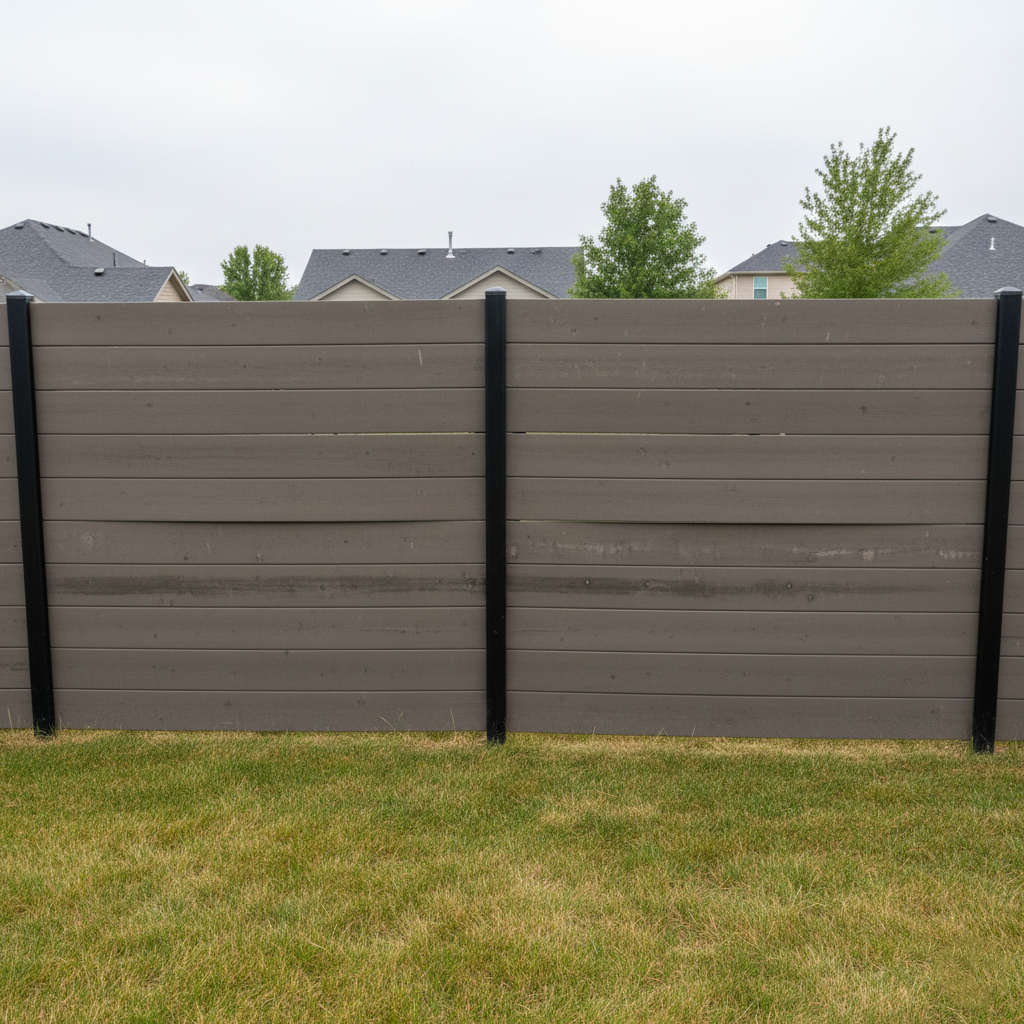
Movement and weathering
On long runs or weak framing, you may see slight sagging or warping, particularly where heat is intense. Colour is noticeably flatter than the original; some areas may look blotchy. The fence can still be structurally sound, but the ultra-clean, sharp look from day one has usually mellowed.
Weight & structure
- Composite boards are heavy.
- Posts and framing must be designed for that load; overly wide spans or light posts can exaggerate sagging and movement over time.
Composite in one sentence: It can beat wood on rot resistance, but the high-end look often fades, stains and moves within 8–15 years, long before the structure itself finally gives out.
Aluminum Fence Lifespan (and Where PrimeAlux Fits In)
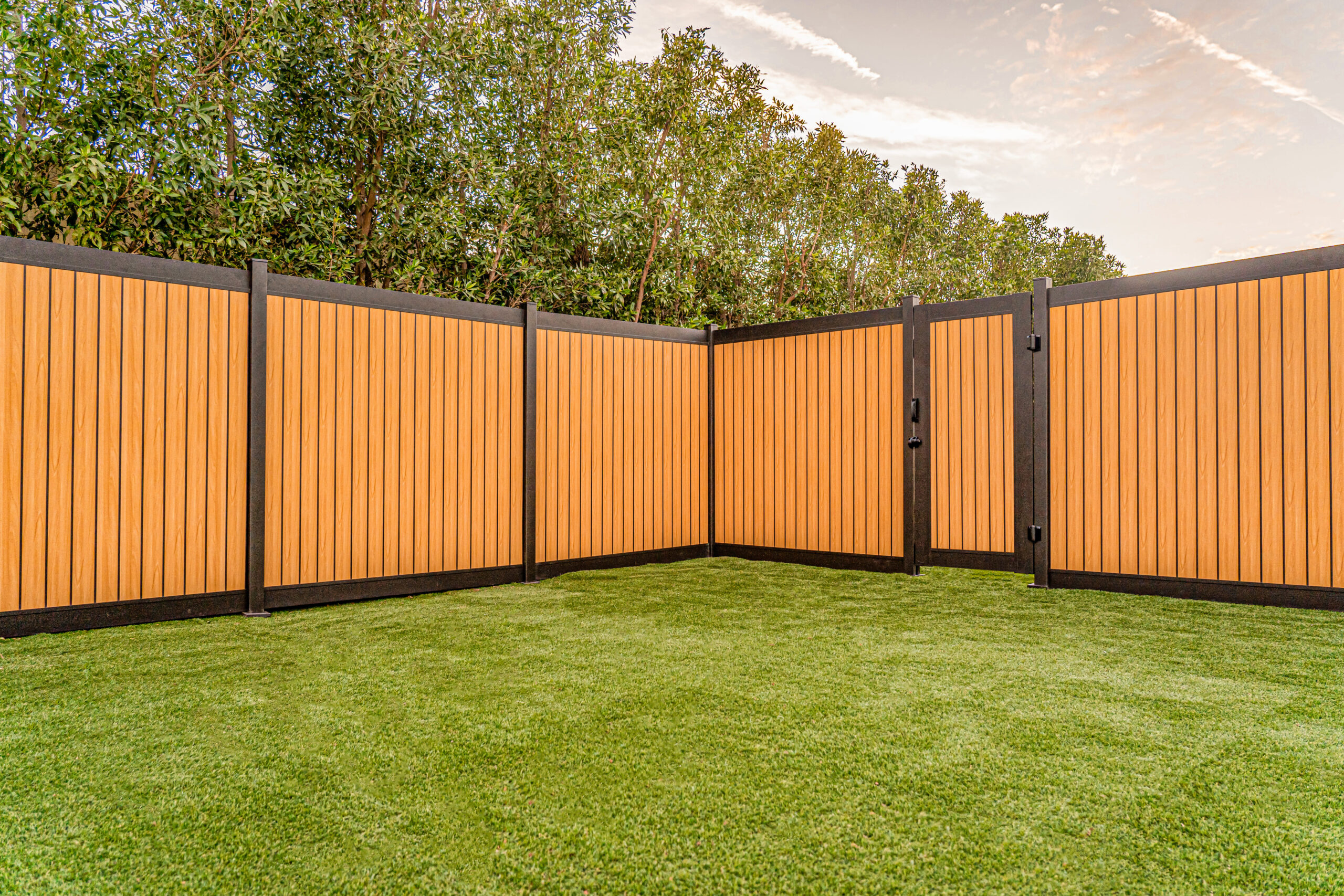
High-quality aluminum fencing is one of the few options that can genuinely deliver a long service life both structurally and visually. In many cases, a well-designed system lasts 30+ years, and decisions to replace it are driven more by style changes or layout updates than by failure.
PrimeAlux is built around this logic: invest once in engineering, coating and details so that the fence stays straight, solid and premium-looking for decades rather than just a few “good” years.
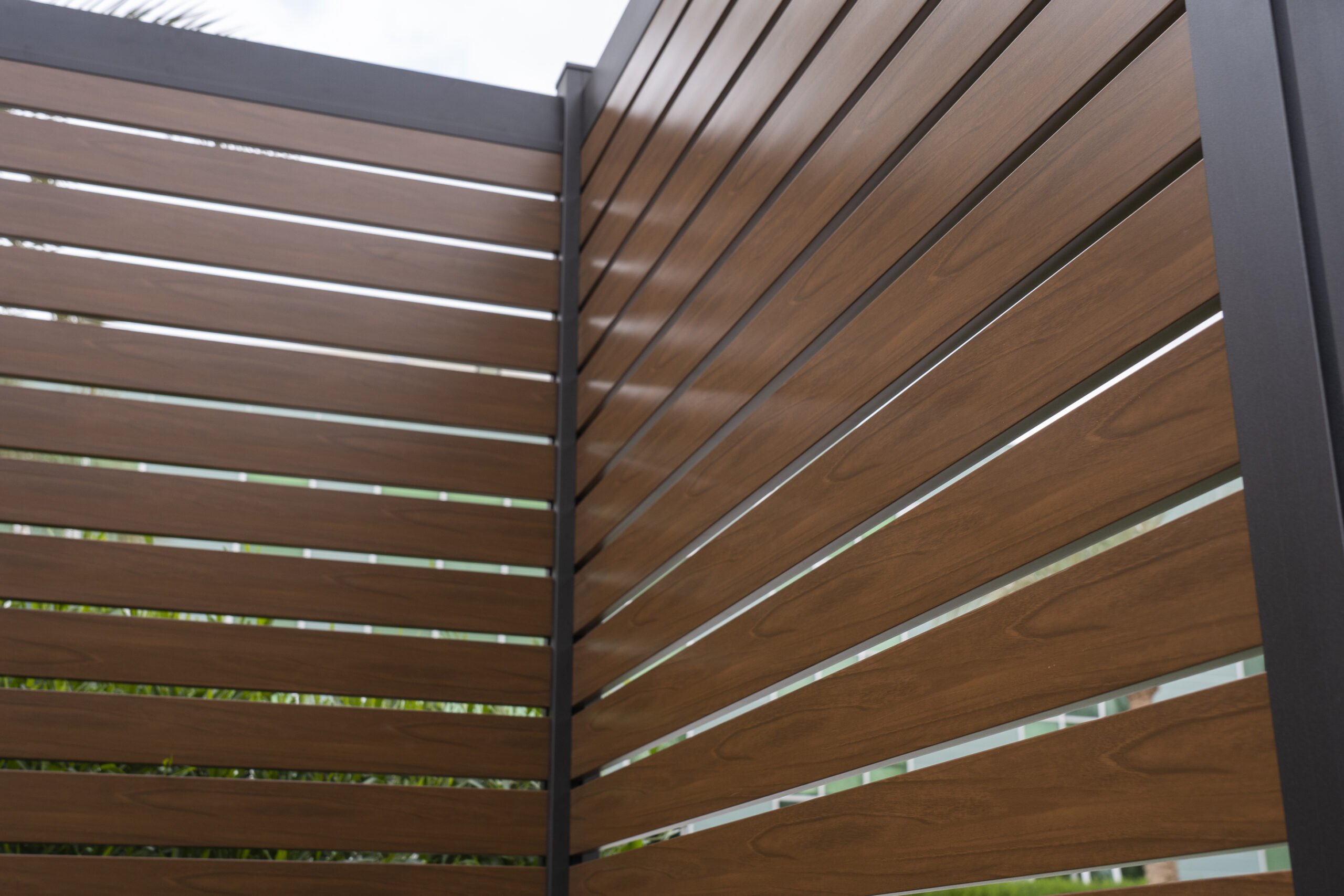
Aluminum Fence – Aging Timeline
What a long-life, low-maintenance fence looks like over decades.
Clean and sharp
Lines are straight and panels stay aligned. Colour is even. The fence looks solid and architectural, not plastic. Maintenance is just occasional rinsing.
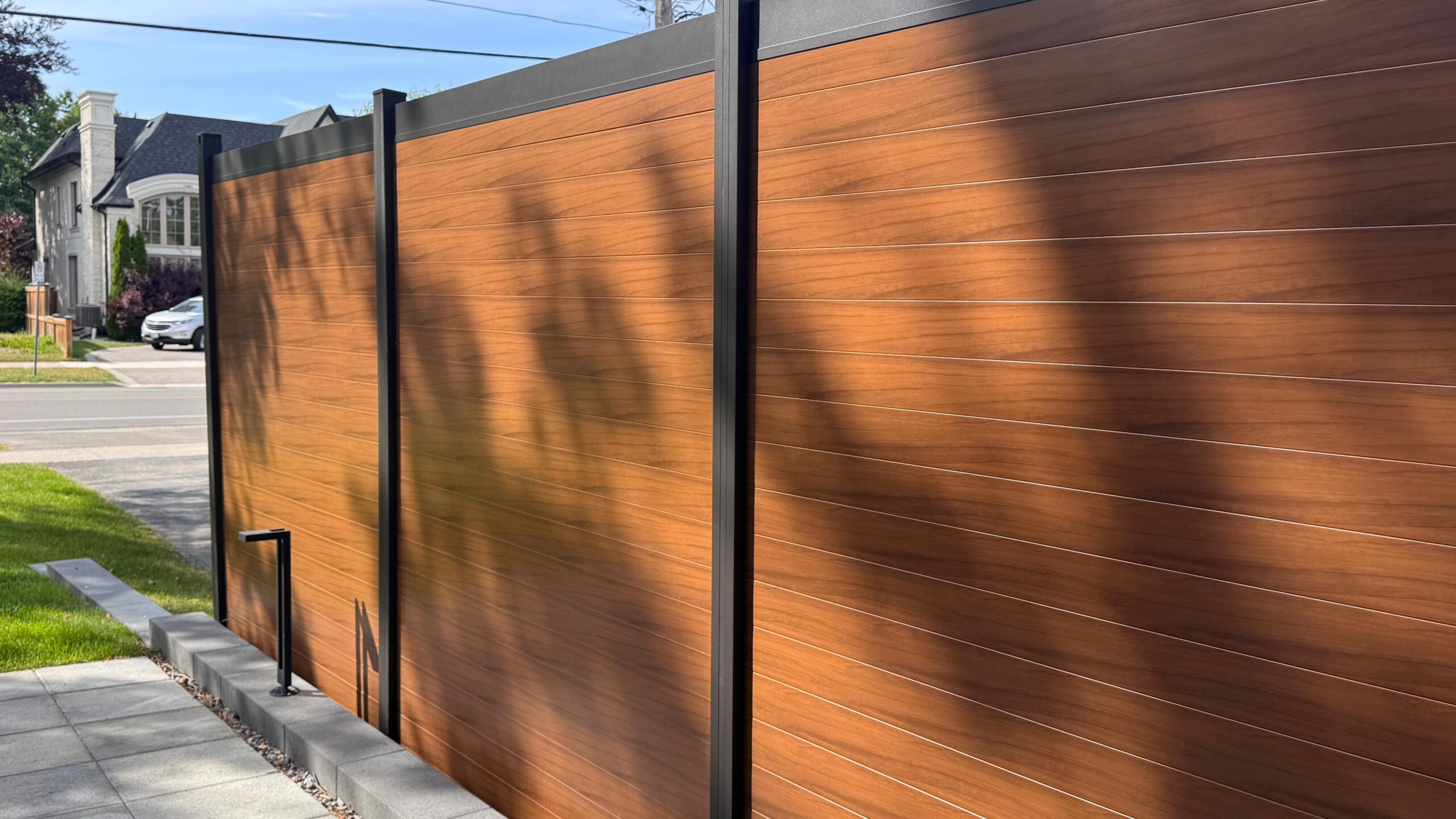
Steady performance
In most climates, the structure is unchanged. Coatings show very little visible shift aside from normal surface dust. Hardware and fasteners remain tight when the system was installed correctly from the start.
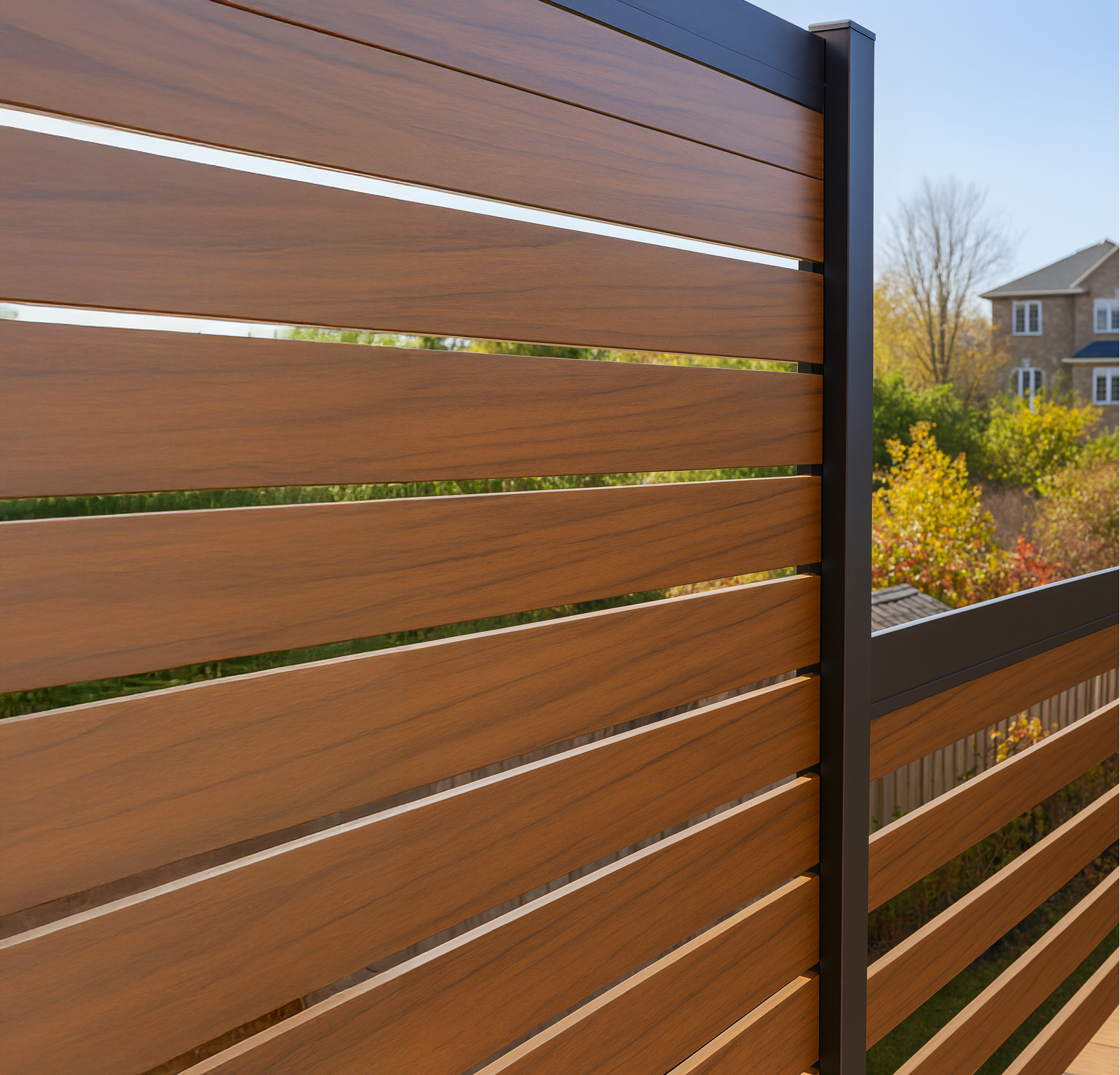
Long-term patina
High-quality coatings continue to protect the metal. You may see the odd chip or scrape from real-world use, but the fence stays straight, stable and premium-looking. At this point, any upgrade is usually about design preferences, not failure.
Why PrimeAlux is different from “generic aluminum.”
- Premium coating system – multi-layer outdoor finish tuned for UV and abrasion resistance, to hold colour and gloss as long as possible.
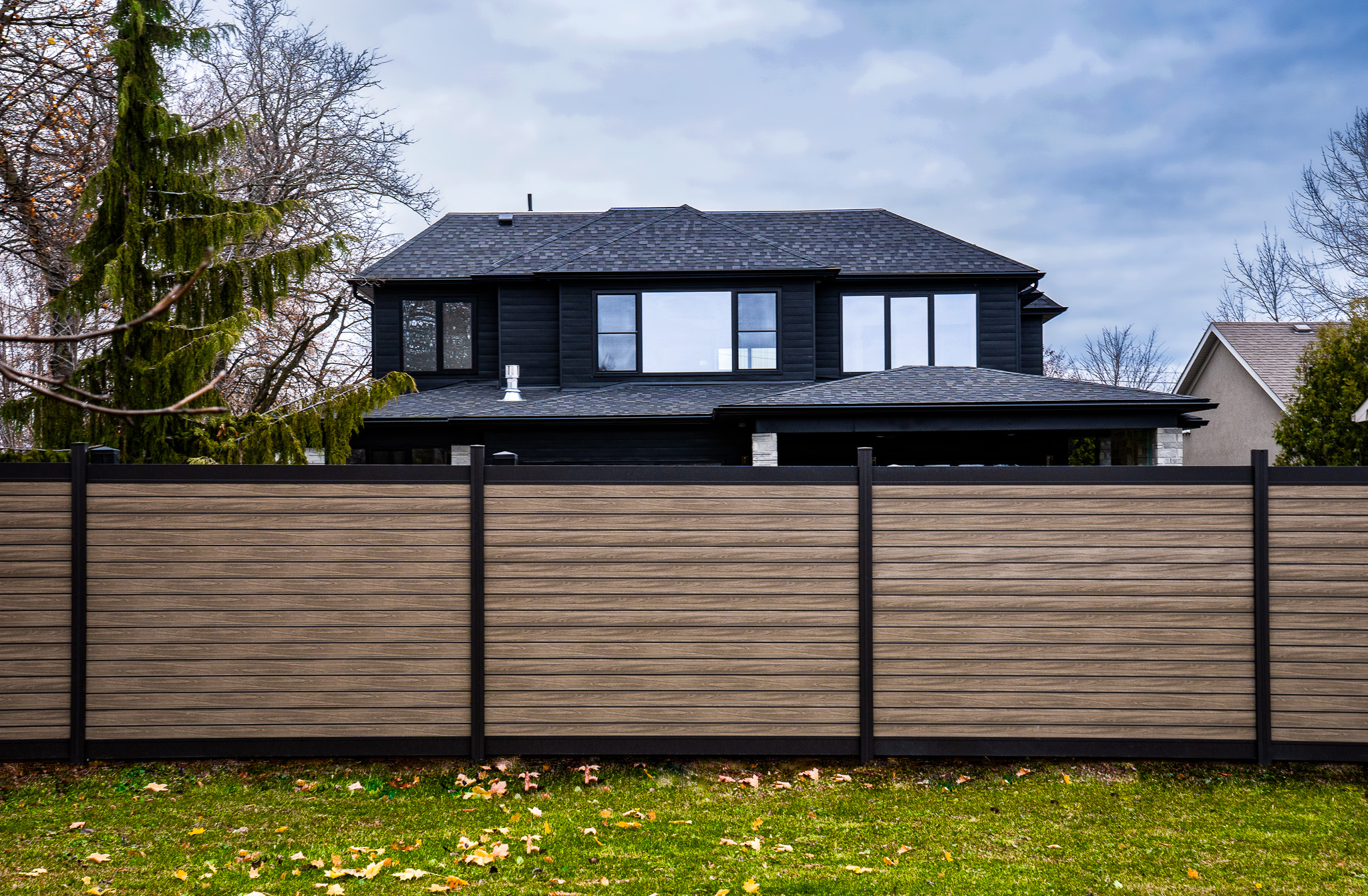
- Realistic colours and wood-look finishes – rich, premium tones that look like real materials, not shiny plastic.
- Foam-core panel design – aluminum skins + stable foam core + engineered profiles for stiffness, clean lines and reduced rattle.
- Tested performance – panels and posts engineered to handle wind and weather when installed to spec.
Imagine a severe windstorm hitting a typical suburban neighbourhood. While some fences struggle against the gusts, a fence built with the PrimeAlux system stands firm, showing no visible signs of damage. That kind of real-world behaviour is exactly what its engineered profiles and coating system are designed for.
Maintenance specifics – what “minimal” really means for aluminum
For aluminum (especially in a system like PrimeAlux), very minimal maintenance is required. No staining, no sealing, no dealing with rot, warping or insect damage. For details, you can review the PrimeAlux cleaning instructions.
Aluminum/PrimeAlux in one sentence: One of the only fence options that realistically gives you 30+ years of use, very low maintenance, and a fence that can still look sharp instead of tired.
Climate Reality – Short Version
Cold & Wet (Canada and northern US)
- Wood: Rot, splitting and movement are accelerated; many fences end up at the low end of their “claimed” range without consistent maintenance.
- Vinyl: No rot, but cold brittleness increases the risk of cracks and breaks, and heaving posts can wreck alignment.
- Composite: Better against rot than wood, but weight and frost movement punish weak framing.
- Aluminum: Very robust; no rot or swelling, and good coatings handle freeze-thaw well when specified properly.
Hot & Sunny (California, Southwest, Southern US)
- Wood: Finish burns off quickly; exposed wood checks and cracks.
- Vinyl: Strong UV accelerates chalking and fading in lower-quality products; even good vinyl ultimately depends on its formulation.
- Composite: Heat drives expansion and subtle warping, especially in long runs and dark colours.
- Aluminum: Excellent with the right coating; structurally stable (it will get hot to the touch in dark colours, like most dark outdoor materials).
Coastal / High-Wind Areas
- Wood: Moisture and wind accelerate decay and fastener corrosion.
- Vinyl/Composite: Need serious engineering for wind; panel failures and awkward repairs are common when corners are cut.
- Aluminum: When it’s a tested system with proper posts, embedment and fixings, aluminum is one of the most dependable long-term options.
Lifespan vs “How It Looks While It Lasts”
A fence that technically survives 25 years but looks awful after 8 is not a win.
- Wood: Ages into grey, patchy and often crooked unless you stay on top of staining, repairs and vegetation.
- Vinyl: Even if it’s still standing, cheaper products often look faded, chalky and cracked, and repairs highlight colour differences between old and new panels.
- Composite: Keeps structure, but subtle warping, fading and staining gradually erode the clean, modern design effect.
- PrimeAlux Aluminum: Designed so both the structure (aluminum skins + foam core + engineered profiles) and the coating (premium multi-layer system) age gracefully. Colours and wood-look finishes are meant to feel architectural and premium, not plasticy, so the fence still looks like part of the design years later.
✅ So, Which Fence Makes Sense Long-Term?
If you only care about the lowest upfront price:
Wood will usually win, but expect more maintenance and earlier replacement.
If you want low maintenance and don’t care much about feel/appearance:
Vinyl or composite can work, as long as you’re honest about the difference between high-end and cheap/imported products.
If you want long life, low maintenance and a premium, modern look:
A high-quality aluminum system like
PrimeAlux is, in practice, the most balanced option for most homeowners and many commercial properties:
- Realistic 30+ year lifespan with minimal maintenance.
- No rot, no insect damage, no warping.
- Finishes that look real and premium, not plasticy.
- Engineered panels and posts that handle wind and climate rather than just looking good in a showroom.
Take a walk along your current fence. Do you see rot, warping, fading or cracks starting to show? That’s usually your first signal that it’s time to think about a longer-term solution.
Sources & Further Reading
- Hancock Fence & Fabrication. “The Big Mistake.” hancockfence.com.
- Jay Fencing. “How Often Do Wood Fences Need to Be Replaced.” jayfencing.com.
- Everlasting Fence Company. “Should You Repair or Replace Your Wooden Fence?” everlastingfence.com.
- Cambridge Fence. “How Long Does a Fence Last? Factors That Affect Fence Durability in Cambridge.” cambridgefence.ca.
- Law Fence Co. “Fence Materials: Cost & Maintenance.” lawfenceco.com.
- Standard Fencing Company. “FAQs.” standardfencing.ca.
- “How Long Do Cedar and Other Wood Fences Last?” handymansworld.net.
- “Cedar vs Economy Wood Fence Material Comparison.” fencesupplyinc.com.
- “Composite vs. Vinyl Fence: Which Is Better for You?” northernline.com.
- “Are Composite Fences Worth the Money?” courtyardmart.com.
- “The Life Expectancy of Different Residential Fences.” northlandfenceapplevalley.com.
- “Cost Comparison: Metal Fencing vs. Other Materials.” ironfenceshop.com.
- “Vinyl vs Aluminum Fence: Choosing the Best Low-Maintenance Option.” barrierboss.ca.
- “How long do they last? – Cedar, Vinyl, Composite and Metal Fencing.” vancasa.ca.
- “Why Is My Fence Turning Gray?” southlandfence.com.
- “Why Pressure-Treated Fence Posts Split and Crack (and Why It’s Not a Big Problem).” mkwservices.ca.
- “The Common Problems with Composite Fencing (and How to Avoid Them).” selectlivinggroup.co.uk.
- Reddit users discussing warped PVC fence panels: r/FenceBuilding.
- “Vinyl Fencing Problems.” afenceutah.com.
